These top ten tips are not rocket science, but they will put a rocket in your profit and make 2022 a truly sensational year for you and your business.
Top tip 1 is all about why you have to communicate with your customers; why you have to communicate often and why you need to be easy to reach.
How Regular Communication with Your Customers Could Save You Money
How much does it cost you to run your business?
Whatever that number is, that is the amount it costs you to create customers. So why would you want to be continually attempting to find new customers when they are so expensive.
Doesn’t it make better business sense to nurture your current customers? After all, it’s easier getting someone who has already demonstrated that they know, like and trust you to buy from you again.
One really simple way of regular communication with your customers is via email, so building your email list in imperative.
It is 6 to 7 times more expensive to gain a new customer than it is to retain one
Repeat customers tend to spend 67% more on subsequent purchases than they do on the first
After 10 purchases / engagements a customer has already referred you to at least 7 people
Communicating with your customers on a regular basis is the surefire way of ensuring they remember you so that you are their supplier of choice when they choose to purchase again.
Practical Do’s and Don’ts for Ongoing Customer Communication
DO remember to ask for customer details – at the very least name and email address
DON’T just add people to a mailing list – ask permission, you could always offer an incentive
DO have a systematic way of dealing with contact details – if you have a system it is far less likely that you will ‘mislay’ a customer
DON’T have more than one mailing list – keep everyone in one place (an Excel spreadsheet is absolutely fine), you can always split the list into smaller groups for specific purposes
DON’T leave a pile of business cards on your desk with the intention of ‘one day’ doing something with them, do something or bin them!
DO keep in touch with your customers regularly and remind them about what you do and how you do it – don’t assume, just because you have said it a couple of times, that people remember what you do because until they need that ‘thing’ they will forget
Next Steps?
If you’re unsure about how to implement any of the suggestions I have made in this article, why not take advantage of my free, half-hour mentoring session?
It would be very easy to get in to a panic and high state of fear relating to the risks of cyber-crime to your own business, or your employer, especially if you are in a position of responsibility relating to data, information or security. With the UK governments latest Cyber Security Breaches Survey reporting that “Four in ten businesses and a quarter of charities report having cyber security breaches or attacks in the last 12 months”, we should not be overlooking that to be forewarned is to be forearmed.
Any cyber security strategy, to be as strong as it can be, should involve a combination of technical, people and process elements.
Cyber criminals are always looking at ways to overcome technical solutions, which will never be 100% infallible, and they have the time to dedicate towards finding ways to bypass them. Phishing campaigns are becoming more sophisticated and harder to spot, targeting companies at times they consider peoples guard will be down the most. Add to this that we see more and more that the technology side of an organisation is people dependent, as alerts need to be responded to, updates need to be made and the right questions need to be asked if people are unsure of something.
Although not glamorous at first thought, security processes and policies are arguably the bedrock of your cyber security strategy. They outline the organisational standards for the controls you put around the confidentiality, integrity and availability of data, and can also help employees know what to do under certain situations to further minimise risk. This element of your strategy is ultimately about people and how they understand, implement, follow and respond to any security related process or policy requirements.
Now above I said “arguably” as we often hear that people are seen as a key problem when it comes to cyber security. We prefer to see people as a potential strength and central to any robust cyber security strategy. So, what is the bedrock?…Educating staff about what to look out for, why they should/shouldn’t do something, and what to do if something does happen is paramount to a company’s defence against cybercrime.
Whatever data or sensitive information your organisation handles, the importance of awareness across the organisation cannot be underestimated as this can and will ensure a more vigilant workforce. One simple error can lead to catastrophic effects for any organisation. The sooner a mistake can be identified the better the chance of the company recovering quickly and minimizing the damage. Without awareness and emotional investment from employees, security will be forever seen as that mundane or intimidating topic that people will generally avoid.
Having your cyber security strategy clearly defined and accessible will also ensure that you are able to increase customer confidence and compliance with their (and your) supply chain requirements.
So what are we really talking about here? – building a culture of security within your organisation, a key element of which is investing in cyber security training for your staff. Depending on where you are on your cyber maturity journey cyber security training will often begin as non-technical, tailored to the teams and their needs, and will always be developed to be made understandable and accessible
Mistakes made by people can lead to cyber security breaches so placing staff training at the centre will help mitigate this. Greater awareness can lead to overall improvements in defences especially against the most commonly used tactics such as phishing.
By personalising your cyber security training, making it mandatory and part of staff onboarding, keeping it updated and on repeat to ensure everyone is kept abreast of the ever-changing landscape, all goes towards keeping the topic alive within the business. As change involves asking people to do something, they need to feel supported in this.
We believe that with face-to-face training, we can provide context and that human perspective on why security not only matters at a business level, but at a personal level too. People should be at the front and centre of security, they can spot a suspicious email, report if something doesn’t seem normal about their computer, they are the first line of defence and that should never be overlooked. We can also deliver remote sessions providing the same quality and value which are more accessible for people who can’t travel or are not comfortable with in person training.
So what now? Don’t sit on what you now know, make sure you talk to the relevant people in your organisation or reach out to us if that’s you and start building your cyber security strategy.
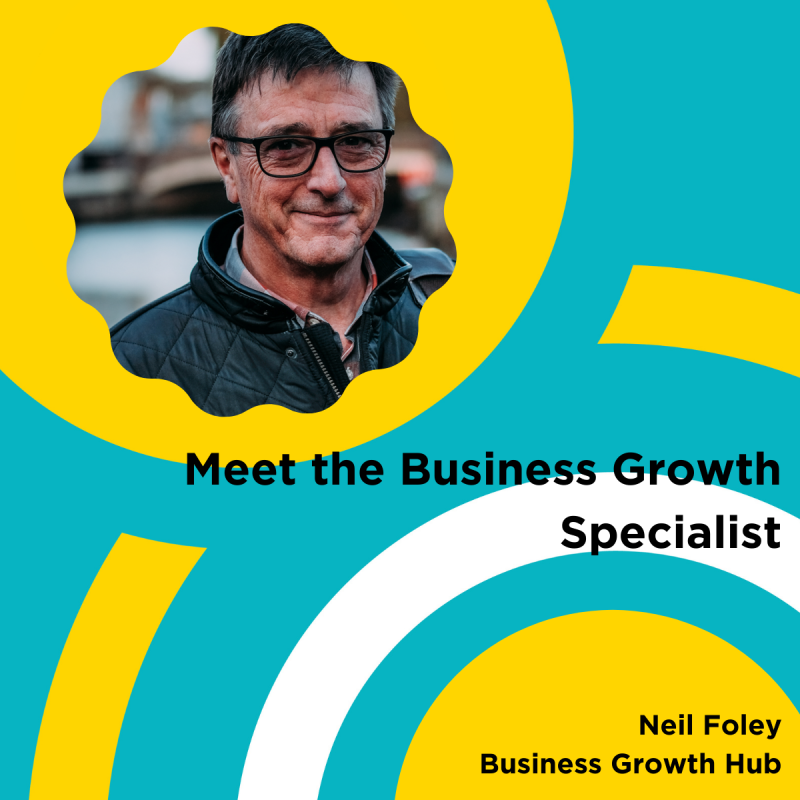
Neil founded the Business Growth Club 10 years ago, with the aim of sharing his knowledge and experience gained over a life time in business and sales.
Aimed at small business owners who have to grapple with competing tasks, his practical down to earth approach has helped hundreds of companies grow and thrive.
He’s often quoted as saying the only advantage to getting old, is he’s gained more knowledge and experience!
With over 25 years’ experience in leadership and management, Alex Sellers is now a Director of Turning Factor and thrives on sharing insights and helping people and businesses develop to reach their full potential. He has line managed lots of teams and lots of people!
Our Vision is to be the first port of call for our clients to solve the everyday challenges that arise with people and business at the highest level, both locally and globally.
Effective leadership at all levels is the differential in the most successful organisations. Good leaders can inspire, drive, co-ordinate, engage, empower and enthuse their followers to great things. The followers become the leaders and the cycle continues. It stands to reason then that the impact of poor leadership on organisations is dramatic and costly.
So what is leadership? What does it mean to be a leader? How do we change? What skills do we need to nurture and develop our people? How can we encourage and grow leadership in our organisations?
Get in touch to discuss the answers to these questions and more and see how we can develop your people to develop your business
Business owners and leaders are constantly learning new things and as a relatively recent business owner I am no exception. I am always seeking advice, and trying to find the best people to help me make the business a success.
A great example is marketing. Coming from a technical and consulting background, this is not really my area of strength. Don’t get me wrong, I’ve picked up a lot over the years, and I’ve managed, through luck or judgement or some combination of both to do enough to get the business into a pretty good place in our first three years. But when it came to the point where we decided to put some real focus on our marketing, I wasn’t really too sure where to start.
Clearly there are many aspects to marketing a business, whether you’re new or established. I knew I needed some help, but to whom should I turn? Should I employ someone, or use an agency? Should I look for a generalist, or a specialist (or a number of different specialists)? I know that I prefer working with specialists, but if I pick a specialist in one area, am I neglecting other important areas?
The problem, for me, was that not having sufficient experience or knowledge of the area that I needed help with, I wasn’t sure how to articulate exactly what help I was looking for.
I didn’t know what I didn’t know.
Fortunately, I managed to find my way through this with some advice from friends in the field, and some trial and error, and I’m confident that we’re now on the right track. However, if there had been a course or workshop that I had come across that would have helped me figure out the key areas that I needed to consider, key questions to ask myself and guide me towards some priorities, I would definitely have jumped at that. I’m sure they exist; I just didn’t find them.
When it comes to Cyber Security and managing the risks to a business, I frequently see exactly the same scenario. Business owners, and senior management teams know that their business is at significant risk from Cyber Attacks, ransomware, email-based fraud and similar, and many know they need help. Their IT department, or external IT provider looks after some of the technical aspects of security but they’re often not specialists in security – they’re typically more focused on keeping the lights on and implementing new technology to help the business stay ahead. Rightly so. The owner, or leadership team, however, has this nagging feeling that they should definitely be doing more. They know they need some help.
The point of the one-day training workshop is not to make you a security expert. It’s not designed to scare you into buying services from us (although it might scare you a bit). It’s purpose is to help you understand what you don’t know – what’s important, what to look at and prioritise when it comes to security, and where to go for help that you can trust. But it’s more than just telling you.
Yes, we provide you with lots of information, all geared towards owners and senior management teams, but it’s a bit of a whirlwind “voyage of discovery”. Through carefully designed exercises and discussions, we’ll help YOU discover how to determine what is important to your business, how to assess risks and impacts in a security context, and how to build a strategy and plan to improve security and reduce business risk.
Want to find out more? You can contact us to talk through your needs or alternatively go online and book yourself on to the next available course.
NatWest Business Builder: Building a growth mindset
Being in business means taking risks, but how do you assess them and what’s the payoff? Four entrepreneurs reveal their biggest gambles.
“I turned down half of our business revenue”
Pete Campbell was just 25 when he started his PR and SEO business Kaizen in London. Within 18 months the business was turning over £250,000 and employing five people, with half of that revenue coming through the agency’s white label SEO services. And then everything changed: Pete decided to stop offering the SEO service that had been so valuable to the company.
“I was basically helping other people grow their marketing agencies rather than building my own empire, and I’d started the business to become a leader in the Digital PR SEO space in my own right,” says Campbell. “Also, our profit margin on direct clients at the time was circa 30% versus 10% on outsourcing. I decided we could double our day rate to make up for the potential revenue loss we’d face in the short term.”
What followed next were some “awkward” conversations between Campbell and his clients and a company strategy day where he outlined the business’s long-term vision to the team. The risk paid off: “We actually recouped our potential loss in three months and exceeded our initial revenue targets.”
Today, Kaizen employs 21 staff members, and projects a £1.2m turnover for 2018. “I can trace this increase back directly to the risk I took three years ago,” says Campbell.
“I sold my house and set up a factory”
Within three years of launching Nim’s Fruit Crisps from her London home, Nimisha Raja’s fruit snacks were being manufactured in Hungary and stocked in Harrods, Selfridges and Planet Organic. Yet despite the success, Raja was ready to give up the business and cease trading entirely.
“I started to get the odd complaint about the crisps being soft so I monitored it and decided that the products were not consistent and the quality not always as good as I wanted,” says Raja. “Plus, the cost of third-party production, packing and distribution were just not viable given I wanted Nim’s to be an affordable healthy snack.”
After some deliberation Raja decided to keep going by selling her house and setting up her own factory in Kent. “I met someone at a trade show who told me that Kent Council were great at offering grants to manufacturers, I then spoke with a friend of mine who said he’d also invest in the business.”
It was the right move. Raja has since secured deals with Tesco, Co-op Food and Ocado and now exports to 11 countries. She remains cautious, however. “By setting up the factory, everything I’d ever worked for all my life was at stake – and to some degree it still is!”
“I can trace this £1.2m turnover back directly to the risk I took three years ago”
Pete Campbell, founder and CEO, Kaizen
“I joined a UK start-up from Canada”
Serial entrepreneur Sarah Botham was living as a temporary resident in Canada when a former colleague offered her the role of chief operating officer at Reconfigure.io, a recently launched cloud computing company based in the UK.
“It was a risky position to be in at the best of times,” she says. “I had no safety net if Reconfigure.io were to fold, only some depleted savings. On the other hand, if I were to keep my job with a Canadian company I’d have had access to healthcare and all the other good stuff most people take for granted.”
Having worked with the firm’s CEO at a previous start-up, Botham decided the risk was worth it and joined the firm remotely in 2017 as one of five co-founders.
“I knew right from the off that I wouldn’t take home a lot of money in the first year. I worked full time, on a very part-time salary, and made up the rest of my budget with my savings. In the first year I took home less than £10,000.”
Currently in beta, the tech company is growing steadily and the team hope to raise £1.5m by the end of 2018.
“Your job should never just be a job, it should support the kind of lifestyle you want,” says Botham. “If I was too worried about what I could lose, I wouldn’t have had a very interesting life by this point.”
“I risked everything to go on The Apprentice”
Joseph Valente was just 22 when he founded his plumbing business, ImpraGas in 2012. Three years later he joined the 11th series of Lord Sugar’s TV show The Apprentice, and was told he’d have to leave his firm completely for up to nine weeks.
“Everything was at stake,” says Valente, whose business employed seven people and served 2,500 clients at the time. “My business, my relationship with my team, my pride. But part of being an entrepreneur and business owner is knowing when you need to jump, when the right time to take a risk is and when to measure out if it’s worth it.”
Valente’s self-belief paid off and he went on to win the show and the £250,000 investment from Lord Sugar, helping propel ImpraGas to a turnover of above £2m.
“First and foremost, risk is essential to building and growing a business,” says Valente. “Create a name for yourself as an entrepreneur who takes risks by staring fear in the face, and doing the things your competitors aren’t willing to do – that will grab the attention of the people who can support you.”
There’s a myth that there is alot of guesswork involved in starting your own business.
Is it true?
The breezy, slick stories we hear about famous entrepreneurs can make it seem as though success is something you achieve simply by working hard, then leaving the rest to fate.
But as someone who has started several businesses in the past – with varying degrees of success – I know there’s no substitute for planning and guidance.
I just wish I’d learned that lesson sooner!
One of the reasons I became a Business Mentor is because I know how it feels to start out with nothing but a big idea, a thirst for hard work, and a bucketload of passion.
More importantly, I also know from hard-won experience how to turn all that into a profitable business. It’s why I now spend my days working with fired-up solopreneurs and side-hustlers.
My mission is to provide them with the tools, methods, and support they need achieve the success they dreamed of when they made the brave, life-changing decision to go it alone.
I’ve made a bold statement with the title of this blog, saying that Solopreneurs and Side Hustlers need a Business Mentor. So let’s get down to some of the nitty-gritty
What Is a Business Mentor?
The origin of the word ‘Mentor’ comes from the ancient Greek poem, Odyssey. In the poem Homer uses the word Mentor to describe the person who guides the young Telemachus into adulthood.
Since then, the word Mentor has evolved to mean someone who uses their wisdom, experience, and knowledge to guide others.
But a Business Mentor should not be confused with a Mentor. A Mentor will use their knowledge and wisdom to guide you though the pitfalls of life.
The role of a Business Mentor is specific. They will use their knowledge, skills and experience in business to help you successfully implement business basics, business development and business growth.
They will enable you to avoid business pitfalls and mistakes because they have had their own business(es) previously (and are probably running a Solopreneur, business Mentoring business when they work with you!)
Let’s face it: if you had to choose a Mentor to help you start-up or scale-up your business, would you want someone who is supportive and knowledgeable or someone who is supportive, knowledgeable AND knows how to start, run and grow a business?
Business Mentor versus Business Coach: Similar, But Not the Same
While you may hear the terms ‘Coaching’ and ‘Mentoring’ used to mean one and the same thing, there is a key difference between the two:
A Business Coach uses goal-setting and questioning techniques to help you develop your passions and ideas
A Business Mentor uses their knowledge and experience to help you turn your passions and ideas into a profitable business
The difference is subtle, I know.
As a Business Mentor I use coaching techniques with my clients because questioning and goal setting are a key element in a successful business.
However, it isn’t always possible for a Business Coach to provide business mentoring, because they may never have started and run a successful business of their own.
So, a Business Mentor can Coach; but a Business Coach may not have the skills and experience to enable them to Mentor.
Why Do Solopreneurs and Side-Hustlers Need a Business Mentor?
I describe my mentoring approach as “a brain to pick, an ear to listen, and a push in the right direction.”
Those things take on more importance when your business starts and ends with you, and even more besides, if it’s the first time you’ve ever set up a business on your own. Talking your ideas and concerns through with a Business Mentor who’s ready and willing to help can take the weight off your shoulders, and free up more of your precious time.
Here are some more benefits of working with a Business Mentor:
They will provide you with an ‘outside’ perspective
I describe this as the ‘helicopter approach’.
As a Business Mentor I want my clients to be successful; but it’s their business, I’m not part of it. This means I can take a long, hard look at the business in a very objective way.
As a solopreneurs and side-hustler, you have so much to do. It will be almost imporssible for you to step back and look at the big picture. You will always look at your business subjectively.
As a Business Mentor I provide objective insights, inspiring ideas you might not have thought about before, and help you identify exciting, new opportunities.
They will hold you accountable
You know those stubborn tasks you keep pushing to the bottom of your ‘To-Do list?
Well, a Business Mentor will help you get them done, once and for all.
I spend lots of time with my clients helping them set realistic and achievable actions. I bet your To-Do list is full of unrealistic and unachievable activities – which is why they keep being overlooked.
A Business mentor should also help you develop time management, prioritisation and delegation skills – so the right things get done at the right time by the right people (and those ‘people’ may not be you!)
They will save you time and money
The two commodities all Solopreneurs and Side Hustlers have the least of – time and money!
It may seem counter-intuitive, but although you pay for the expert support and guidance of a Business Mentor, working with one will actually save you both time and money.
A Business mentor will save you, as a Solopreneur or Side Hustler, from making costly mistakes while implementing financial management, time management and profit making activities in your business.
I always say to my clients that my experience stops them making the same costly mistakes I made when I started out.
I help them set up practical systems and processes that mean they can see where their time and money is best spent… so none of either is wasted.
They will support you through difficult times
Having your own business is never a life of champagne and roses.
Whatever type of business you’ve chosen to start, there will be plenty of challenges ahead.
On bad days (we all have these), you’ll question whether to keep going.
That’s when your Business Mentor will step in, with knowledgeable support, gentle guidance, and a listening ear that keeps you moving forwards.
They will widen your network
Any Business Mentor worth the name will network extensively, which means they’ll have a bulging list of contacts for just about every industry you can think of.
Not only will your mentor put you in touch with tried and tested ‘people-who-can’ to help with specific business areas, they can also recommend the best groups and events for you to meet more potential customers!
I Was Only Making Feeble Attempts. It Was Not the Cohesive Plan that Kathy Helped Create
I needed help to understand my business. I have no previous experience in this field and was really only making feeble attempts at it. It was not the cohesive plan that Kathy helped create. We outlined my business and how to approach my marketing. I now have more interest and engagement from the group people I want to sell to. I thought that was not possible. Now I actually enjoy doing it!
Working With a Business Mentor Is Your Shortcut to Success!
If you are a solopreneur, side-hustler or other single-person business you will always be at a disadvantage. There is only one of you, but there are a hundred jobs to do and a thousand decisions to make every day.
You have to do everything that a business that has ‘departments’ has to do… All by yourself!
With a Business Mentor in your corner cheering you on when things go right; helping you up when things go wrong and sharing their skills, knowledge and experience, how can you be anything but successful?
“I’m 29, so have I left it too late to be an entrepreneur?”
I saw this question recently when I was searching for something on Google. It made me take a deep breath and laugh because I am someone who started their first business at 40+. So, I felt the need to say out loud: “No, sweetheart, you definitely have not left it too late to be an entrepreneur!”
I’m a ‘Maturepreneur’ Business Mentor who works with freelancers, solopreneurs, and side-hustlers of all ages, helping them transform their big ideas into brilliant, profitable businesses.
But, because I choose to work with one-person businesses, people often make the mistake of assuming all my clients are thrusting young things… bright-eyed, vibrant millennials and Gen Z-ers who have the passion and energy to strike out on their own.
Heaven forbid you might want to start a business in your 40s. Meanwhile, if you’ve committed the heinous crime of being over 50, then isn’t it about time you donned a cardi and put those weary feet up with a nice cup of tea?
You Don’t Have to Be Young to Start a Business!
Despite the global media’s obsession with Silicon Valley whizz kids, it’s a myth that all new businesses are started by dynamic youngsters.
It’s a myth that most new businesses are started by dynamic youngsters.
In fact, the majority of UK entrepreneurs are in their 40s. The average age of new business owners is rising steadily year on year. According to the latest Global Entrepreneurship Monitor, “entrepreneurial activity among the over 50s has risen by more than 50% since 2008.”
We maturepreneurs aren’t just starting businesses, either. We’re busy turning them into success stories. For example, 70% of businesses started by the over-50s are likely to survive for at least five years. This compares to 28% of businesses started by the under-50s.
I’m not knocking youth in any way.
Young people have lots of offer entrepreneurship – they’re often enthusiastic, willing to learn, and tech-savvy.
I just think it’s high time society started to appreciate the immense value that older people can bring to the business table too. From life experience and self-knowledge to specialist skills that have taken decades to perfect.
Why Start a Business When Your are Over 40 (or 50!)?
There are all kinds of reasons why you might not be ready to start a business when you’re young.
It takes serious guts to turn your back on the 9-5, and if you’re not doing that armed with years of hard-won experience under your belt, going it alone can feel much more terrifying.
I was an overnight success all right, but 30 years is a long, long night.
Ray Kroc, Founder of McDonald’s
Ray Kroc spent over 17 years working as a salesman when in 1954, and aged 52, he sold 8 milkshake mixers to Dick and Mac McDonald. The brothers were running a small burger restaurant together. Ray saw an opportunity to turn their simple, high-quality menu into a nationwide success.
With the brothers’ agreement, Ray founded the McDonald’s corporation in 1955. By 1958 McDonald’s had sold its 100 millionth hamburger.
Ray came equipped with plenty of imagination. All those years he spent at the sharp end of selling to lots of different businesses turned out to be a gift. Not only did they help him spot the vast potential in McDonald’s, but they also taught him how best to realise it.
Successful businesses are started by founders who spent years honing specialist skills and knowledge… like the brilliantly named Yes Yes Yes Company, which makes plant-based intimate lubrication products.
The company’s co-founder, Suzi Lennox, was in her late fifties when she decided to go it alone. She had been working at Pfizer when Viagra was launched, then spent the following years in Drug Safety divisions for pharmaceutical companies.
All that direct experience meant Suzi not only understood the need for her new company’s products and how to create them, but how to bring them successfully to market!
How to Start a Maturepreneur Business Yourself
It could be that your own route to maturepreneurship begins by accident (like mine). My clients start working with me because they’ve been made redundant, or been ‘persuaded’ to leave their jobs. Many say “It’s now, or never!”
With extra time on their hands, they’ve suddenly spotted a business opportunity using their experience, or from a hobby.
If that describes you, but you’ve got no idea how to turn your brilliant idea into a business, the good news is there’s plenty of help available.
Sites like Enterprise Nation offer a wealth of support to new business founders of all ages. While The Start-Up Loans Company has been busily helping founders in their 50s and over with low-interest loans.
So, to summarise, it’s more than possible to be a success in business, regardless of your age.
NO, you haven’t left it too late to become an entrepreneur!
If you’d like to discuss turning your own ideas into a profitable business, I can help you formulate a plan of action that draws upon over 20 years of personal ‘been there, done that’ experience.
Working for yourself is a life-changing decision, so having a clear picture of the steps you need to take to start a business and become self-employed is essential.
I know that because I’ve been there myself (many times!)
I became a Business Mentor because I understand EXACTLY how exhilarating it feels to say goodbye to the 9-5, armed with a brilliant idea and a headful of dreams.
But I also understand the fear, uncertainty and lack of practical knowledge that is often involved in going it alone.
I’ve Never Had a Business Before and I Don’t Want to Do It Wrong!
If you’ve never started a business before, how can you be sure your idea is good enough to pay the bills? What happens if it turns out self-employment isn’t for you, after all?
You know it’s possible to make a go of it and succeed. Nearly 4.5 million people in the UK are currently self-employed, and you probably know some of them!
But right here and right now – at the start – it can like you’re standing on the edge of a cliff.
Leap and the net will appear
This is a popular saying in business, and most of the time it’s bang on for seasoned business people.
But, when you start a business and become self employed for the first time, you want to see that net before you take that leap.
That’s where preparation, planning and some basic business start up know-how comes in!
How Do You Become Self-Employed?
From a practical point of view, self-employment in the UK is as easy as telling HMRC that you’re working for yourself.
Part of the process involves registering for Self-Assessment, which is how you (or your accountant) will calculate and pay your annual tax bill.
Sole Trader Or Self-Employed – Is There A Difference?
Self-employment means you decide what work you’ll do, and how and when you’ll do it. You are also completely responsible for the results.
You are not entitled to sick or holiday pay. However, you can choose your own working hours, and you will work for more than one client (so if you need to take a morning off at short notice, or ditch that client who never pays your invoices on time, no problem!)
If you’re a sole trader, then you’re a self-employed person who is the sole owner of your business.
Sole traders can work as consultants, plumbers, graphic designers, coaches, virtual assistants, online shop owners…. just about any type of business goes.
To summarise, ‘sole trader’ describes the legal structure of your business, while ‘self-employed’ means you don’t work for an employer.
There isn’t a huge difference between the two terms, which is why they are so often used interchangeably. Self-employment doesn’t automatically make you a sole trader.
You could choose to set up a partnership instead, so you and someone else share equal responsibility for the business, or register as a limited company.
Sole Trader vs. Limited Company
Unlike a sole trader or business partnership, a limited company is a separate legal entity from its owners – even if that’s just you.
Your company will have to be formally registered at Companies House. Also, your personal finances and assets are not counted as part of the business.
You will have control over your business name. Once it’s been registered, nobody else will legally be allowed to use it!
Many new business owners start out as sole traders, then switch to limited companies later, as they become more successful and their profits increase.
What Other Self-Employment Responsibilities Should You Focus On?
I know… I know… you were hoping to move onto the more exciting parts of self-employment by now!
Things like designing a fancy website, how to chat with customers on social media, or where to find the best networking events with free snacks and coffee.
Self-employment has a list of responsibilities. Too often, people overlook them because they’ve been distracted by all that fun, frilly stuff!
The good news is that if you take care of those responsibilities right from the start, there’s much more scope for you to relax and enjoy yourself later on.
They include:
Opening a business bank account. If you’re a sole trader you can use your personal account for business, but do you want to? It will be so much easier for you to manage your year accounts if all your business transactions are in a separate bank account.
Organising the right insurance for the type of work you want to do. This can include policies such as professional indemnity, public liability insurance, product liability insurance, critical illness insurance etc.
Deciding how you’ll keep accurate and up-to-date financial records.
You may also want to think about registering for VAT. You can do that voluntarily at any time. However, you must register if you expect your business turnover to be more than £85k a year (well, we can dream!)
Ultimately, Business Is A Practical Process
After years of stops and starts, it wasn’t until I focused on planning, systems, and processes, that my self-employed business finally started moving in the right direction.
You have to be prepared prepared to roll your sleeves up, learn the mechanics of business. You have to pay attention to what’s going on behind the scenes – not just the glitzy stuff at the front – then your chances of success will skyrocket.
As a highly experienced Business Mentor, I will help you focus on what really matters. This means you can take that brilliant idea of yours, and turn it into the successful business you deserve!
Find out more by booking a half-hour, complimentary Breakthrough Session now
If you’re a Solopreneur, then the chances are you enjoy all the thrills and spills that come from going it alone in business. (The clue’s in the name… ‘solo’-preneur!) But there comes a time when you want more … time, money, clients, recognition. What do you do then? How do you scale a Solopreneur business – when your business is just you?!
Solopreneur
/ˌsəʊləʊprəˈnəː/
noun
a person who sets up and runs a business on their own
As a Business Mentor who is a Solopreneur, and someone who’s been there, done that, and wears the T-shirt to prove it, I understand how exciting it feels when you take charge of your business destiny.
But I also know how it feels when you hit a plateau.
So, let’s go back in time for a moment.
You bravely turned your back on the 9-5 and launched your business in a blaze of glory. Armed with a brilliant idea and a bucketload of passion, you weren’t sure if you’d be a success or a failure… but you were determined to give it a good go!
Now, after a LOT of hard work, late nights, and missed catch ups with friends, you’re the successful Solopreneur you always dreamed about being.
As such, everything is ticking along just fine – but that’s not good enough anymore!
It’s time to take your business to the next level.
But if you’re anything like I was at this point, you’ll have identified three issues.
One: you’re not exactly rolling in cash
Two: you don’t want to give up that precious freedom you’ve worked so hard for
Three: you never want to hire and manage staff
Here’s why scaling your Solopreneur business for growth doesn’t have to mean investing piles of money you haven’t got… or building a world-dominating empire that means recruiting vast teams of people.
So, want to know how you can grow and scale your Solopreneur business? Here are eight proven ways that keep you solo and firmly in the driver’s seat.
1. Outsource
You know those jobs you hate, but you keep on doing because it’s YOUR business?
Things like writing and scheduling endless blog and social media posts, managing your business accounts, and making sure your website is up to date.
Outsourcing to professionals who love the jobs you hate will give you time to work on a plan that focuses on growing your business, rather than dealing with distracting day-to-day tasks.
(Let’s be honest, it’s also likely those pesky jobs will be completed to a higher standard than if you’d completed them yourself!)
2. Invest in a CRM
Growing and scaling a business effectively means getting organised.
Investing in a CRM (Customer Relationship Management) system will help you manage your customer data in a way those paper lists and Excel spreadsheets just aren’t capable of.
With a CRM you will be able to store messes of data such as, user behaviour, how long a customer has been with your business, purchase records, and notes on sales interactions, which you can use to optimize your sales and marketing processes and improve customer service across your organization.
customer behaviour
how long a customer has been with you
how often a customer contacts you, engages with you or buys from you
purchase records
notes on sales and interactions
With all this information you will be able to make informed decisions which means you which you will be able to optimise, automate and streamline your sales and marketing processes. This will help to improve your customer service and increase your sales.
Both essential if you are looking to grow and scale your Solopreneur business.
There are lots of CRM options available. Two of my favourites are the freebie from Hubspot’s and the really cost-effective one from Capsule.
Make sure you do some research into the best CRM for your business.
3. Productise Your Business
Don’t worry if you don’t know what ‘productise’ means!
It’s a word I made up to describe how you can make tangible ‘products’ to sell when your business usually involves exchanging time for money.
The problem many service-based Solopreneurs face is how to grow and scale their business when – essentially – they sell time for money.
If you’re a Coach, a Consultant, a Personal Trainer, a Therapist, a Copywriter, an Accountant etc it may seem that the only way you can scale up is to work more hours, charge more per hour / per project or to bring in a partner or staff.
Any one of those things will change the nature of the business you have built and love.
But there is the option to ‘productise’.
An example of the introduction of physical products could be that of one of my clients, She is a massage therapist; a hands-on, treatment-based business. Because she can only physically work with around six people every day, her turnover is limited. Limited by the number of hours per day and the number of days in the week she works.
However, if she ‘productises’; selling sleep masks, scented candles, or pillow sprays at the consultation or via her website, she can increase her income.
[BTW: I think she should increase her prices too]
But what about if you don’t have the kind of business that would work easily alongside additional products like these?
You could:
Create a course
Write a book
Have a subscription-based Group on Facebook
Work with a group of people rather then one-to-one (one hour x 10 people is more cost-effective than 10 people x 1 hour each!)
If you want ideas about how you could Productise your business, let’s talk
4. Automate Tasks
The less you have to do of the daily grind, the more time you will have to spend with the customers who pay you – and more customers means business growth and scale.
This is why automation is a godsend for any business. It takes repetitive tasks off your hands, seamlessly running them in the background for you!
Do some research into the tasks that could benefit from automation in your business. For example, you could set up an automated email series for people who sign up to your mailing list, invest in an accounting software package, automate your customer appointment bookings or pre-schedule social media posts for certain days of the week.
Every five minutes you don’t have to spend on these tasks is five minutes you can spend with someone who pays you.
5. Maximise Your Email List
If you haven’t built an email list yet, why not?
Here’s a guide to getting going with building your list
The return on investment for email marketing is estimated at £42 for every £1 you spend – and since some platforms (like Mailerlite) are free to start with, you may not even have to spend that!
Entice people to sign up to your list by creating an enticing lead magnet (check out the ones I have included on my Business Toolkit page), then use your subscriber data to send targeted messages with information and offers they’ll appreciate.
6. Build Your Personal Brand
Far more than just your logo, your personal brand encapsulates everything people see, hear, think, and feel about you and your business.
Your personal brand is built around your values – so make sure you understand what these are, and how best to explain them to your customers.
If you struggle to define your values, you could start by thinking of five words that best describe your approach to business (fun, confident, reliable, etc.!)
7. Spend, Spend, Spend
OK, I might have got a little carried away.
But there’s no escaping the fact that a successful business costs – as well as makes – money.
The secret is to spend wisely, on the tools, tech, and expertise you’ll need to facilitate successful business growth.
This includes outsourcing and automation, plus marketing, memberships, and training to keep your skills fresh (and your business competitive.)
8. Review and Reflect (With a Helpful Mentor!)
It’s no secret that planning is an essential ingredient for success (I call it the link between passion and profit!)
But there’s no use coming up with a brilliant business plan… that you never look at again.
You’ll only know if things are going according to plan – and how you can adjust your goals for future growth, if you review and reflect on your results.
As a highly experience Business Mentor who specialises in working with one-person businesses, I will help you get to grips with what really matters, so you can roll up your sleeves and get stuck into those plans for the growth and scale your Solopreneur business deserves.
How to Start a Business (When You’re Working Full-Time!)
Kathy Ennis, LittlePiggy
If you have ever said “I’d love to start a business, but I can’t because I’m working full-time” ask yourself, are you using your job as an excuse not to go for it?
As a Business Mentor, who has a specialism in helping people transition from employee to entrepreneur, I can tell you:
You’re not alone in wanting to make the transition
You can start the business you want while you are working full-time
Start a Business When Working Full-Time? The Statistics Speak for Themselves
Most employees in the UK have thought about starting a business at some point or another (me included!). A recent survey claims that 64% of the UK workforce is itching to strike out on their own.
If you add to that research by the Henley Business School , it shows that 25% of all adults in the UK are side hustlers.
Side Hustling is the New Normal
The idea of self-employment is scary.
OK, so you’re following your passion, but what happens if things don’t work out?
Happily, there’s no need to say goodbye to full-time employment just yet!
Striking out on your own doesn’t have to mean turning your back on the (relative) security of a full-time job. There are ways to test out that brilliant business idea and grow your entrepreneurial skills, all whilst keeping up with the 9-5.
It’s called a side hustle. It’s starting a business while you’re working full-time.
And here’s how you can do it….
Manage Your Expectations
If you start a business when you’re working full-time don’t expect it to be a breeze.
First, if you think you haven’t got a lot of free time as an employee, think about how much less time you will have an an employee and an entrepreneur. By accepting the fact that it WILL be challenging and time-consuming from the start, you’ll be better prepared for the highs and lows to come.
Second, if you’re counting on your side hustle bringing in shed loads of money from day one – enough to allow you to wave goodbye to your full-time job within weeks or months – please be aware that it probably won’t.
Use the Time to Plan, Make Mistakes then Plan Again
Starting a business you’re working full-time takes careful and detailed planning.
Planning your time will be paramount. You will have far less time than a full-time entrepreneur to do all the things that will need to happen to turn your idea into a business – and then deliver those products or services to your customers.
You will also need to plan your spending. Starting a business can be done without masses of expenditure, but it can’t be done for free. So you will need to plan carefully how much money are you going to spend on start-up costs, like website design and marketing?
What about planning for the type of customers you want to buy your products or services? Who are your customers going to be, and why will they buy from you? How are you going to deliver your products or services to them?
You don’t have to write a lengthy or complicated business plan, but you do need to answer important questions like these. They will help you gain a full understanding about how your business will work, and how you could eventually transition from employee to entrepreneur.
Once you’ve written a detailed plan, you’ll then need to schedule key tasks, and track your progress regularly.
Want some help with simple plan for your business?
The One Page Business Plan: From Surviving to Thriving in 12 Easy Steps
Not every business owner needs a business plan. But every business owner does need a plan for their business. This is the only one you will ever need.
What’s involved in a big, shiny, ambitious business launch?
Lots of:
Time
Effort
Money
People
If you’re starting a business while you are working full time, you are doing two things: creating something that will enable you to move into running your own business full time AND taking the time to test your ideas without as much risk. So, it’s absolutely fine to start with something very simple and work your way up to something bigger, better and bolder over time.
It’s fine to dream, but when you’re launching a business while working a day job, you probably shouldn’t go too big.
At least, not for now…..
Do What You Do Best and Outsource the Rest
You don’t have to do everything yourself.
In fact, for the sake of time, sanity’s and a successful business I absolutely recommend that you don’t.
There is no rule that says that as a one-person, solopreneur, side hustle business that you have to be expert in everything about business. It’s also a really bad idea to try to be that idea of the ‘perfect’ business owner who knows, understands and can do everything themselves.
That person does not exist and if anyone tells you they do – and that you can do it all on your own – well, to be blunt, they’re a liar.
The best way to get your business quickly off the ground is to invest in other people’s time and professional expertise, whether you hire a social media expert to work on your posts or use an accountant to plan your finances.
Not only will this allow you to focus properly on your business (rather than in it), but using experts means tasks will be completed to a high standard… definitely higher than you (as an enthusiastic amateur) would have achieved yourself!
So, When Is the Right Time to Leave Your Full-Time Job?
If things start going to plan with your new business, it’ll be easy to let your current career slide.
You may have a healthy customer list, you could have found an investor, maybe you’ve got the equipment and you have developed a fantastic set of new skills that will make your venture a success… you’re doing so well that you’re convinced you’ll be the next Forbes success story!
I’m not saying you’re wrong.
But before you take that last step off the side of the cliff and tell the boss goodbye forever:
Take some self-reflection time so you can be sure that, as far as possible, self-employment is the right long-term move for you
Triple-check that you can afford to leave work
Do your best to hold out for any redundancy or ‘goodbye’ money that might be up for grabs
Ready to Take the Plunge and Start Your Business When You are Working Full-Time?
I can help you start your brand-new business, providing an experienced brain to pick and an ear to listen along the way! If you fancy a chat about how I can help you, the way I have helped hundreds of others just like you, book yourself a complimentary Breakthrough Session.
Or, why not download my Prepare to Be Your Own Boss toolkit?
Prepare to Be Your Own Boss: How to Start a Business the RIGHT Way
Starting your own business is ridiculously simple – but starting is only the beginning. Starting is easy. Making it work? Now that’s a whole different story.
Sticking my flag firmly in the sand (and to shouts of “NO!” from some quarters), I am going to say freelancing is a business – and I’m going to tell you why.
Answer me this question:
What’s the Difference Between a Business Owner and a Freelancer?
(No, that isn’t the beginning of a joke!)
The answer is simple.
Nothing.
I’ve read so many articles about the supposed differences between freelancers, business owners and the self-employed. There has been so much coverage that readers could be forgiven for assuming they are all completely different to each-other.
But if you ask me, all those articles seem a bit unnecessary.
The only good they do is to stir up confusion amongst people who decide to take the plunge into self-employment.
For example, I recently read a piece about the difference between having a business and being a freelancer that was written by a business coach.
The business coach wrote “I am a self-employed business owner, but I outsource tasks to freelancers” – almost as though freelancers are a sub-species!
Clearly, this person felt they could describe their coaching services as a business, because they outsource to freelancers, who – in their opinion – do not own businesses.
But, tell me, what is the difference between a self-employed business coach and, say, the highly qualified freelance graphic designer they’ve just outsourced their logo design to?
What Do the Experts Say to the Question ‘Is Freelancing a Business?’
Who better to ask if freelancing is a business than the organisation responsible for the taxation of businesses in the UK?
Her Majesty’s Revenue and Customs.
According to HMRC, both the business coach and the graphic designer own a business.
In fact, that coach’s peculiar quote made me think of the ‘sniffy’ differences that are often drawn between academic and technical education.(Or if you prefer a funnier example, the famous Class comedy sketch, featuring John Cleese and the Two Ronnies!)
As a Business Mentor, new clients often ask me if they should refer to themselves as a freelancer or a business owner.
My answer is always the same; freelancing is a business, so a freelancer is a business owner.
Want some proof? Here’s a simple ten-point business checklist. All ten criteria apply whether you use the term freelance, solopreneur, consultant, coach, self-employed, side hustle, business owner …..
1. You Need to Know and Understand Your ‘Why’
Lots of questions start with “why” when you work for yourself.
The biggest are why: me; now; this business?
You also have to be able to answer why have you chosen to do things in this particular way.
Working for yourself can also feel isolating, so understanding why this business is so important to you will help to make it all worthwhile – particularly on ‘down’ days (which we all have from time to time!)
2. Your Business Planning is Crucial
For any successful business – regardless of size – the link between passion and profit is planning.
That means setting and reviewing clear, achievable objectives and targets that help you understand how your business is performing, and where you’d like it to be in the future.
3. You Have to Measure Your Results
In other words, you can’t just work hard and hope for the best.
There’s a famous saying that goes, “you can’t manage what you don’t measure”, and it’s a famous saying because it’s true.
If you don’t track and measure your business results, you won’t know how well or badly things are going. This means making future decisions will be much harder.
For example, if you know a particular product or service isn’t selling well, you could decide to make some changes, or ditch it altogether to focus on your top sellers.
4. You Have to Submit Annual Accounts
As I mentioned previously, HMRC makes no distinction between a freelancer and a business owner.
A freelancer can work as a sole trader, a limited company, or a business partnership, and they are expected to submit their annual accounts – and pay tax – accordingly.
If you don’t, there will be penalties…regardless of how you choose to describe yourself!
5. You Have to Make a Profit
Making a profit doesn’t just prove that you have a successful business, it means you’ll get paid for your hard work!
Profit will also allow you to grow your business into something bigger (if you want to) and afford to outsource some of those tasks that you either don’t like doing or those that need a level of expertise.
This brings us on to…
6. You Don’t Earn? You Don’t Eat!
You are self-employed, which means you’re responsible for paying your own salary.
And, like every business owner, you don’t qualify for sick or holiday pay – unless you’ve decided to put some money aside, or taken out insurance – to cover them yourself.
7. You Have Customers
Whether you call them customers, clients, or contracts – without them, you don’t earn money. With them, you have a business.
The other clear sign that customers is a good indication of whether you are a business or not is that you also have to:
Constantly find new customers
Nurture them
Do your job well for them
Make sure they pay you
8. You’re Responsible for Your Own Marketing
Finding the right customers means marketing yourself, and the products or services you offer.
This involves activities that allow people to find and get to know you. This can include setting up a website and social media pages, attending network events, building an email list…. And the list goes on.
9. You Have to Accept Taking and Managing Risk – It’s a Given
Running a business means every action comes with certain amount of risk.
I have seen too many business owners suffering from the paralysis of perfectionism – that great catch-all excuse for not ‘doing’ because it can’t be done until it’s perfect.
Nothing is in life certain. Even crossing a road comes with a certain amount of risk. It just happens that, in business, we have to make so many decisions – daily – it seems like every step we take has risks attached.
However, if you take a leaf out of the book of some famous, ‘risk-taking’ entrepreneurs – they all have a secret. They aren’t risk takers at all. They constantly measure, analyse and evaluate so that they can manage the potential risk involved in every move they make.
They keep up with things like trends, market changes, and competitor activity, so what seems like flying by the seat of their pants is actually a carefully calculated decision.
10. You’ve Got to Take Charge of Your Own Personal and Professional Development
When you work for yourself, there’s no swanky learning and development department, ready and waiting to book you onto an all-expenses-paid course!
On the flip side, neither will you have to sit in a draughty training room, learning skills you know you’re never going to use.
However, to stay competitive, every business owner has to continuously update their skills and knowledge, perhaps by taking on bigger and more in-depth projects, or by doing some focused training in different areas – the good news is, you get to decide!
Use Any Adjective You Want to Describe Yourself – You’re Still a Business
However you choose to describe yourself, if you’d like some help setting up or growing your business, this is how I help.
You can also arrange a complimentary, half-hour Breakthrough Session to talk through your ideas, challenges or concerns in more detail!