Innovation and Growth

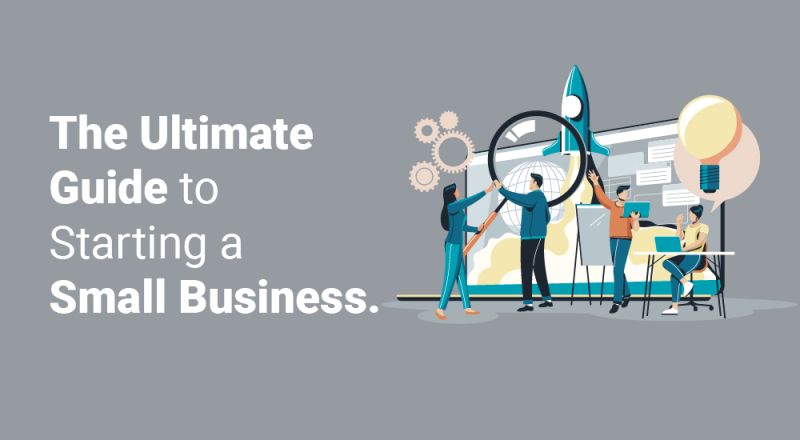
The Ultimate Guide to Starting a Small Business from Scratch

Profitable Adventure
Being self-employed and starting your own business is something that a decade or so ago was not very common. But today, many people are turning their hobbies into careers and starting their own businesses. This is often as a side hustle alongside their main full-time jobs.

But a lot of people who have worked in a specific industry for a long time decide to go their own way and start their own companies. Starting your own business is a bold and exciting endeavor, but it can also be difficult and overwhelming. So, to help you get started here is the ultimate guide to starting a small business. 

Are You Really Prepared to Start a Business?

A lot of people have fancied themselves not cut out for the average nine to five, and would love to try out something both mentally and physically rewarding, not neglecting the financial aspect. Being your own boss, having flexibility with your schedule and keeping more of the financial rewards that come with business ownership, are all good reasons to own your own company.

“It is always the start that requires the greatest effort.” – James Cash Penny

“Building Oracle is like doing math puzzles as a kid.” – Larry Ellison

But a lot of would-be entrepreneurs get to find out along the line that it is not all roses, and that their projections are way off the mark. According to the Small Business Association, two thirds of all startups survive at least 2 years and approximately 50% of these startups survive up to 5 years.

“Success is a poor teacher. We learn the most about ourselves when we fail, so don’t be afraid of failing. Failing is part of the process of success. You cannot have success without failure.” – Rich Dad

One of the reasons why businesses fail lie in the planning and execution of such venture. There are so many things you have to consider from coming up with an excellent idea to registering a company, all the way to business planning, fundraising and much more.

“The business empires built by successful entrepreneurs were erected on the foundation of past failures.” – Ajaero Tony Martins

a) Thomas Edison failed 10,000 times before he invented the incandescent bulb and he went on to build General Electric (GE); one of the most powerful companies in the world. This is what he has to say;

“I have not failed. I have just found 10,000 ways that won’t work.” – Thomas Edison

b) Henry Ford had two business failures and with the experience gathered from those business failures, he went on to build Ford Motor Company and became one of the richest men in history.

“Failure is just a resting place. It is an opportunity to begin again more intelligently.” – Henry Ford

C) Sir Philip Green had four business failures before he hit his first million at the age of 33.

d) Robert Kiyosaki had a major business failure when his Nylon and Velcro wallet company crashed; and with the experience from this failure, he went on to build the Rich Dad Company.

“Losers quit when they fail. Winners fail until they succeed.” – Robert Kiyosaki

“I can accept failure, everyone fails at something. But I cannot accept not trying.” – Michael Jordan

Making Your Dream a Reality

One of the best things about starting your own business is that you can do whatever you like. Whether your passion is fashion design, illustration, or fixing cars, you can start your own business. You have very likely been dreaming of doing this for years and are finally ready to take the plunge and are trying to do as much research as possible.

This is very sensible as, although there are a lot of fun and exciting parts to starting your own business, there are also lots of serious (and kind of boring) parts as well. A lot of the serious stuff comes down to paperwork and making your business dreams into something real and professional. The best way to do this is to work on making a business plan and doing as much research as possible. 

Steps to Starting a Small Business from Scratch

1. Why Do You Want to Be an Entrepreneur?

“I built a conglomerate and emerged the richest black man in the world in 2008 but it didn’t happen overnight. It took me thirty years to get to where I am today. Youths of today aspire to be like me but they want to achieve it overnight. It’s not going to work. To build a successful business, you must start small and dream big. In the journey of entrepreneurship, tenacity of purpose is supreme.” – Aliko Dangote

Starting a business is a process that requires an enormous amount of thought and careful examination. First, you need to find out why you want to be a business owner. Are you genuinely interested in running a business or are you just trying to follow a fad?

Before you start a business, you should be absolutely clear about why you are doing it. That may sound obvious, but there are actually many reasons why someone should choose to turn their back on the security of a job and career for the uncertainty of starting a business. So the clearer you are about what exactly you are trying to achieve, the better chances you have of achieving it.

Next, take a good look at your strengths, weaknesses and skills. This will allow you to start thinking about what you can do and what you cannot do. It is important to start here even if you already have world’s best business idea, because you might not have the skills or personality traits to enable you to make it into a successful business.

“The height attained by great men is not by sudden flight. For while their companions lay asleep, these men were toiling in the night.” – Anonymous

You may be good at public speaking which can help when raising money, but bad at accounting which just means that you’ll need to find some kind of help with that area of the business. The crucial point is to understand yourself and your team, and if you are well suited to any business ideas, areas of business or specific types of business. It allows you to start coming up with ideas and narrowing down what businesses you could start.

Logic dictates that if you want a successful business then you should begin in an area that you already have a passion for. To start figuring out what businesses or areas of business you are passionate about, you need to start by thinking about the areas, activities, and things you are passionate about. That is, what interests you and what do you have strong opinions on, for example:

  • Someone who loves to hike might consider setting up a travel business.
  • Someone who loves Lego might think about a toy or construction business.
  • Someone who spent their whole life with a passion for music might start a company related to sound.

2. Read and Learn as Much as You Can

“I started and built a business from scratch. One thing I love about the entrepreneurial process is this; no matter my level of fame and success today, the thought of my early days in life, when I had nothing; will always keep me humble.” – Ajaero Tony Martins

Research is crucial when it comes to starting a business. So much can be learned and extrapolated from just a few hours of Googling, surfing the Internet or reading related business books. Do your homework thoroughly and you’ll be so much better off. In fact, it’s a necessary first step to determine the viability of your business idea.

It’s important to be honest with yourself. If it seems your idea has already been done, can you do it better or offer it cheaper than the competition? Ask yourself the hard questions and get feedback from associates and mentors. Anybody that neglects to do the ground work may likely find out too late that they have made an avoidable mistake.

3. Find a Mentor or Coach

When it comes to starting a business especially if you are a novice, one thing you should keep in mind is that you need help. By this help, we don’t mean financial. You can have a bag of money and still wreck your business. Right now, what you need more than anything else is the right kind of people to help you through the journey.

These people can be business mentors or even a business coach. Some entrepreneurs would decide to take on partners who would also play the role of a business guide or coach. If you start your company with co-founders, you should agree early on about the details of your business relationship.

Not doing so can potentially cause significant legal problems down the road. In a way, think of the founder agreement as a form of “pre-nuptial agreement.” Here are the key deal terms your written founder agreement needs to address:

  • How is the equity split among the founders?
  • Is the percentage of ownership subject to vesting based on continued participation in the business?
  • What are the roles and responsibilities of the founders?
  • If one founder leaves, does the company or the other founder have the right to buy back that founder’s shares? At what price?
  • How much time commitment to the business is expected of each founder?
  • What salaries (if any) are the founders entitled to? How can that be changed?
  • How are key decisions and day-to-day decisions of the business to be made? (by majority vote, unanimous vote, or are certain decisions solely in the hands of the CEO?)
  • Under what circumstances can a founder be removed as an employee of the business? (usually, this would be a Board decision)
  • What assets or cash does each founder contribute or invest into the business?
  • How will a sale of the business be decided?
  • What happens if one founder isn’t living up to expectations under the founder agreement? How will it be resolved?
  • What is the overall goal and vision for the business?
  • If one founder wants to leave the business, does the company have the right to buy back his or her shares? At what price?

4. Develop your Skills

Business skills are skills that help people understand consumer and organizational behavior and the ability to use this information to promote the success of the company. Business skills are often considered soft skills and may include team management, leadership and communication skills, sales and marketing skills, etc.

You need to develop a couple of these skills if you want to be successful with your business. This is because, as a startup, you may likely take up a lot of roles by yourself before you start making enough money to hire professionals. So you need to build yourself up in these skills before you think of starting your business.

5. Have a Clear Business idea

This is important for several reasons. One of the main reasons is it will help you secure funding. No one is going to fund a business that sort of has an idea that kind of might work. You need to find a gap in the market that your business will fill. 

You also need to be able to prove that you have the skills, experience, and know-how to not only set up a business but also build your business and help it to succeed. You need to plan beyond setting up the business itself and be able to plan for future growth. 

Coming up with a business idea can be difficult so don’t force it. You might want to work for yourself and be in control of your time and your own productivity, but this doesn’t mean that you should try and do just anything. Starting a business can mean becoming a freelancer in your field or starting to sell your crafts on Etsy. You don’t need to do anything outlandish or out there, just something that is viable and will attract a decent number of people. 

Finding Your Niche

6. Define Target Audience

Finding your target audience is really important. It’s nice to think that your product or service will appeal to everyone but that just isn’t the case. So you need to work out exactly who you will be selling to, what they want, how they will benefit from your product or service, and how best to market to them. 

This is called creating a customer persona. You essentially come up with the exact type of person who you think will be the most interested in your service or product. This will allow you to develop and market your product directly for the people who will want to buy it.

Developing a customer persona will also allow you to consider your service or product from the audience’s perspective. You will be able to get into the head of your customer and ensure you can understand what they would most want from you. You shouldn’t start a business for other people but it’s important to know who you will be buying from you.

7. Do Market Research

Market research is important for several reasons. The main reason is to know where your business will sit in the market, what service it will provide that is not already available, and how it will compare to competitors.  It is very difficult to come up with an idea that no one else has had, so you will likely always be competing with someone else.

But this isn’t a bad thing. You can create something, for example, a clothing range, which so many people have done before. But it needs to be different. It needs to sit within a specific style and have what is known as a USP, a unique selling point.

A USP will allow you to concentrate your ideas and keep them in line. As already mentioned, it is easy to want to do everything but this is not a good idea. Knowing what you can offer is essential to starting your business but you also need to know what you offer in comparison to other businesses. So researching what else is out there and understanding how you will stand out but also fit in alongside other businesses is essential. 

Just don’t get too hung up on what other people are offering. You don’t want to try to be so different from everyone else that you end up offering something that people don’t really want or need. Doing extensive and proactive market research can help you to find that balance.

8. Validate your idea

Once you have a few thoroughly researched business ideas, it’s time to test quickly and validate if your proposed business can work in the real world. Many entrepreneurs who skip this stage, end up wasting much time chasing ventures that would never work.

When testing a proposed business, you can assess the performance of any venture in different ways, so it is important to initially work out what you want to measure to gauge success or failure. Here are some suggested measures to get you started:

  • How much revenue could you generate/How many products can you sell?
  • How much customer interest can you generate?
  • How much press/notoriety can you generate?

If you have a services or a specific solution based business and your primary sales channel will be online, this is often the quickest way to test:

  • Set up a quick one-page website.
  • Make it seem and feel professional.
  • List your services/solutions.
  • Add a contact email.
  • Find the e-mails of ideal potential buyers and contact them about your service.
  • Then manage communications and see if anyone is interested, if not ask why and be persistent.
  • Set up a market stall and sell

If you are starting a product based business and your primary sales method will be face-to-face, a cost-effective way to test your business is to build initial versions of your product and book a table at your local market or festival. You can gauge via sales and customer feedback though this method.

9. Develop a Product Prototype

When starting out, your product or service has to be at least good if not great. And the only way to find out is if you have a prototype. You can build a prototype for people to use, touch and look at so they can get a feel of it. If a prototype is not possible or it’s a service business, then offer a highly descriptive presentation of the business plan complete with its unique benefits and how it’s different from the competition.

Having a “beta” test product works for many startups as they work the bugs out from user reactions. Don’t drag your feet on getting your product out to market, since early customer feedback is one of the best ways to help improve your product.

10. Evaluate and Assess Your Situation

When you are building up your ideas and business plan, keep asking yourself why you’re doing it. There isn’t really a right or wrong answer but it’s important to consider what exactly you’re getting into. Have you had years of experience in the field, noticed a gap in the market, and feel confident that your business idea can plug the gap and be successful?

Are you tired of your current job and just want to take a leap into the unknown? Or have you recently been made unemployed, had an idea for a while, and feel like it’s now or never? Some of these reasons are stronger than others. But it’s important to consider where you are in your current situation.

Starting and building up a business is a long process, so there’s no need to rush. If you’re trying to start something to get in on a trend before it dies, then this might not be the best idea as it doesn’t suggest there is any potential longevity to your business idea.

Once you have considered the reasons behind why you want to start your own business, consider how viable it will be. Speak with professionals, attend training courses, and get as much information as you possibly can. This will set you up for success and ensure you don’t become overwhelmed and fizzle out before the business gets off the ground.

It’s important to know when the best time to start a business is in terms of the economy, but you also need to consider your personal life. Starting a business can mean working incredibly long hours, especially if you will be doing it alongside a full-time or even part-time job. It can affect your social life and your family life, especially if you have a partner and/or children. So it’s important to be realistic about what you can do and achieve.

This doesn’t mean that you shouldn’t try to start a business just because it will be difficult. Only that you need to be considerate of the far-reaching impact of the amount of work it will take. If you decide that this is the best time to make the leap and that you’re ready, go back to the reason why you’re doing this in the first place and regularly remind yourself throughout the business production process.

11. Choose a Business Name

Coming up with the perfect business name can be hard, especially if you want a .com domain to go along with it. You can use a free business name generator to help you come up with a name. Most brands try to include their keyword in the brand name, such as Fashion Nova. However, some brands create a unique name, such as Oberlo.

The business name you choose should be catchy, memorable, easy to spell when heard, have available usernames and a domain, and be concise. Sometimes the best naming ideas come after bouncing names with a friend as a second opinion helps give you a different perspective. So feel free to get a second opinion if you feel stuck when choosing the right brand name.

Here are some basic tips on how to name your startup:

  • Avoid hard-to-spell names
  • Don’t pick a name that could be limiting as your business grows
  • Conduct a thorough Internet search on a proposed name
  • Get a “.com” domain name (as opposed to “.net” or another variant)
  • Conduct a thorough trademark search
  • Make sure you and your employees will be happy saying the name
  • Come up with five names you like and test market the name with prospective employees, partners, investors, and potential customers

12. Choose a Business Structure

You have many options when it comes to choosing a business structure. Discussing them with your accountant or financial adviser is really the only way to know what’s right for you. But just to give you a quick rundown of the types of business entities and their pros and cons we will briefly go through them:

  1. Sole Proprietorship
  2. Partnership
  3. Limited Liability Company (LLC)
  4. Corporation

You should know that there is no simple answer to which structure is best for your business, it depends on your business operation and needs. For example, if you:

  • Plan to grow your small business beyond yourself (one person) and then sell it, then a Private Limited Company would likely be the most suitable structure.
  • Plan to only operate as a one-person business for the near future, then a Sole proprietorship would probably be the best structure.
  • Plan to start a business that has a significant amount of senior management, capital and that deals in services, then a Limited Liability partnership would be the best choice.

13. Write a Business Plan

To have a successful business, to find funding, and to have a clear set of goals, you need a good business plan. Writing a business plan can be difficult, especially if you’re more on the creative side of things than the finances. This might be a reason to bring other people on board. Starting a business with someone else is a risky endeavor but it has a lot of benefits.

To write a business plan, you need to know what investors are looking for and what they will expect. You might have a great idea but if you can’t show evidence that it will do well, then you’re going to have trouble getting support.

A business plan needs to be sensible, well-thought-out, and professionally written. So don’t rush it and seek advice when you need to. If you believe in your idea and have done your research, then the business plan will likely come easily. You might find yourself having to do more research again to fix small areas and get new figures. But you will be able to write a great business plan with the right help and information.

A good business plan should have the following elements:

  1. Executive summary
  2. Contents page
  3. Business model and products/services
  4. Customer, market and competition
  5. Marketing and sales
  6. Finances and projections
  7. Team

Business plan summary

This section should summarize your entire business plan through key points in bullet point format and provide contact details so a reader can easily get in touch with you. Create your initial document in Word, Google docs or Open Office, these tools are easy to use and you’ll end up with an easily editable file.

You can also use Excel to create and update a clear structure, this helps to give you a good overview of the plan. Make sure to use a theme that is consistent throughout the document regarding fonts, colours and design features. If you must give a copy to an external party, always export the file to PDF, and make sure to have professional graphics in place if desired.

14. Raise Capital

Before you can start generating any revenue or making purchases, you are going to need to open a business bank account to send, receive and securely store your businesses capital (money). It is essential to select a bank and business account carefully as it is very likely you will be with the chosen banking provider for the life of the business.

You also must decide what type of business account or accounts your set up. If you have the wrong type of account, it can significantly affect your cost of business banking. It will take you a bit of time to gather information on bank accounts and compare it, but it is worth doing as it can save you a lot of money, time and headaches in the future.

Once you are a few months or years into trading, it can be challenging to change banks and even to change your accounts, as you will likely be processing many payments and purchases through your bank and accounts at any one time.

15. Be Realistic

This might sound harsh but it is important to keep your expectations realistic. You should aim high and believe in what your business has to offer. But you also need to remember that starting a business is difficult and you might fail many times before you succeed.

The chances of you setting up a multi-million dollar business straight away are extremely unlikely. With that said, you also shouldn’t focus too much on how much money you will be making. It’s important to focus on finances, supporting your business, and whether or not you are making any money. 

But you also don’t want to focus only on making money. Being able to make affordable products is important, but you also need to provide good quality products and services. So make sure to focus on the quality of the services or products that your business is providing, before considering how big your profit margins are. 

Getting Your Business Out There

16. Digital Marketing

This will be a huge part of your marketing scheme. You need to consider every digital avenue you have available to reach the widest audience possible. Social media marketing is an incredibly valuable tool for getting messages, products, and services out into the world.

When you first get your business up and running, setting up your own social media accounts is one of the best ways to get people’s attention. You can set out your aesthetic, show your ideas, highlight your products, and share your message. You can show images of products on Instagram, film videos of you making and packing products on TikTok, and tweet out offers on Twitter.

Digital marketing is difficult and you could get a whole college degree in it if you wanted to. But you can also find courses online to help you. There are some that are free but it’s also a good idea to invest in some courses that can help you get started.

Digital marketing can also involve marketing via email and through your own website. Having a website for your business is essential. Even if you are incredibly small, not having a website is just not an option anymore. A lot of people, no matter their age, won’t trust a business if it doesn’t have a website.

So it’s important to have a professional-looking website with all of your information available. You don’t need anything too fancy but something that shows you are real, legitimate, and trustworthy is essential.

17. Reach Out to Local Newspapers and Radio Stations

Digital marketing might be one of the best ways to reach a large audience but it isn’t the only way. It also might not be the most important way if you have a very small, local business. If you are opening up a business that will only serve the local community, then you don’t need to go too hard on social media (although it will still help).

Reaching out to local newspapers and radio stations will help get the word out into your local community and directly to your customer base. When you’re deciding on your customer persona, it’s important to consider where they will most likely receive their news and advertising. If your customer persona has a Nokia 3310 and only reads the local paper, then marketing to them through TikTok is not the best idea. 

Office Space vs Home-Based

18. Choose a Suitable Location

As you are setting up your business, you need to start thinking of the location you will be operating from. Apart from working from home, there a few different options for entrepreneurs looking for space to start and run their businesses.

Rent a co-working space

Co-working spaces allow you to flexibly rent office space or an individual desk at a relatively low cost compared to traditional serviced or private office options. They also offer an environment designed for start-ups with a great community of like-minded entrepreneurs.

Apply for a business accelerator

Accelerator programs provide seed investment, mentorship and office space for a limited time to start-ups and other small companies. If you are a technology business, there are many accelerators where you could apply for in many major cities in the UK.

Rent a business incubator office

Incubators are effectively low-cost office space that offer some level of community and network. Non-for-profit companies, charities or universities typically run them.

Rent from another local business

Many large to medium sized businesses that find they have excess space are often open if approached by a smaller company about renting unused space in their premises. It is a great source of extra income for the landlord business and often a flexible renting agreement for the tenant business.

Build The Work Environment

Whether you decide to build your company in an office, in a dedicated workspace, or at your kitchen table, you need to have a dedicated work environment. This is essential for productivity but also for rest.  Most people need to have a specific workspace so they can feel ready to work and get into the right headspace. But you also need somewhere to get away from work.

When you start your business, it can get overwhelming and take over your life a little. You need to be able to separate yourself from the business and have a healthy work-life balance.  Here are some of the main things to consider when setting up your work environment. 

Computer/Laptop

This is essential, no matter what your business is or where it will be based. Almost everything you need for your business, from ordering materials to filling in paperwork, will now be online.

Credit Card Processor

This is not necessarily essential, especially if your business will be entirely online as you can set up a checkout page on your website. But it will be essential for a physical store and might even be useful for an online store if some of your customers prefer to order over the phone.

Landline or Cell Phone

Speaking of phones, having a dedicated work phone is important. Landlines might seem old-fashioned now, but a lot of people won’t trust a business that only has a cell phone number. Whichever type of phone you choose, make sure that it is separate from your personal phone. This is another way to ensure that your work life and personal life remain separate.

Headsets or Earbuds

This is another item to consider. You might find that working with a headset or earbuds is essential or you might find you never need them. But, if you have a phone and a contact number, then you’re going to be fielding all of the customer service and work calls when you first start up your business. You might eventually hire someone for this but at first, you will be the main (and only) point of contact.

Printer, Scanner, Copier

Although a lot of your business will be conducted online, and it’s important to try and go paperless to reduce your environmental impact, it can still be useful to have these items. Especially if you are an illustrator or have products that you will be printing yourself.

Software

No matter your business, having the correct software is essential. This can be the right software for setting up a safe and secure checkout page on your website or it can be software that helps you to keep on top of stock. “Software” is a word that can be daunting to most people without a computer science degree but if you do enough research, and hire someone who knows what they’re doing, you will be okay.

Internet Connection

No matter your business, an internet connection is as essential as heating and running water. This will be how your customers will be able to contact you, to buy from you, and to see your advertising. It is absolutely essential that you have a strong internet connection.It will also help when speaking with other professionals.

You might take a lot of meetings in person but you will also need to be able to take meetings via Zoom or Teams. If your internet connection keeps cutting out or is bad during these meetings, it can be awkward or make you appear unprofessional.

Shipping Materials

This is a really important aspect to consider. It might not seem like a big deal, but the packaging is the first thing your customers will see when they receive their order. If the packaging is poor or looks messy then it will give your customer the impression that the product could be poorly made as well.

Using eco-friendly and recyclable packaging is also essential. It’s important to ensure that your business is as environmentally friendly as possible. Your environmental impact will be monitored by many people and checked out by a lot of customers before they buy from you.

If your business is not eco-friendly then you can lose a lot of customers and be creating something that will only make the current environmental breakdown worse. So it’s important to not further negatively contribute.Setting up your workspace is also incredibly important and you need to set up your workspace with a few different things.

Furniture

Furniture is essential. Good quality comfortable furniture is important for both you and any employees you might have. This is especially true if you will be sitting down for long periods of time. Choosing a comfortable and supportive chair, desks of the correct size and height, and even footstools are important.

Stationery

You might find yourself doing a lot of your work on a computer but stationery is still important. This is especially true if you like to draw or write things down first before transferring them to your computer.Notebooks, pens, and highlighters are all useful for your business.

You might prefer working on a screen but this isn’t good for your eyes. So working by hand can be an important and healthy break. Eye strain is a problem for a lot of modern professionals and if you start working long hours when you start the business, this could become a problem.

Storage Space

Storage space is another important factor to consider when you are trying to separate your home from your work. Storage space allows you to keep your workspace neat and tidy which will allow you to work better.But you also need to be able to pack up your work items at the end of the day.

This is especially important if you don’t have space for an office and will be working at the kitchen table. It is easy to dedicate long periods of time to a business that relies on you but you also need to take a break to rest and come back again.

You might not need all of these items or you might need more. It will very likely be the small things that catch you out. The small things, such as pens or packaging labels, are essential but easy to forget when you’re trying to start up a whole business.

Making the Business Official

It is essential to do everything by the book. Setting up a business when you have no prior experience can be confusing as there are a lot of legal and financial things to consider that can be difficult, especially as you don’t want to accidentally do anything wrong. Speaking with your bank, financial advisors, other professionals, and bringing on board people who can help you with all aspects of your business is important. 

Bank accounts and credit cards

You may want to set up free or low-cost bank accounts, as well as determine whether to provide credit cards to managers or sales reps.

These are all absolutely essential to starting your business and ensuring that you have all the important things considered. This will stop you from accidentally falling into any pitfalls or missing any essential paperwork or permits. 

19. Hire Employees and Form your Management Team

Your business can be made or marred by the kind of employees and management team you hire. You are now going to face the task of hiring the best fit for your business.

  • Do you hate sales and cold calling? Great! There are people who love selling and wouldn’t want to do anything else.
  • Bored to death with accounting? There are a ton of small accounting firms out there that will take care of that for you.
  • What about marketing? You can hire someone in-house or out-source that too.

Your job is to keep on top of all the different aspects of the business to make sure they are all running smoothly and getting the results you need. If not, it’s your job to figure out the problem and implement a solution though hiring right.

20. Launch your Business With a Grand Opening Ceremony

Launching a business is an exciting time for an entrepreneur. During a grand opening, new businesses introduce their products and services to potential clients, vendors, suppliers, investors and the surrounding community. Grand opening events are designed to leave a memorable impression on guests.

To get a great outing on your great opening, you have to apply several strategies. Host a small, intimate cocktail reception to introduce and celebrate your new business. Publicize the opening of the business on websites and in publications that target your ideal clients.

Invite the community to come and celebrate your the opening of your business on a designated day or weekend. Contact and join the business associations in your area once your business is ready to take clients. Provide useful, engaging information on your site that encourages visitors to bookmark your page. Announce the grand opening of your business by advertising online and offline.

21. Start Marketing and Promoting your Business from day 1

Whether you are a retail store, a chemicals company or a modelling company having at least a basic website is a basic marketing tool in the 21st century, customers expect you to have a website and expect to be able to find it easily. Your website should:

  1. Include and show your company/business details including address, phone number, name, and logo (if you have a limited company number it is also a legal requirement to list it here).
  2. Provide a clear description of what your business is/does.
  3. Provide details of your products, services, and
  4. Provide a business e-mail or contact form that enables prospective customers/outside parties to reach you easily.
  5. You can add many more things to your website, this is just the basic information you need to include.

Creating a website is not nearly as complicated as you might think it is. There are many different types of software, website builders and helpful information that allow you to build a simple website for your business. Once you have a website, you are going to need a professional e-mail address where prospective customers and external parties can reach you.

As mentioned above, establishing a professional appearance is essential to show that your business is serious and legitimate. You need to offer customer service, digital access, but also physical access. 

These all, of course, depend on the type of business you will be running. For most modern businesses, physical access isn’t necessary. But opening up a physical shop or office can help to create a more legitimate appearance. This is especially true if you will be serving your local community. 

Having a business that functions entirely online will work for some but not others. Having a physical presence is also important for access. Having a mailbox or a shopfront will help cement your business as a feature of your community. This will be incredibly important for many people, your employees and customers both. 

Staying Professional

22. Run your Business

If the business is to become successful, you must become a great salesperson. You are going to have to learn how to “sell” your business—not only to customers but also to prospective investors and even to potential employees. It’s important to be positive, trustworthy, and to learn how to listen. You must practice your sales pitch, get feedback from a variety of people, and then refine your pitch.

Even if you are not naturally an extrovert, you need to show confidence, follow up, and ask for the sale. Again, you have to always feel the pulse of your business. Have your eyes in every department, especially in marketing and accounts. Equally take care of your clients so they keep coming back.

Summary

Starting your own business is an exciting idea but it is also overwhelming. Hopefully, this article has given you a better understanding of how to get your service or product out to the people who want and need it. 

There are a lot of serious and confusing elements to starting a business, but there are also a lot of fun and exciting parts too. Trying to get your head around business plans, creating customer personas, and what kind of packing materials to use might take some time, but it will all be worth it when you succeed. 

The most important thing to remember is that it will be difficult and you might not succeed straight away but hard work can pay off. That said, it’s also essential that you don’t let your business overrun your life. Beginning a business should be the start of something better for you and your family, not something more difficult.

So, overall, you need to work hard, do everything by the book, and ask for help when needed. But you also need to remember why you’re starting a business, why you love what you do, and how you will be improving the lives of your customers through your business.

Frequently Asked Questions

When Is The Right Time To Start A Small Business?

The right time to start a business is now! Yes, it is as soon as the need to start a business pop up in your heart.

What Paperwork Do You Need For A Small Business?

Here are some of the basic paperwork or document you would need for a small business;

  • Business Plan.
  • Partnership Agreement.
  • LLC Operating Agreement.
  • Buy/Sell Agreement.
  • Employment Agreement.
  • Employee Handbook.
  • Non-Disclosure Agreement.
  • Non-Compete Agreement.
  • Terms of Service/Privacy Policy
What Small Businesses Are In Demand?

Here are some of the small businesses that are in demand as of today;

  • Social Media Consulting.
  • Senior Care Services.
  • Smart Product Development.
  • Organic Beauty Products.
  • Healthy Fast Food.
  • Healthcare Consulting.
  • Crowdfunding Consulting.
  • Wheelchair Repair.
  • Mutlicultural Marketing Expert
  • Ghostwriting
  • Green Consulting
  • Disaster Consulting
  • Translation Services
  • Car Repair Concierge
What Is Needed To Start A Business?

Here are some of the basic things needed to start a business;

  • Start-up capital
  • Operational base or office space
  • Business Plan
  • Marketing Plan
  • Business license and permits
  • Insurance policy covers
What Type Of Business Should You Start?

A business that is into the production of hand sanitizers and nose mask. I choose to start this business because hand sanitizers and nose masks are in pretty high demand all across the world and this is due to the current pandemic – the corona virus.

Can You Run A Business Without Registering?

In as much as you can run some type of business without registering the business, it is not advisable to do it. If you do, you will be doing it illegally and of course, you will be restricting yourself from maximizing the business because there will be a limit to how big you can grow the business.

How Can You Start Your Own Business With No Money?

You can actually start your own business with no money by partnering with an investor that has the money. That perhaps is one of the easiest ways you can start a business without money. So also, if you have a fantastic and workable business idea is to;

  • Ask your friends and family for extra funds.
  • Apply for a small business loan when you need extra cash.
  • Look to small business grants and local funding opportunities.
What Is The Easiest Business To Start With No Money?
  • In-home child care.
  • In-home dog care.
  • Pet services.
  • Dog training.
  • Freelance writing.
  • Freelance editing.
  • Resume building.
What Is An Easy Business To Start At Home?

Some popular ones are starting an online store, selling homemade goods, selling online courses, freelance writing services, becoming a virtual assistant, starting a drop shipping store, offering hourly services (marketing, designing, etc.,), selling custom printed products, starting a print on demand business and more.

What Are The Most Successful Small Businesses To Start?
  • Personal wellness.
  • Courses in other hobbies.
  • Bookkeeping and accounting.
  • Graphic design.
  • Social media management.
  • Marketing copywriter.
  • Virtual assistant services.
How Much Does It Cost To Start A Small Business In Florida?

The basic total cost of forming or registering an LLC in Florida is $125, which includes the fees for filing the Articles of Organization and the registered agent designation.

Can You Run A Business From Home In Florida?

Yes, you got that right. If you run your business out of a home office — even if it’s just you, a desk and a computer — you’re required to have a home business license in Collier County, Florida.

What Is A Business Statement Of Purpose For An LLC Or Corporation?

An LLC purpose statement describes the reason for forming the Limited Liability Company. While your overall vision can be based on an abstract goal, your statement can be specific to your industry or general enough to allow your company to conduct any business activities legally permitted in the state.

Do You Need To Register Your Business Name?

Sure, and the truth is that if you are thinking about starting a business but you are not yet sure what legal form you want, and you have a business name, register it. If you’re forming a sole proprietorship, you should definitely register your business name with the state because sole proprietorships aren’t registered in any other way.

As A Business Owner, Can You Have Multiple LLCs?

Absolutely! In the United States, it is possible and permissible to operate multiple businesses under one LLC. Many entrepreneurs who opt to do this use what is called a “Fictitious Name Statement” or a “DBA” (also known as a “Doing Business As”) to operate an additional business under a different name.

When Can You Classify A Worker As An Independent Contractor?

The general rule is that an individual is an independent contractor if the payer has the right to control or direct only the result of the work and not what will be done and how it will be done. The earnings of a person who is working as an independent contractor are subject to Self-Employment Tax.

Can You Start A Business With $10k?

Absolutely, there are several businesses that you can start with $10,000 and even less.

Where In New York Can You Register Your Business As A Corporation?

www.opal.ny.gov. Go to the “Online Applications” tab, then under “Taxation and Finance, Department of” select the “Certificate of Authority of Collect Sales Tax” to fill out the Form DTF-17. You can also obtain a copy of the form by calling the NYS Tax Department at (800) 698-2909.

What Are The Risks Associated With Being An Independent Contractor?

5 Risks of Hiring Independent Contractors are;

  • Misclassifying Workers.
  • Getting Audited.
  • Mismanaging Independent Contractors.
  • Failing to Require Proper Insurance.
  • Co-employment.
Is It Better To Be Employee Or Contractor?

An employee may be able to obtain better benefits than an independent contractor. An employee will probably not have many costs beyond commuting, business clothes and other costs of the profession. Independent contractors, however, often have office expenses and staffing costs.

What Are Examples Of Independent Contractors?

An auto mechanic who has a station license, a resale license, buys the parts necessary for the repairs, sets his or her own prices, collects from the customer, sets his or her own hours and days of work, and owns or rents the shop from a third party is an example of an independent contractor.

Can An Independent Contractor Work For Only One Company?

Independent contractors usually offer their services to the general public, not just to one person or company. Government auditors will be impressed if you market your services to the public.

What Are 3 Things You Must Do Before Starting A Business?
  • Conduct thorough market research and feasibility studies
  • Write a workable Business Plan
  • Choose a Name for the Business and Register the business even if it is DBA
Does My LLC Need A Purpose Statement?

Most states do not require you to be specific about the purpose of your LLC. Instead, a statement such as “The purpose of the Limited Liability Company is to engage in any lawful activity for which a Limited Liability Company may be organized in this state” is usually sufficient.

What Are The IRS Rules For Independent Contractors?

The general rule is that an individual is an independent contractor if the payer has the right to control or direct only the result of the work and not what will be done and how it will be done. The earnings of a person who is working as an independent contractor are subject to Self-Employment Tax.

What Happens If I Don’t Register My Business Name?

If you don’t register your brands, logos and names as trademarks there are no guarantees that you have the right to use them. By not protecting your business with a registered trademark, another trader can start using a similar name to yours in your industry, and you may have no power to stop them.

What Is The Difference Between A Business Name And A Trading Name?

A ‘trading name’ refers to an unregistered name that businesses could use before the introduction of the National Business Names Register on 28 May 2012. A trading name is not a registered business name. If you wish to continue using a trading name, you need to register it as a business name.

What Type Of Shop Is Most Profitable?

Here are some type of shops that are most profitable;

  • Jewelry Shop
  • Sport And Yoga Apparel Store.
  • Organic Food Store.
  • Cosmetics And Make Up Shop.
  • Beauty & Body Care Products Store.
  • Shoe Shop.
  • Stationery Shop.
What Is A Business Credit Score And Why Does It Matter?

A business credit score is the measure of a business’s creditworthiness, which is made up from a number of factors to understand the financial position of a business and its level of financial risk. The score ranges from 0 to 100, with 0 representing a high risk and 100 representing a low risk.

It matters because business credit reports can be just as important in securing business financing as a strong personal credit score and guarantee. Maintaining good business credit reduces the cost of borrowing money and avails your business to more favorable payment terms with creditors and vendors alike.

How Do I Find Out My Business Credit Score?

Anyone can go to one of the reporting agencies and look up your business’s score — though they may have to pay to do so. Several business credit reporting agencies track business credit scores. Three of the major ones are Dun & Bradstreet, Equifax Business and Experian Business.

How Can You Reduce Your Overall Fixed Costs?

You can reduce your overall fixed costs by relocating your office to an area with cheaper rent or negotiate lower lease payments with your landlord. Sub-lease a portion of your space to another tenant who will pay rent. Reduce the number of salaried employees on staff. Shop around for lower insurance premiums.

What Are The 5 Types Of Business?

The IRS recognizes five types of businesses: sole proprietorship, partnership, corporation, S corporation and limited liability company or LLC.

What Are The Most Profitable Business by Sector?
  • Accounting = 18.4 percent
  • Lessors of Real Estate = 17.9 percent
  • Legal Services = 17.4 percent
  • Management of Companies = 16 percent
  • Activities Related to Real Estate = 14.9 percent
  • Office of Dentists = 14.8 percent
  • Offices of Real Estate Agents = 14.3 percent
  • Non-Metalic Mineral and Mining = 13.2 percent
What Are The Best Tools Needed For A Small Business You Have And Know How To Use, Or Willing To Learn?
  • Task Management Tools.
  • Email and Social Marketing.
  • Social Media Scheduling Tools.
  • Scheduling Meetings.
  • Obtaining e-Signatures.
  • Finding and Retaining Business Clients.
  • Document Collaboration.
What Is The Sales Volume At Which A Service Will Become Profitable?

Assuming your sales exceed your variable costs, each additional unit of sales volume increases your gross profits and your net income. If you can lower your costs without impacting revenue and maintain the same sales volume, your profits will go up.

What Is A Federal ID Number For A Business?

A business tax ID number, also called an employer identification number (EIN) or federal tax ID, is a unique nine-digit number that identifies your business with the IRS.

How Do I Get A Federal EIN Number?

To apply for an employer identification number, you should obtain Form SS-4 PDF and its Instructions PDF. You can apply for an EIN on-line, by mail, or by fax. You may also apply by telephone if your organization was formed outside the U.S. or U.S. territories.

How Do I Get A Free Federal Tax ID Number?

Taxpayers can obtain an EIN immediately by calling the Business & Specialty Tax Line at (800) 829-4933 between 7:00 a.m. – 7:00 p.m. local time, Monday through Friday. An assistor takes the information, assigns the EIN, and provides the number to an authorized individual over the telephone.

How Do You Determine Which Product Is More Profitable?

Subtract the cost to produce the product from the revenues of the product. In the example, the products profitability is $1,000 minus $700, which equals $300. If you want to look at this at a per product sold, then you divide the product profitability by the number of products produced.

What Is A Good Profit Margin?

A good margin will vary considerably by industry, but as a general rule of thumb, a 10 percent net profit margin is considered average, a 20 percent margin is considered high (or “good”), and a 5 percent margin is low.

Which Business Has The Highest Profit Margin?
  • Accounting, tax prep, bookkeeping, payroll services: 18.3 percent
  • Legal services: 17.4 percent
  • Lessors of real estate: 17.4 percent
  • Outpatient care centers: 15.9 percent
  • Offices of real estate agents and brokers: 14.8 percent
  • Offices of other health practitioners: 14.2 percent
What Small Businesses Make The Most Millionaires?
  • Financial Services
  • Real Estate and Construction.
  • Food and Beverages
  • Media and Entertainment Industry.
  • Renewable Energy.
Which Business Is Best In 2021?
  • Affiliate Marketing.
  • Content Marketing.
  • Coaching Classes.
  • Recruitment Services.
  • Professional Photography.
  • Translation Services.
  • Franchise Business.
Which Business Is Most Profitable In Future?
  • Outsourcing business.
  • Internet of things (IoT) industry.
  • Rise of co-working space.
  • 3D printing.
  • Consumer goods and services business.
  • Business in real estate.
  • Healthcare industry.
What Is The Best Software To Run A Small Business?

The 5 Best Accounting Software for Small Business of 2021

Best Overall: QuickBooks Online.

Best for Micro-Business Owners: Xero.

Best for Service-Based Businesses: FreshBooks.

Best for Part-Time Freelancers: QuickBooks Self-Employed.

Best Free Software: Wave.

Talia Shelton | Media Executive

 c: Profitable Venture

e: [email protected]

w: profitableventure.com

How to Start a Business (When You’re Working Full-Time!)

Kathy Ennis, LittlePiggy

If you have ever said “I’d love to start a business, but I can’t because I’m working full-time” ask yourself, are you using your job as an excuse not to go for it? 

As a Business Mentor, who has a specialism in helping people transition from employee to entrepreneur, I can tell you:

  • You’re not alone in wanting to make the transition
  • You can start the business you want while you are working full-time

Start a Business When Working Full-Time? The Statistics Speak for Themselves

Most employees in the UK have thought about starting a business at some point or another (me included!). A recent survey claims that 64% of the UK workforce is itching to strike out on their own.

If you add to that research by the Henley Business School , it shows that 25% of all adults in the UK are side hustlers.

Side Hustling is the New Normal

The idea of self-employment is scary. 

OK, so you’re following your passion, but what happens if things don’t work out?

Happily, there’s no need to say goodbye to full-time employment just yet! 

Striking out on your own doesn’t have to mean turning your back on the (relative) security of a full-time job. There are ways to test out that brilliant business idea and grow your entrepreneurial skills, all whilst keeping up with the 9-5.

It’s called a side hustle. It’s starting a business while you’re working full-time.

And here’s how you can do it….

Manage Your Expectations

If you start a business when you’re working full-time don’t expect it to be a breeze. 

First, if you think you haven’t got a lot of free time as an employee, think about how much less time you will have an an employee and an entrepreneur. By accepting the fact that it WILL be challenging and time-consuming from the start, you’ll be better prepared for the highs and lows to come. 

Second, if you’re counting on your side hustle bringing in shed loads of money from day one – enough to allow you to wave goodbye to your full-time job within weeks or months – please be aware that it probably won’t.

Use the Time to Plan, Make Mistakes then Plan Again

Starting a business you’re working full-time takes careful and detailed planning.

Planning your time will be paramount. You will have far less time than a full-time entrepreneur to do all the things that will need to happen to turn your idea into a business – and then deliver those products or services to your customers.

You will also need to plan your spending. Starting a business can be done without masses of expenditure, but it can’t be done for free. So you will need to plan carefully how much money are you going to spend on start-up costs, like website design and marketing? 

What about planning for the type of customers you want to buy your products or services? Who are your customers going to be, and why will they buy from you? How are you going to deliver your products or services to them?

You don’t have to write a lengthy or complicated business plan, but you do need to answer important questions like these. They will help you gain a full understanding about how your business will work, and how you could eventually transition from employee to entrepreneur.

Once you’ve written a detailed plan, you’ll then need to schedule key tasks, and track your progress regularly. 

Want some help with simple plan for your business?

The One Page Business Plan | Home Page | Kathy Ennis | LittlePiggy

The One Page Business Plan: From Surviving to Thriving in 12 Easy Steps

Not every business owner needs a business plan. But every business owner does need a plan for their business. This is the only one you will ever need.

YES PLEASE, SEND ME A COPY

Apply the KISS Principle

What’s involved in a big, shiny, ambitious business launch?

Lots of:

  • Time
  • Effort
  • Money
  • People

If you’re starting a business while you are working full time, you are doing two things: creating something that will enable you to move into running your own business full time AND taking the time to test your ideas without as much risk. So, it’s absolutely fine to start with something very simple and work your way up to something bigger, better and bolder over time.

It’s fine to dream, but when you’re launching a business while working a day job, you probably shouldn’t go too big.

At least, not for now…..

Do What You Do Best and Outsource the Rest

You don’t have to do everything yourself. 

In fact, for the sake of time, sanity’s and a successful business I absolutely recommend that you don’t.

There is no rule that says that as a one-person, solopreneur, side hustle business that you have to be expert in everything about business. It’s also a really bad idea to try to be that idea of the ‘perfect’ business owner who knows, understands and can do everything themselves.

That person does not exist and if anyone tells you they do – and that you can do it all on your own – well, to be blunt, they’re a liar.

The best way to get your business quickly off the ground is to invest in other people’s time and professional expertise, whether you hire a social media expert to work on your posts or use an accountant to plan your finances.

Not only will this allow you to focus properly on your business (rather than in it), but using experts means tasks will be completed to a high standard… definitely higher than you (as an enthusiastic amateur) would have achieved yourself!

So, When Is the Right Time to Leave Your Full-Time Job?

If things start going to plan with your new business, it’ll be easy to let your current career slide.

You may have a healthy customer list, you could have found an investor, maybe you’ve got the equipment and you have developed a fantastic set of new skills that will make your venture a success… you’re doing so well that you’re convinced you’ll be the next Forbes success story!

I’m not saying you’re wrong. 

But before you take that last step off the side of the cliff and tell the boss goodbye forever:

  • Take some self-reflection time so you can be sure that, as far as possible, self-employment is the right long-term move for you
  • Triple-check that you can afford to leave work
  • Do your best to hold out for any redundancy or ‘goodbye’ money that might be up for grabs

Ready to Take the Plunge and Start Your Business When You are Working Full-Time?

I can help you start your brand-new business, providing an experienced brain to pick and an ear to listen along the way! If you fancy a chat about how I can help you, the way I have helped hundreds of others just like you, book yourself a complimentary Breakthrough Session.

Or, why not download my Prepare to Be Your Own Boss toolkit?

Prepare to Be Your Own Boss | Kathy Ennis | LittlePiggy

Prepare to Be Your Own Boss: How to Start a Business the RIGHT Way

Starting your own business is ridiculously simple – but starting is only the beginning. Starting is easy. Making it work? Now that’s a whole different story.

You can view this original article here

Managing cash flow: procurement

NatWest Business Builder: Cost structure

© Getty Images
© Getty Images

It’s all too easy for SMEs to forget about the importance of a solid procurement process, but improving supplier performance and easing admin-heavy tasks can go a long way towards cutting costs.

SMEs have seen substantial hikes in labour, utilities, rent and fuel costs over the last 12 months, putting pressure on their cash flow and distracting senior decision-makers from focusing on growth strategies, including developing new products or marketing.

Cutting these costs will clearly improve the health of their cash balances and boost margins. One area, which can be overlooked in an SME, is making efficiencies in procurement – controlling spend and improving supplier performance and management in a range of purchases from raw materials to energy use and even stationery.

Protect profits

“Now is a testing time for business as global supply chains are buffered by more protectionism and tariffs,” says Malcolm Harrison, chief executive of the Chartered Institute of Procurement & Supply. “Small- and medium-sized businesses may be more vulnerable than some to the winds of change so will need to protect their enterprises and get the most out of their spend whilst protecting their precious bottom line.”

There are a number of procurement processes SMEs can take to make these necessary savings both in direct spend – such as a construction firm buying steel for a project – or indirect spend which refers to items such as IT equipment, office furniture, facilities management and marketing.

Harrison suggests the first step is to perform a supply chain audit to limit a firm’s exposure to currency fluctuations or other unexpected events, which could impact on the smooth delivery of goods and services. “If you have a complete picture of your suppliers then you can identify any critical supply situations, such as sole suppliers for certain products, and take action,” he says.

“Using multiple sourcing strategies is important. Having more than one supplier for crucial products can protect you from disruption and make you react quicker to surprise increases in demand. Though SMEs may feel they can ill afford to do such research, they can ill afford a supply interruption that could bring down their whole operation.”

Transparency

He encourages SMEs to also have greater transparency around spend. “If everyone in a small team has the opportunity to buy, how will you know how much the business has spent? You need to have an appropriate recording and sign-off procedure so a senior manager signs for all critical purchases and you can report on spend on a regular basis,” he says.

“Getting the best deal from suppliers is also difficult if your purchase is relatively small. Common items such as stationery and IT equipment could be a lot cheaper if you buy as a consortium of SMEs. Partnering up with local businesses (while protecting any confidential data in your own business) could give competitive edge.”

“Small- and medium-sized businesses may be more vulnerable than some to the winds of change so will need to protect their enterprises and get the most out of their spend whilst protecting their precious bottom line”

Malcolm Harrison, chief executive, Chartered Institute of Procurement & Supply

SMEs can also look for third-party partners. Ian Bolger, vice president of procurement consultancy Efficio, says it is increasingly working with smaller firms. “Companies are worried about exporting and rising importing costs. They are seeing their cost bases increase and realise that procurement can be a way of mitigating that,” he says.

“We go in and carry out a two- to three-week audit. We then help SMEs with the market research of alternative suppliers, including from new, low-cost territories, and improving the understanding and visibility over their spend. We can negotiate new and better terms with existing suppliers by benchmarking the market rates.”

Outsourcing

Procuright is also seeing more demand from SMEs outsourcing the procurement function. “SMEs often suffer from a lack of time or experience when securing the best deals from suppliers,” says managing director Gemma Howard-Sandy. “Suppliers are notorious for not always comparing apples with apples when it comes to presenting their products and services, which inevitably causes problems when trying to compare costs and terms.

“We find the main areas of category spend within indirect procurement that have become increasingly popular for outsourcing include, energy, carbon and energy management and reduction, insurance, IT and telecoms solutions, office and business supplies, logistics and deliveries, waste disposal and water services.”

She claims it provides many benefits for SMEs. “Having stronger procurement processes can reduce and control costs such as maverick spending, free up internal resources and increase efficiency for time-consuming functions,” she states.

E-procurement

The use of software – including so-called e-procurement – is another option. It can ensure buyers purchase from approved suppliers, set permissions to ensure spend compliance, compare suppliers in e-auctions and can provide more real-time visibility and data on supplier performance.

Wax Digital runs software called web3, which it says automates the procurement process. “We digitise existing processes that are manual and paper-based,” explains Daniel Ball, director. “We believe it brings consistency, efficiency and control.”

Ball believes procurement should become a necessary department and function in an SME when it reaches a £50m turnover or has 100 supplier contracts.

Ian Bolger, however, says it is not that clear-cut. “Even in a business of 1,000 people you might have one or two focused on procurement. But they will be reactive rather than proactively looking at spend,” he says.

“I recently told one boss of a £100m turnover firm, who had two procurement staff managing £80m worth of spend, that a 5% cost reduction in purchasing costs would boost his profits by four times. He was sales and forward-strategy focused and hadn’t realised how important procurement could be.”

Direct purchasing

It is certainly of importance at Creative Nature Superfoods, which sources ingredients from overseas, including New Zealand. “We don’t work with consultants as we want to cut costs as much as possible. We buy direct from farmers and growers around the world and also buy through ingredients wholesalers based in the UK and Europe,” says Matthew Ford, operations manager.

“When starting out, it’s best to use a wholesaler as they buy in large quantities from source, so can offer much better pricing than you would get if going direct. The benefits as you grow of buying direct from the farmers and growers are improved relationships, better knowledge of how the product is grown and how the farmers are treated, and more control over supply chain.”

A focus on indirect spend can also make a huge difference. Michelle Wright, chief executive of Cause4, recently undertook a cost management exercise. “It took over a year to complete, reviewing everything from stationery and utilities,” she explains. “I thought we were incredibly cost-conscious, but we obviously hadn’t been as we reduced costs against turnover by 7%. Our stationery bill fell by £1,000 a year.”

The review included getting three rather than one quote for utility contracts, diarising when service contracts were coming to an end to avoid higher tariffs and getting recommendations from other SMEs for buying cheaper stationery products.

“When you say cost review at an SME people get frightened as they think it means job losses. But it can mean the opposite, reducing costs and freeing up cash for investment,” she says.

Five benefits to strong procurement processes

  • Reduced costs
  • Better spend visibility
  • Deeper analysis of suppliers and ability to source new, more innovative partners
  • Improved payment terms
  • Reduced supplier risk

We have a thriving and diverse community of thousands of entrepreneurs from multiple sectors, backgrounds and skill sets helping you to connect with the right people at the right time. No matter whether you’re looking to upskill, get feedback, engage with new people or simply observe, there’s something for everyone.

  • ‘Want to learn more? Register for NatWest Business Builder to view all of their business development tools. Click HERE

The Sounding Board – voices of experience

With Richard Ross

The Sounding Board

Making big decisions better

The Sounding Board is a group of entrepreneurs, professional advisors and generally nice people who love the challenge of running businesses and are happy to volunteer their time to try and help. We want to share that knowledge and experience we have of running organisations in order help others with theirs… and raise some money for charity along the way.

What do we do?

  • Each quarter we run an informal programme of 6 x 1-2 hours meetings, where 2 relevant Sounding Board members meet with you to provide; guidance, advice, insight, experience, support & generally act as a sounding board, to help you achieve your goals.
  • After being accepted we match you up with 2 x Sounding Board members with relevant experience and skills to meet with you over the 12-week period.

Why do we do it?

  • Our experience to date leads us to think that we can help almost every business that is willing to be open about their goals, challenges and invest some time in talking them through and listening.
  • We enjoy helping, want to give a little back to both business and good causes.

Who is it for?

  • All businesses great and small who aspire to improve.
  • Businesses that are struggling with:
  • Growth (too much as well as not enough)
  • Strategic direction and planning
  • Shareholder planning (planning for exit, succession planning, …)
  • Stress or a specific crisis
  • …… or any business issue/problem/thinking you want the share. These are driven by you.

Who is it not for?

  • People who are not willing to commit and invest the time.
  • Please do take this point seriously. We invest our time and energy free of charge into this process and there are a limited number of spaces.
  • Accepting a space and then not participating (without a good reason) will make you a bad person.

How do you get accepted?

  • Just email Angela with a brief outline of who you are, your business, approximate scale of the business and a brief outline of some of the challenges you are facing.

How much does it cost?

  • Not a lot!
  • It will cost you time – we aim for a minimum of 6 meetings of circa 2 hours over the 12-week period but often provide more.
  • We ask for people (their businesses) to commit to paying at least £1000 to our supported charity at the end of the 12 weeks if you feel we have added value.
  • We say commit because, if at the end of the 12-week period, you feel you have not received at least £1000 of value, then we will not hold you to it.
  • We also do not want the £1000 commitment to be a barrier or another thing adding to the financial worries of your company. If you are struggling, we are happy with an “IOU” to donate when you are enjoying happier times.

Watch the Voices of Experience video here

Home | voices of experience (thesoundingboard.org.uk)

We’d love you to join us online for The Sounding Board Discovery Day

On the 16th September 2021

at 10:00 – 11.30am & 3pm – 4.30pm

Sign up link: The Sounding Board Discovery Day | The Sounding Board

 Website: Home (thesoundingboard.org.uk)

Introduction to Cost Structure

NatWest Business Builder: Cost structure

In this module we’re going to explore the viability of your business model, specifically looking at the cost structure. When looked at in conjunction with your revenue streams, it will give you an overall understanding of the profitability of your business.

In this module, you’ll explore:

  • Different types of cost structures
  • The key costs within your business
  • Fixed and variable costs
  • How to use costs to your advantage

Start by downloading and saving the workbook to your computer, to use throughout the module, capturing any key takeaways and completing the exercises at the end of each chapter.

What is a cost structure?

In this first chapter, we’ll start by looking at what a cost structure is, different approaches to cost and why it’s such a crucial element of building a viable and scalable business. Use your workbook to help you identify the costs within your business – and don’t forget to keep a note of any assumptions that you make so you can continue to test and validate these going forward.

Understanding your costs

Now that you’ve started to identify key costs within your business, one fundamental priority for every business owner is to then understand which costs are fixed and which costs are variable. In this chapter, we’re going to understand what constitutes a fixed cost or a variable cost and apply this to the costs you identified in the previous chapter.

How to use costs to your advantage

In the final chapter of this module, we’re going to look at how you can use costs to your advantage, first understanding the concept of breaking even and how economies of scale and scope could ultimately help increase the profitability of your business. We will also hear from some entrepreneurs about the cost challenges within their businesses and how they’ve worked to reduce these further.

We have a thriving and diverse community of thousands of entrepreneurs from multiple sectors, backgrounds and skill sets helping you to connect with the right people at the right time. No matter whether you’re looking to upskill, get feedback, engage with new people or simply observe, there’s something for everyone.

‘Want to learn more? Register for NatWest Business Builder to view all of their business development tools. Click HERE

Get More Customers With These Ten Fool-Proof Strategies

Kathy Ennis

As a micro business Mentor, I speak to plenty of new business owners who are ultra-confident about their product or service (which is great!) But when I ask how they’re going to get more customers, they look confused. 

They’ve been working long and hard on perfecting their offer… isn’t that enough?

High quality products or services are important, of course. But without enough people who want to buy them, your business won’t be successful.

So, here are ten fool-proof strategies to help you get more customers.

1. Don’t Forget Your Existing Customers

When you plan for business growth the temptation can be to concentrate on the search to get more customers. But what about the ones you already have?

Don’t get so fixated on attracting new customers, that you leave the ‘old’ ones behind.

Especially when someone who has bought from you before is likely to buy again. 

Not only that, but getting the customers you already have to buy something else costs about seven times less than attracting new customers.

Why?

Because your current customers already know you and love you!

2. Be Your Own PR Expert

You don’t have to become a character from Absolutely Fabulous to be good at PR.

All you’ve got to do is let more people know how amazing you are!

To do this, make sure you’re blogging regularly. Each blog post should demonstrate your knowledge, expertise, and personality, so people finish them feeling compelled to get in touch.

Meanwhile, journalists are always looking for knowledgeable people to comment for news articles, so why not be one of them? Type #journorequest into Twitter, and see who’s on the search.

Don’t forget about your local paper, too. If you’ve got an interesting story to share, why not put a short press release together?  

3. Use Social Media (But Differently)

That famous old saying, “if you do what you’ve always done, you’ll get what you’ve always got” can be easily applied to social media!

Don’t keep pitching the same old messages, and make sure you adapt your tone to suit the platform you’re using.

(You shouldn’t use the same style for a tweet as you would a Facebook post, for example.)

But for the best customer-attracting results, don’t just write random posts every now and again. 

Try scheduling specific campaigns (such as a seasonal offer) and plan specific, targeted social media activity that supports them.

4. Get Your Face and Voice Out There!

OK, this might involve stepping out of your comfort zone.

But recording a podcast or a video (or a Live video if you’re feeling brave!) will not only demonstrate your expertise, they will also help people get to know you.

And if they know you, they’ll feel more comfortable buying from you.

The Micro Pod is a podcast specifically for ultra small businesses. Check out the latest episodes here

5. Give Something Away

A downloadable lead magnet (think ‘Five Top Tips’ or ‘How To…’) will help attract potential customers to your website, and sign up to your mailing list.

If you can’t afford a designer to make your lead magnet look pretty, try experimenting yourself, with free, easy-to-use sites like Canva.

6. Host an Event

Shine a spotlight on your expertise, by hosting a customer-attracting event.

This could be a webinar, a networking meeting, or even a conference – whatever takes your fancy the most.

(Don’t forget to plan a social media campaign to promote your event!)

7. Collaborate with a Talented Partner

Two heads are better than one, so try teaming up with another businessperson, whose skills complement yours. 

Is there a specific project you could launch together… something that would attract new customers to both of your businesses?

Don’t put pressure on yourselves, as this doesn’t have to be a formalised ‘company’. Just find someone you can have fun and share ideas with, and you never know where it might lead!

I’ve worked on lots of creative and exciting projects with my main collaborator, the amazing Emma Goode of 24fingers, including our regular co-hosted training events.

8. Let People Know You Care

You don’t have to do all the heavy promotional lifting yourself, you know!

Share reviews, testimonials, and longer case studies that show potential new customers just how much your current ones love you. 

Drill into as much detail as possible about the problems you helped them solve, and how happy they were with the results.

9. Invest in Advertising

As we covered in Strategy 3, it’s not enough to broadcast random messages here and there.

You have to get campaigning, and that involves being specific.

So, do some research and testing to help you discover what type of ad campaign will work best for your ideal customer group.

This could involve social media platforms like Facebook or Instagram, web campaigns like Google Pay-Per-Click, or even old-fashioned leafleting.

(Yes, advertising costs money. But once you hit on a method that works, it’ll pay dividends!)

10. Be Planned and Be Consistent

Don’t get me wrong. I’m all for spontaneity… sometimes!

But when it comes to business, planning is best, because it helps you focus on what you need to achieve.

For example, saying “I want to get more customers” isn’t helpful unless you also understand, a) how many more customers you need, and b) how you’re going to get them.

So, create a plan, then follow it. 

Measure your progress along the way – the great thing about having a plan is that you can check how well it’s going – and make adjustments as needed.

If something’s working particularly well, keep doing it… and if something’s not working at all, stop! 

It really is as simple as that.

I hope you’ve found something useful to work on here. 

Need some extra help? Remember, my own expertise involves helping micro business owners and side-hustlers like you do all of the above! 

So, why not download one of my powerful toolkits, or contact me for a half-hour, no obligation Breakthrough Session?

Magic Sauce: Free Start Up Canvas

A Canvas is an essential tool when starting a new business.

It will make you focus on the important stuff you need to consider before you spend time or money on your new concept. Read the instructions and either print and fill in or use a PDF editor to complete the Canvas to see if your idea has legs.

You can download your free Canvas here

Your Business Mindset is Essential for Successful Growth

Kathy Ennis, LittlePiggy

Thinking small means staying small. Discover how to harness your business mindset and increase your business success.

Have you ever wondered how some business owners leap effortlessly from working out of a small room in their house, to running a large, profit-generating company that employs teams of people? 

Meanwhile, you’ve been working all the hours under the sun, yet you’re still barely covering the monthly bills.

But those big, hotshot business owners aren’t necessarily any more talented than you.

They’ve just developed a focused, business mindset for success, that’s all.

Business Success? It’s All in Your Head

Though their businesses are different, there’s one thing all successful business owners have in common.

They focus on three key principles, which are:

Money: they understand exactly how their business makes money (and how much their business costs), so they can implement the right financial management systems.

Marketing: they create compelling and engaging marketing strategies, regularly analysing their results so they lead directly to more sales.

Mindset: they develop a resilient mental attitude that allows them to make decisions, solve problems, bounce back from obstacles, and manage their success.

Business mindset is the most powerful principle of all, because it underpins everything else you do in business.

So, here’s how to start developing a business success mindset that will help pave your way from micro to macro.

Your Business Mindset will Bring You Your Own Version of Success

What does “success” mean to you?

It could be endless wealth, with your own private island, celebrity friends, and a collection of vintage cars, or it could be simple security and comfort.

Defining your own version of success is important, because it’s only then that you can start planning towards it in a purposeful and measurable way.

For example, visualising the wealthy scenario may mean starting work on an ultimate goal of making millions, whereas security may mean earning enough for you to be mortgage-free.

Understand the Power of Your Brand

Many people immediately think “logo” when they think brand. 

But your logo is only a small outcome of your brand development.

Your brand is your unique personality – it’s everything people think, hear, see, and feel about your business. 

Essentially, you are operating in a crowded marketplace, your brand is the thing separates you from all the other businesses offering similar products and services. 

Build Trusted Business Relationships

Connections are not relationships. 

As an example, look at the number of followers your business has on each social media platform. How many of them do you know personally?

Developing deeper, more long-term relationships based on trust will help you succeed in business, because we are all naturally geared to help those people we know and like.

Which leads on to…

Give Without Expecting to Get

One of the most important tools in your business mindset kit is to offer your connections something of value first.

For example, instead of starting conversations by telling people what you do, ask what they need help with. 

Listen, share ideas, offer introductions… anything that you can see helps others out. You’ll develop a reputation based on trust and helpfulness, which is something everybody values in business.

(Don’t get me wrong, sometimes you won’t receive so much as a response in return, but when you do, the experience can be truly magical!)

Invest in Others’ Expertise

Whenever I am asked what is the missing link between a promising businessperson and a successful one, mentoring comes to mind

Sir Richard Branson

Investing in your future business success is essential. 

As a micro business owner, ask yourself why others should buy from you, if you’re not prepared to invest in support and expertise that elevates you above your competition.

No one person knows everything about business (and nor should they) which is why drawing upon others’ professional skills – just as they will draw upon yours – will help you on your way from micro to macro.

I may be biased, but mentoring, as Richard Branson mentions, is a great start! 

Someone who has been there, done that, and got the T-shirt to prove it will help you focus on your personal version of success, helping you develop the right business mindset while sidestepping all those classic business mistakes. 

You’ll also have the benefit of a brain to pick and an ear to listen when the going gets tough.

If you’d like to discuss what the power of mentoring could do for your business, why not book a complimentary, half-hour Breakthrough Session now?

Clear Business Objectives Are Vital For A Successful Business

Kathy Ennis, LittlePiggy

Does the idea of planning and setting measurable business objectives for your freelance or side hustle business scare you?

Planning can seem frightening, because when you’ve got a plan, you’ve got more than just a vague idea. You’ve got something real and measurable to work towards. Something that tells you whether or not your business is a success.

In my experience as a business coach and mentor, this is exactly why so many people are scared of planning! 

Business Objectives vs Self Belief

They worry that they might not achieve everything they’ve set out to do. They also don’t truly believe they will achieve it!

And then what?

As a business mentor who specialises in supporting freelance, solopreneur and side hustle businesses, I can tell you that running a business by yourself can heap on the pressure you feel to get everything right.

After all, working for yourself isn’t like working for a faceless corporation, where everything gets swallowed up in the machine. When you’re the only one in charge, there’s nowhere to hide from bad business ideas!

But I’ll let you into a secret: failure is a good thing. Every top entrepreneur knows that we need failure to succeed, because it’s how we learn and become better next time.

Success is not final, failure is not fatal: it is the courage to continue that counts

Winston Churchill

Why Your Own Self-Worth Means More than You Think when Setting Business Objectives

Do you really believe you’ve got what it takes to be successful? I mean, do you REALLY believe it?

From my experience working with freelance and side hustle business owners (not to mention years of running a solopreneur business myself!) I understand the importance of mindset. Specifically the mindset around your own self-worth. This can have a major impact when it comes to setting the right objectives – or any objectives – for your business..

If you don’t believe that you’ve got something other people will want to buy (and buy it from you), then it doesn’t actually matter whether you have or not! Your lack of self-belief will prevent you from setting objectives that will lead you to the right customers.

I once worked with a cake maker who priced her products purely on what she thought people might pay for a cake. Rather than pricing the ingredients and other costs so that she knew, exactly, how much each cake would cost her to make.

When we sat down and looked at her figures, we discovered that she was making a loss on every cake she made!

In this case, she was scared to properly price her cakes. Her thought process? If people refused to buy them for what they actually cost, it meant they were ‘rejecting’ her. Our work together as mentor/mentee did involve practical business advice and guidance; but there was also a lot of mindset and self-worth work in this case too.

Business isn’t complicated; more often then not it’s simple maths.

Example: If your average customer spend per month is £200, then to make £2,000 every month you will need to find ten customers.

As I said, a very simple calculation. However, if you don’t believe that you will be able to get ten customers, you might be tempted to aim lower or not aim at all.

Or it could be that you have a fantastic idea about running an all-inclusive retreat, yet you feel nervous about asking people to pay what it would cost.

(But what if some people were ready and willing to pay?)

How to Start Setting Realistic Business Objectives and Goals

First, a few definitions:

  • Objective: this is the top-level description of what you want to achieve, for example, more customers
  • Goal: goals break down the objective into time-specific, measurable outcomes, for example, those ‘more customers’ becomes ten more customers
  • Action: once you have a set of measurable goals, you need to work out how you are gong to achieve them. Then you need to create a list of actions you will take. So, what will you have to do to get those ten more customers?
  • Attend 5 networking meetings in the next 2 months
  • Host a webinar in 6 weeks time
  • Create a special offer and promote it over the next 8 weeks
  • Post regularly on Facebook for the next 4 weeks
  • etc. etc.

A good place to begin with objective and goal setting is by looking at your financial targets. If you know how much your business – and your life! – costs, then you will need to set objectives that mean you can afford them!

Here’s a simple example:

Your business costs you £750 a month to run and you pay yourself £1,250 a month. You currently turnover £2,000, but you want to invest in a new website and pay for some business mentoring support. So, you will need an extra £500 per month. You have 10 customers and your current, monthly customer value (i.e. the average you take monthly from each customer) is £200.

Let’s see how this turns into an objective, goals and actions:

Objective: Increase monthly turnover

Goal: Increase monthly turnover by £500 to £2,500

Now there are a few ways you can go with the Actions; you can approach them separately, or in combination. For example, you could introduce a number of actions that would bring you more customers. In this example you would need 3 more customers spending an average of £200 each to bring you the £500+ you need.

Another option (or maybe, an additional option as there’s nothing stopping you doing both!) would be to increase the value of each customer sale. You could do this by encouraging current customers to buy more, or you could increase your prices.

In this example, if you did a combination (which i would always recommend), it could look something like this:

Increase your prices by 10% – this would make the average income from each customer £220, so your 10 customers would bring you a total of £2,200 per month. Annually, the difference would be an increase in turnover from £24,000 to £26,400.

Now you only need to make another £300 to reach your £500 a month target

Create a new product or service – something your current customers have been asking for; something low-cost, maybe £15 a month. Even if only seven of your current clients buy it, you’ve made another £105 per month. If we look at the annual turnover to include this increase you would move from £24,000 to £28,200.

Now you only need to make another £195 to reach your £500 a month target

Get one new client – we always think this should be our first step, but getting new clients is seven times harder than it is to get clients who but from us already to buy from us again.

I usually recommend my clients to make this a final option.

In this scenario, one new client would bring in £220 per month (remember, you’ve put your prices up and maybe they’re not ready to go for your £15 a month add on).

Now your monthly turnover would be £2,525 and your annual turnover would move from £24,000 to £30,300

Three things have happened here.

  • One simple objective has been set
  • A measurable goal has been identified
  • Specific actions have been created

This example shows that small increases, low-cost items and one extra client can add £6,300 per annum to this business.

If you need to know how to do this in your business, book a Breakthrough Session today

The Importance of Understanding Your Market

Once you’ve looked at your financial targets, it’s time to take a closer view of your market.

In other words, you’ll need to make sure your business objectives and goals are the right ones to attract your ideal customers.

You can use the four Ps to help you on your way: Product, Price, People and Promotion.

All four of these Ps need to be in alignment when you set your business objectives. 

For example, if you’ve got the right Product and it’s the right Price but you’re Promoting it to the wrong People, you will find it virtually impossible to achieve your goals.

A common mistake freelance and side hustle business owners make, particularly in the beginning, is blindly marketing their products or services to the people they usually mix with. Targeting people they know from regular networking events, or friends of friends.

A more successful strategy would involve finding and targeting the people who would most benefit from your product or service. This may mean casting your net wider, such as contacting new people on LinkedIn, or running a targeted marketing campaign.

Do You Know Where You Will Be Five Years from Today?

I’ll be taking a more in-depth look at micro and side hustle business objective and goal setting in my next post. Meanwhile, my Five Year Timeline will help you set out your intentions, and ensure you can come up with a clear business plan that fits in with your life.

Download it now!

Have you got any stories or comments to share about business planning? Feel free to post them below, and let’s start a conversation.

NAAME See Talent Differently with Launch of New Talent Sharing Platform

Manufacturing and Engineering firms in Norfolk & Suffolk are being encouraged to see and manage their talent differently.

New Anglia Advanced Manufacturing & Engineering (NAAME) has recognised the challenges facing regional employers in managing staffing during the peaks and troughs of workflow. With the support of key manufacturing and engineering organisations in the region, NAAME have created a solution with the launch of a new Talent Sharing Platform for Norfolk & Suffolk.

As an industry, advanced engineering and manufacturing needs to attract and crucially, retain qualified & experienced talent. With the world changing as rapidly as it is, our industry needs to consider new ways of managing talent and skills, to meet the evolving needs & demands of our businesses, our industry and our employees.

The new Talent Sharing Platform from NAAME offers a much simpler way for businesses to both supply and/or receive highly skilled talent through a flexible networked scheme, working with other, similarly skilled businesses in the region. This could be via:

  • Secondment
  • Planned/on-going
  • Redeployment

The Talent Sharing Platform is a secure and confidential way of providing details on the skills and talent available in your organisation to other sector businesses who may need them when you do not. This is about thinking about things differently, and opening opportunities for sharing, retaining and collaboration. In this event, you will hear from industry business leaders as well as from experts in HR and legal to help understand the technical and practical issues this process may bring and how to overcome them.

To learn more and book your space at the online discovery event, click here or email james.williamson@jim-rice

Three Simple Ways to Explain Your Start-Up Business Idea

Kathy Ennis, LittePiggy

“What do you do?” might seem like a simple question, but it can strike fear into the heart of the most experienced businessperson. So, I know how difficult it can be explaining your start-up business idea.

If you’re setting up an accountancy business, for example, how do you explain that you’re different from all the other accountants out there?

Added to the fact that you probably don’t want to sound cheesy or too salesy, you don’t want to talk for so long that people get bored, and you don’t want anyone to think you’re just rehearsing an impersonal pitch.

When you think about it like that it gets easier to see why the “What do you do?” question can feel like so scary.

But before you give up in despair, here’s some good news. It is possible to explain what your business does, in ways that are simple, fresh, and compelling.

Here are three ways I use to help my clients talk about their start-up business idea. There should be something here to help you get to grips with this too.

1. It’s Not All About You!

The usual question is, “What do you do?” 

That wording naturally puts the emphasis on you, which is why so many of us will automatically mumble something like, “I’m a life coach/yoga instructor/beauty therapist” (delete as applicable) in response.

But if you reframe the question into “What problems do you solve?” it becomes much easier to think of a heartfelt, original reply.

For example, if you’re an accountant, you could say “I help you pay less tax.” A yoga instructor could reply, “I help you become more bendy!”

The key is to think about the question from the perspective of your customer, rather than yourself. It’s all about outcomes for them; definitely not the inputs from you.

So, try crafting a snappy, one-sentence explanation that tells people how you’ll solve their problem. This will not only help to avoid your business being stereotyped, it’s also likely to start a much more interesting conversation!

Struggling for problem-solving ideas? My book, Five (and a Half) Steps to a Brilliant Brand, will help you create a unique Problem-Solving Statement for your business

2. A Strapline Saves Time

A strapline is a short, easy-to-remember phrase that helps people instantly recognise your business.

If you’re a start-up attempting to summarise your business idea the ‘strapline’ is a great place to start.

Here are a few, well known, examples:

  • Innocent – Little Tasty Drinks
  • HSBC – The World’s Local Bank
  • Carlsberg – Probably the Best Lager in the World
  • Co-Operative – Good with Food
  • Ronseal – It Does What It Says on the Tin
  • Apple – Think Differently
  • Nike – Just Do It

Your strapline should encapsulate your brand’s values and personality. Also, it shouldn’t contain any jargon or complicated phrases. 

And … only use humour if you KNOW your audience will find it funny.

A good start is to select the very best aspect of your product or service, then think about your ideal customer mood. 

For example, my own strapline, ‘Taking Your Business from Passion to Profit’ explains what I do, in a way that (I hope) generates interest and excitement!

3. The ‘Elevator Pitch’

An ‘elevator pitch’ is a clear introduction to who you are and what you offer. The idea is that it should be short enough for you to say to someone during a brief ride in a lift (elevator).

Your elevator pitch should be no more than 60 seconds long, and it should encourage people to ask questions… so please don’t attempt to cram everything into it (which is a relief, when you’ve only got a minute!)

I’m not a fan of the ‘pure’ version of the elevator pitch, to be honest. 

What I mean by this is the ‘learned-by-rote’ speech that is delivered in every situation – regardless of the audience. You need to have enough flexibility in what you want to say, and enough confidence in your product or service, to make it appropriate to a variety of situations.

Keep in mind, the purpose of your elevator pitch is to build interest and excite your audience. If they hear the same thing over and over again or, the content is not relevant to the situation you find yourself in, it can do more harm than good.

You don’t want to be remembered for the wrong reasons!

Use your explanation to outline the customer benefits of what you do, and include a call to action at the end.

You could encourage people to follow you on social media, visit your website, download a resource or maybe you could suggest a one-to-one coffee catch-up, instead? 

It’s well worth spending extra time and effort on describing your business well, and don’t worry if it takes a few tries and tweaks to get it right! 

Next Steps

If you’d like to talk through some ideas or road-test your elevator pitch, I’m always happy to listen. All you have to do is schedule a half-hour, complimentary Breakthrough Sessi

9 strategies for rapid business growth

Mark Williams Action Coach

We all want new customers right? Well, here’s our guide on how to rapidly increase your business growth through 9 highly effective, proven steps. This will assist you in generating new leads and successfully converting prospects into paying customers, therefore building momentum behind your business growth. Good luck and let us know how you get on.

Build A Loyalty Ladder To Create “Raving Fans”

Loyal customers are ideal customers. These are the people who sometimes refer others to your business, which makes them especially valuable because they serve as a free form of advertisement. These are “raving fans” and they are a golden asset, and tremendous source of new customers. Read our blog on how to make your customers love you.

If a business makes a concerted effort to identify their loyal customers and earn their highest praises, they will almost certainly become cheerleaders for your business. This is an investment that pays off many times over, and it costs much less than traditional forms of marketing.

For a company to rise to this level of appeal, they must make an intentional, targeted effort to personalise each transaction and aspect of the customer relationship. Your investment in these special services should be calculated based upon the value of the business that raving fans bring to the company. Put another way, customer service is transformed so that it becomes an incentive and rewards programme tailored to individual clients. When other potential raving fans witness this kind of VIP treatment, they will similarly become inspired to tell others about the business in order to enjoy the exclusive benefits of this preferred customer relationship.

*Top Tip: Turn your local customers into raving fans! Birthday presents, surprise gifts aligned with times of the year – tell your customers you LOVE working with them on valentines day, celebrate International Women’s Day with your female customers, send Christmas presents….

Create A Referral Programme

Designing a referral programme that rewards customers for bringing others into the customer base follows on from our first point about building ‘raving fans’.

Referral rewards can be in the form of discounts, gifts, invitations to special events, or exclusive “closed door” sales events. A closed door sales event can have a particularly strong appeal with customers who desire a feeling of exclusivity.

A referral programme can borrow ideas and schemes from the raving fan concept, but it will be executed in a simpler and more general fashion. Many customers have friends, co-workers, and family members who require the same products and services, so referrals are a natural method of growing your customer base. By using existing customers as a resource for community outreach, you can easily turn one customer into five to build on your business growth.

*Top Tip: Offer your customers a discount code to share with their friends AND use themselves. Bloom & Wild have done this very effectively in the past where they have offered their customers a £10 voucher for referring a friend (who also gets a £10 discount).

Weed Out Bad Clients And Cater To The Best

Contrary to popular belief, it is sometimes advantageous to lose customers, especially if the business owner deliberately orchestrates the loss.

By prioritising the kinds of customers a business prefers to have, it makes it possible to eliminate those who create unnecessary headaches and detract from your overall bottom line. This allows you to better serve other, more valuable customers. Furthermore, it also allows a company to focus on attracting the kinds of desirable customers that contribute to most of their profits.

Shedding those who are a liability – the 5-10% of people who can never be satisfied – is actually a net positive in the long run. Identify who the best customers are by applying the “80-20” rule. This principle states that 80% of a company’s business comes from 20% of its customers. Treat those 20% of customers particularly well, and invest extra energy in satisfying their needs while extending service above and beyond the call of duty. They form the core of the business’ customer base, and by appealing to them it is possible to create more customers who are similarly lucrative.

As the saying goes, birds of a feather flock together. The needs of the best customers will always be the same as the needs of the best potential customers the organisation is trying to attract. Learn to cater to those needs and those kinds of clients, and you’ll watch your bottom line swell in size.

*Top tip: It can be hard to get your head around eliminating customers when they are paying you. Keep in mind the extra time these customers take up which you could be putting to good use in creating an even better service to your higher value customers.

Create Strategic Alliances

By partnering with other businesses with which there is a common customer demographic but no actual direct competition, a company can expand its customer base and rapidly grow quickly and easily. Customers who trust other businesses and have proven their loyalty to them will be inclined to follow their recommendations or perceived endorsements of an alliance partner.

Locate businesses that share the same philosophy, style, and corporate culture as your own. By creating good alliances, it is possible to come up with all sorts of creative campaigns to increase both business’ customer bases. Alliances are a form of networking that share the common goal of growing each other’s customer base, because two heads are often better than one.

*Top tip: Start with referrals to each other, promote each other to your database and ask your alliance to ghost write the copy for your email to save you time and ensure they are happy. Offer to do the same for your copy too. Share each other’s businesses on social media and perhaps even write a blog for each other. All easy steps you could take in the early days of your partnership.

Train And Support Your Staff

Employees feel valued when business owners invest in them to help them further their futures and enhance their careers and skills. As a result, they develop a sense of ownership and responsibility that can boost a business’s customer base dramatically. Read our blog on 6 ways to make great people love working for you here!

Employees come in contact with people every day, both inside the place of business and elsewhere. Anybody who walks through your doors is a potential customer, but it takes a certain level of professional skill to convert them into a raving fan. Alternatively, an employee might attend a church or school, where there are dozens of potential customers. By helping that employee learn the skills needed to promote your business to those people, it is possible to capture the people that have not heard of you previously.

Employees often profit from attending sales or marketing workshops, for instance. Representatives for major wineries often travel to Europe to learn more about wines, at the company’s expense. Hair salons send stylists to conventions to learn new tricks of the trade. Construction companies send carpenters and electricians to night school to get advanced certifications. These investments all pay off when those employees return and land lucrative new accounts, do a better job, or are able to charge customers a higher rate for more specialised service.

*Top tip: Invest in those who are already within the business, and it will pay off by bringing in new customers from outside the business, which will in turn aid your business growth.

Improve Your Conversion Rate From Leads To Customers

Keeping tabs on leads or sending contacts costly mailings can be a drain, not an asset. As leads and contacts are made, they need to be converted as soon as possible into customers. Otherwise, they can simply become a nuisance and a labour-intensive list of names.

Once someone becomes a “lukewarm lead”, it is important to warm them up so that they become a hot prospect and then a loyal customer. When someone walks into a party and doesn’t know anyone, they are inclined to turn around and leave. But a good host or hostess knows how to spot them, introduce them, show them around, and help them enjoy themselves. The same holds true for businesses that are converting strangers into loyal customers. Conversion requires getting to know the person, understanding their wants and needs, and then fulfilling those needs in a way that is mutually beneficial for both parties involved.

*Top Tip: Be helpful! Offering free advice and support is always a great way to warm up prospects and show the value you can add. Show them you care and don’t force a sales pitch. Sales isn’t about pushing your product or service to people who don’t want or need it. It’s about finding people who need what you do, and finding how you can help solve their problems!

Convert A Single Customer Into A Multiple Customer

One of the easiest ways to rapidly grow your business and increase your number of customers is to concentrate on those already in your database (we’ve spoken about this enough times in this article). This kind of conversion is often just as lucrative – but far less expensive – than trying to drum up business from cold-calling complete strangers.

For example, by up-selling or cross-selling different goods and services, profits can very easily be increased with little effort. Sell a customer a premium version of the standard item they are already buying, and it turns a mediocre customer into a top-tier one. Introduce them to other products in the lineup, or convince them to purchase other services, and it is just as good as landing a new customer.

*Top Tip: Get you know your customer’s needs. This will help in your up-sell as you don’t want to try and sell them something they have no use for.

Follow Up

Once a business manages to recruit customers, it is important to maintain consistency through on-going marketing campaigns that strengthen the relationship, expand upon it, and further respond to the wants and needs of those customers. The investments required to find, identify, and attract new customers are much greater than the energy and effort required to retain an existing customer who will reward the business with loyalty, referrals, and greater profits over multiple transactions.

Neglecting to follow through and preserve “top-of-the-mind awareness” is a common mistake made by business owners, and it can prove to be costly. Even the largest and most recognised brands in the world continue to run successful advertising campaigns designed to keep existing customers and add new ones to their database.

*Top tip: Email marketing is a great way to follow up with your customers. Providing regular helpful content in their inbox regularly will remind them of you when they are ready to buy again.

Test And Measure

At the final stage of the game, testing and measuring takes on a hugely significant role. Just as tests and measurements helped to identify successful marketing tactics, they also help to provide a quantifiable snapshot of results. Here are 5 main areas of the business which should be explored and monitored:

  1. The number of leads generated.
  2. The conversion rate that shows what percentage of leads converted into actual buying customers.
  3. The number of transactions completed by each of those new customers.
  4. The average cost of each sales transaction.
  5. The profit margins generated.

It is also really valuable to ask leads how and where they were contacted. This data is needed in order to identify and weed-out ineffective lead-generating strategies.

Once you have worked out what seems to be working make sure you focus on those winning initiatives. Recognising this success is vital so you can replicate this process again and again.

It’s also worth remembering that campaigns work in different periods of time. What didn’t work this year might work next year or during another cycle of the market or sales season.

*Top tip: Make sure you hold on to ideas that, while they may not have generated a huge amount of customers, did show some promising results by attracting useful leads. Those “runner up” strategies might produce paying customers at a slower rate too, so don’t write them off prematurely.

I hope this has given you lots of ideas on how to grow your business quickly and effectively. While it is tempting to grow your business through generating new leads, much of the secret to rapid business growth lies within your already established customer base. Spend time nurturing and looking after your valuable customers and you will see your numbers grow, grow, grow!

To find out more about how I may be able to help your Norfolk business thrive then please don’t hesitate to get in touch on 01603 559590 or email [email protected] – you can also get in touch through my contact form here. If you’d like to know a little more about my experience, expertise and accolades then click here.