Innovation and Growth

Your Business Mindset is Essential for Successful Growth

Kathy Ennis

Thinking small means staying small. Discover how to harness your business mindset and increase your business success.

Have you ever wondered how some business owners leap effortlessly from working out of a small room in their house, to running a large, profit-generating company that employs teams of people? 

Meanwhile, you’ve been working all the hours under the sun, yet you’re still barely covering the monthly bills.

But those big, hotshot business owners aren’t necessarily any more talented than you.

They’ve just developed a focused, business mindset for success, that’s all.

Business Success? It’s All in Your Head

Though their businesses are different, there’s one thing all successful business owners have in common.

They focus on three key principles, which are:

Money: they understand exactly how their business makes money (and how much their business costs), so they can implement the right financial management systems.

Marketing: they create compelling and engaging marketing strategies, regularly analysing their results so they lead directly to more sales.

Mindset: they develop a resilient mental attitude that allows them to make decisions, solve problems, bounce back from obstacles, and manage their success.

Business mindset is the most powerful principle of all, because it underpins everything else you do in business.

So, here’s how to start developing a business success mindset that will help pave your way from micro to macro.

Your Business Mindset will Bring You Your Own Version of Success

What does “success” mean to you?

It could be endless wealth, with your own private island, celebrity friends, and a collection of vintage cars, or it could be simple security and comfort.

Defining your own version of success is important, because it’s only then that you can start planning towards it in a purposeful and measurable way.

For example, visualising the wealthy scenario may mean starting work on an ultimate goal of making millions, whereas security may mean earning enough for you to be mortgage-free.

Understand the Power of Your Brand

Many people immediately think “logo” when they think brand. 

But your logo is only a small outcome of your brand development.

Your brand is your unique personality – it’s everything people think, hear, see, and feel about your business. 

Essentially, you are operating in a crowded marketplace, your brand is the thing separates you from all the other businesses offering similar products and services. 

Build Trusted Business Relationships

Connections are not relationships. 

As an example, look at the number of followers your business has on each social media platform. How many of them do you know personally?

Developing deeper, more long-term relationships based on trust will help you succeed in business, because we are all naturally geared to help those people we know and like.

Which leads on to…

Give Without Expecting to Get

One of the most important tools in your business mindset kit is to offer your connections something of value first.

For example, instead of starting conversations by telling people what you do, ask what they need help with. 

Listen, share ideas, offer introductions… anything that you can see helps others out. You’ll develop a reputation based on trust and helpfulness, which is something everybody values in business.

(Don’t get me wrong, sometimes you won’t receive so much as a response in return, but when you do, the experience can be truly magical!)

Invest in Others’ Expertise

Whenever I am asked what is the missing link between a promising businessperson and a successful one, mentoring comes to mind

Sir Richard Branson

Investing in your future business success is essential. 

As a micro business owner, ask yourself why others should buy from you, if you’re not prepared to invest in support and expertise that elevates you above your competition.

No one person knows everything about business (and nor should they) which is why drawing upon others’ professional skills – just as they will draw upon yours – will help you on your way from micro to macro.

I may be biased, but mentoring, as Richard Branson mentions, is a great start! 

Someone who has been there, done that, and got the T-shirt to prove it will help you focus on your personal version of success, helping you develop the right business mindset while sidestepping all those classic business mistakes. 

You’ll also have the benefit of a brain to pick and an ear to listen when the going gets tough.

If you’d like to discuss what the power of mentoring could do for your business, why not book a complimentary, half-hour Breakthrough Session now?

The 6 Fatal Flaws of the Traditional Corporate Escape

Kathy Ennis

If you’re stuck in a job you hate or one you no longer enjoy and dream of the transition from employee to business owner, swapping it for the life of an entrepreneur can seem incredibly tempting.

Freedom. Control. Money! 

Not to mention the word “entrepreneur” itself, which sounds so independent and thrilling. 

It’s a word that tells others you’re not a corporate drone. You’re a go-getter who had the courage to leave a job or someone who has grasped redundancy by the collar, so you could make your business dreams come true.

But as someone who’s experienced life on both sides of the fence, I can tell you this: the grass isn’t always greener!

For one thing, becoming an entrepreneur means losing the security that comes with your regular salary, swapping it for all the risk that comes with going it alone.

Suddenly, there are no colleagues around to help you out when things get tough. You’re responsible for EVERYTHING, which can feel as though a rug has been swiftly pulled out from under you. 

That learning curve can feel incredibly steep (and it never seems to straighten out!)

Don’t get me wrong. Making the transition from employee to business owner – via a side-hustle – counts among the best, most exciting experiences of my life. 

But there have been some extremely rough times too, and I’d be lying if I said it was a journey everybody should take.

I’ve worked with lots of start-up founders over the years, which means I’ve seen the same mistakes (some of which I made myself) happen over and over again. 

So, here are six fatal flaws to avoid when transitioning from employee to business owner.

1. Lack of Knowledge and Focus on ‘Business’

You can be amazing at whatever you make or do.

But you’ll also need to have some understanding of the mechanics of business, if you’re going to make the transition from employee to business owner and become a successful entrepreneur.

That’s because running a business involves so much more than designing a logo, setting up a website, and opening a bank account. 

It’s a skillset that involves everything from planning and forecasting, to market research, selling, and ensuring you can attract (and keep!) customers.

RELATED POST: Business Skills: Time to Arm Yourself with the Skills for Success

2. Not Understanding How Long It Takes to Be Profitable

This might come as a surprise, but business isn’t just about making money, it’s also about spending it.

There will be costs associated with things like website design, hosting, and maintenance, marketing, memberships, admin assistance, and so on. 

And that’s before we move on to things like getting customers, which is not guaranteed. And, I hate to say it but it’s an unhappy fact, some people just won’t pay when they say they will (or at all).

Try not to be disheartened if the money doesn’t flow in immediately. Seth Godin once said:

It takes about six years of hard work to become an overnight success

And I can report that he’s right!

3. A Belief That Start-Up Life is More Fun than Challenging

Oh my goodness, I don’t want to sound like a prophet of doom – honestly. But, remember I said that the grass isn’t always greener?

So you think you’re frustrated and challenged at work now, just wait until you’re an entrepreneur!

The transition from employee to business owner can be compared to a rollercoaster ride, with the same exhilarating highs, and the same plummeting lows.

As for free time, what’s that? In the beginning, you’ll be so consumed with business tasks so things like binge-watching on Netflix and (paid) holidays will feel like dusty relics from the past.

Also bear in mind that no-one will pay you for being sick anymore, and you’ll only receive professional development if you can make time (and pay!) for it yourself.

But, would I ever go back to the 9 to 5, even with all these challenges (they never go away, just become easier to manage). No I would not!

4. Thinking “It’s All About Me”

It may not seem this way from the articles and stories you read about popular entrepreneurs, but there’s no room for ego in business.

Your customers must ALWAYS come first. 

That means dedicating yourself to providing the very best service or products possible – and that dedication has to override everything else.

You have one, very simple job as a business owner. It’s to make your customers love your products and services as much as you do. In order for that to happen they need to know, like and trust you. For that to happen, you need to be there for them.

The customer isn’t king (or queen); they aren’t always right. They do need to be nurtured and to feel the love.

5. Being Unprepared for Loneliness

When I started out on my own, I missed the office banter and ‘water cooler’ moments I’d taken for granted in my job.

It took me a while to get used to being on my own for a large part of each day (though not completely alone… my cats now know everything there is to know about running a business!)

You can combat loneliness by getting out and networking, joining a supportive group to chat with, and finding an experienced mentor to business bounce ideas off.

REALTED POST: Don’t Just Sit There! Start Getting More Business (Hint, You Need a Business Mentor)

6. Your Job vs. Your Life

The important thing to remember about having a job is, if you don’t like it, you can always swap it for another one. 

You can also take a holiday, a sabbatical, or a break whenever you choose.

But when you own a business, your life and your work become intertwined, and that’s not always the picture of sunshine and roses some people try to paint!

You could say that being an entrepreneur is like Marmite, in that some people try it and hate it, while others love it so much that they’d never go back to a 9-5.

And, you know what? There is nothing wrong with that. If you give business ‘a go’ and find it’s not for you, going back to work is absolutely OK. The most awful thing would be to feel trapped, or worse, a failure if it doesn’t work for you. You are no such thing. Like Marmite, it’s for some, but not for others.

Here’s An Important Question to Help You Transition from Employee to Business Owner

Has this list of flaws put you off becoming a business owner?

If it has, the lifestyle might not be for you… and that’s OK! There’s no shame in admitting that you’d rather be employed than self-employed.

But if you’re still raring to go for it, it’s time to think hard. 

Don’t view entrepreneurship as an escape from an unhappy job. It can be that, it is also much more. You will need to make some serious adjustment (as we’ve seen.) 

Why not start a side-hustle first, to test your ideas and give yourself a taste of start-up life before jumping in?

Make use of your corporate connections, and don’t burn your bridges by sticking two fingers up to the boss and walking out! 

You never know whose help you’ll end up needing along the way… and one day you may even want to go back.

In the meantime, get some more advice from someone who’s been there and done that. Book a half-hour, complimentary Breakthrough Session with me will help clarify your next – exciting! – steps.

Why Failure Will Teach You Much More than Success

Kathy Ennis

What happens when you fail at something? Do you brush yourself off and start over, or slink away in embarrassment, vowing never to try anything new again? If it’s the latter, you’re missing out on a valuable learning experience that every successful businessperson understands well – failure will teach you so much more then success ever will.

You never learn from success, but you do learn from failure

James Dyson

James Dyson is well-placed to talk about failure, since it took him over 5,000 attempts to create his famous Dual Cyclone vacuum cleaner!

Other ‘famous failures’ include WD-40 (40 indicates the number of failed formulas that came before the one that worked).

Even the humble Post-It note took 12 years of development – and constant rejection – before it became the office essential it is now.

Did you know there’s even a Museum of Failure, that exhibits failed products and services from around the world? 

“Innovation needs failure” is the museum’s motto, and among its big-brand exhibits are Google Glass, what was intended to be an ‘improved taste’ Coke, and fat-free Pringles (a terrible idea if I ever heard one!)

Why Don’t We Talk About Failure More Often?

It’s a good question. 

We see, hear, and read so much about successful people and their brilliant businesses, that it’s easy to feel like you’re the only one who ever gets things wrong.

But many people are so scared of failure, that they don’t get started – so we never get to hear about their eventual success!

As someone who has failed many times in the past, my advice is that it’s always better to throw yourself in, and give your ideas a good go.  

OK, so you may not get a ‘perfect’ result. But while it’s hard to get things 100% right, it’s just as hard to get things 100% wrong. 

That means there will ALWAYS be something you can take away and learn from… and maybe even get right the next time.

And, of course, there are people like me – Business Mentors – whose role it is to help, support and nurture you. This means you can make those failures with the assurance that there will be someone there to catch you when you fall and put you back on your feet again.

RELATED POST: Give Me 10-Minutes and I’ll Give You the Truth About Business Mentoring

Why Failure Is the Best Teacher of Success

Failure gives us a reality check

When we fail, we’re reminded that nothing stays the same, and that we can never be in complete control. 

So, we have to be as open and responsive as we can, adjusting our plans when the unexpected happens (we all have recent experience of this!) and trusting that others – such as those we’ve outsourced work to – will do what they say.

Our greatest glory is not in falling, but in rising every time we fall

Rocky Balboa

Failure makes us value what we work for

If we have to work hard for something, we naturally value it more. 

That means when we try again in business, we know exactly why it’s so important to do things like attracting customers, developing strong relationships, or even getting to grips with podcasting

We understand more about what we’re striving for.

Failure teaches us how to survive and grow

I can clearly remember all my lowest points, in my life and in my business.

While they were horrendous at the time, they also helped me realise that nothing was more important than getting myself back on track. 

To do that, I had to face everything that had gone wrong, so I could learn from it all.

I call this realisation ‘finding your imperative’. It’s the ‘thing’ that makes you do whatever you have to do, almost instinctively.

And in my experience, nothing is more effective at helping you find your imperative than failure!

We don’t start learning until we have failed

People telling us that “the sky’s the limit”, and “anything’s possible”, and “follow these tips for success” is all well and good.

But no advice really takes form until the stuff hits the fan!

That’s when we tend to realise the difference between knowing and owning… because unless we ‘own’ whatever we need to do, we probably won’t do it!

Failure brings a world of opportunity

Failure means we’ve been given the chance to take stock, pause, then take a deep breath and start again.

Nine times out of ten, if we’ve honestly learned from failure, we’ll come back bigger, better, and bolder than we were before.

Failure has taught me to question my assumptions, do different, more successful things, and meet amazing people who have brought so much to my business, and to me personally.

Failure translates into courage

One of my core values is ‘courageous’.

Everyone who starts a business has to have courage, because as we know, there are no guarantees of success! 

I was no different, starting a business aged 40, armed with nothing but enthusiasm and what I hoped was a good idea.

Interestingly, failure can even give us a courageous boost at times, since it teaches us how powerful and resilient we can be, both as people and as business owners.

Failure encourages inner strength

Failure teaches a positive mental attitude, as we realise that we can look at things with a ‘glass half empty’ or a ‘glass half full’ approach! 

(One approach is much more appealing to customers than the other… can you guess which?)

It helps to remember things like this when you feel like giving up – and we all have days like that.

Remember that it’s a positive step to admit you need help, too, so don’t suffer in silence if that feeling of not wanting to get out of bed persists.

Failure reveals your true support network

Surrounding yourself with positive people is much better for you than spending time with people who are always complaining, or talking about themselves.

Think pipes versus drains! People fall into two categories: pipes or drains.

Water pipes bring us fresh water and allow us to feel refreshed; there are people like that. On the other hand, drains carry waste and effluent; there are people like that. So, question. Which type of people do you think you should surround yourself with – especially if failure is something you fear.

With ‘pipe’ people around you, when you need help, you can feel confident that you’ll receive it… so there’s no need to keep putting a brave face on.

Please Don’t Be Afraid to Fail!

As we’ve seen, the biggest, brightest, and best cite failure as the very thing that propelled them towards the success they enjoy now.

So why not join their ranks, by shouting, “come on failure, do your worst!”

If you could do with some help turning failure into success, or you want to understand how you can learn from your experiences, why not get in touch

As a business mentor who’s seen it, done it, and worn the T-shirt, I can help motivate you to become even better than you think you can be.

7 ways to make your customers love you

Mark Williams Action Coach

Client retention is one of THE most important parts of your business, especially in a time when anxiety is high and spending power may be slightly decreased due to uncertainty in the marketplace.

Focusing on your customers, building the trust, loyalty and their confidence in you is hugely important to your bottom line. After all, it could be your most loyal customers who are seeing you through these slightly rougher seas.

Right now customers are acutely aware of how businesses are handling the current crisis, with those showing care, empathy and compassion emerging as leaders in their industry. Never has there been a better time to focus on your brand values, ethics (for both your customers and your staff) and your purpose.

Turning customers into loyal and raving fans is a process which we call ‘Ladder of Loyalty’ and it goes like this:

1. Initially you have Suspects. Suspects are clients/customers who you feel could potentially be interested in your products/services. To get them hooked think of ways to grab their attention. That could be great social media content, a blog, collaborating with another business, an event, an invitation to an event (the invitation itself could be just what they need, even if they can’t attend).

2. Suspects then turn to Prospects. Prospects are essentially Suspects who have shown interest in what you sell. They have taken the first step of engagement and seem warm to the idea of what they could buy from you. According to the book Never Lose A Customer Again by Joey Coleman a Prospect is in the ‘Assess’ phase at this point. “The customer is hopeful that you’ll be able to help, but it’s cautious optimism at best. If you don’t position yourself as fulfilling your needs while wrapping them in a great customer experience, they won’t choose to work with you. If you can convince them that you are the best choice, they will move forward with the purchase. This dance between customer and the organisation is what most people would refer to as “sales and marketing.” The potential customer is assessing their options.” – Joey Coleman.

3. Shoppers are not like a Customer. Shoppers are those who have invested once in your product or service. They have seen the value of what you do and handed over their cash. Here is when you can start the process of keeping your shoppers loyal to turn them into a client/customer. Let them know how much their custom means to you – if you are a relatively small business you could perhaps tell them how their custom affects you/your staff/your family. Bring your shoppers into the fold and make them feel valued and appreciated. This phase is usually where a customer can begin to doubt their decision to work with you – commonly known as ‘buyers remorse’. This is where your communication skills play a huge part and can re-affirm the initial feelings of euphoria and excitement which your customer felt at the start of their buying journey with you.

4. Next up is moving your Shoppers into Customers. Customers are those who have made multiple transactions with you. They have purchased your goods or services 2 or 3 times and they’re beginning to feel some form of loyalty to you. Often this will be because of a mixture of a few key elements such as pricing, communication, brand values and ethics, customer experience and locality. These Customers need nurturing. Could you offer them exclusive deals? Boden do this in the form of a £10 discount offer to those who regularly buy from them online. If you offer a service are there any critical non-essentials you can send them as a thank you for their custom – everyone loves an unexpected card and box of chocolates. If your business is a one time purchase (like weddings) then perhaps there are special offers or bundled packages you can offer for future milestones like birthdays/babies/special occasions. I’m sure there are many ways you can reward your local customers to turn them into…. (go to point 5.)

5. A member. Your Customers reach Member level once they are fully engaged with your business. Now they are more than a Customer. They are a friend of your business who actively believes in what you do/sell and has some deeper connection with you. Members feel a part of what you’re doing. At this stage you want to build this connection. Can you take them out for ‘member meals’, invite them to join you at events, give them a relationship manager so they can always deal with the same individual, who in turn will get to know and understand their needs to further build the relationship. Ask them when their birthday is and make sure you send them a postcard or little gift to make them feel special.

6. Nxt up is an Advocate. Once you start moving beyond the Member level you should be able to rely on your Advocates to help YOU market YOUR business. See what’s happened here – your clients/customers/members have turned into a marketing resource for your business as a result of all the time your have spent building your relationship with them. An Advocate is someone who will respond very positively when asked about their experience with your business. They will say things like ‘I would highly recommend them’, ‘You must work with them/buy their products’. ‘I wouldn’t know what I’d do without xxx, they have really helped me’. Word of mouth is THE most powerful form of marketing and it’s your Advocates that will do this for you. Advocates appreciate your level of customer service and they feel a strong connection to your business/your staff/you. The key to building Advocates is to stay connected with them. Keep in touch with them to see how they are doing and send regular exclusive offers/invitations. Maintain this level of service to keep them feeling loyal.

7. Finally we move to Raving Fans. Raving Fans are simply the best type of customer for any business. They have bought into what you do with such emotion and understanding that they want to spread the word about what they have found. They feel proud to buy from you/use your services and you have made their life so much better that they want to shout about you. If you have Raving Fans then you know how to keep your customers loyal! Just keep doing what you’re doing and MAINTAIN the level of service you offer them!

One final note – if you are serious about client retention and working out how you can best navigate your way to gaining more and more advocates then we’d highly recommend you to read ‘Never Lose A Customer’ by Joey Coleman. Read his first 3 chapters here – we’re pretty sure you’ll get hooked pretty quickly!

To find out more about how I may be able to help your Norfolk business thrive then please don’t hesitate to get in touch on 01603 559590 or email [email protected] – you can also get in touch through my contact form here. If you’d like to know a little more about my experience, expertise and accolades then click here. 

9 lessons business leaders can learn from sports coaches

Leon Davies, Sustainability Consultant

There is arguably no more pure form of leadership than coaching a sports team, and business leaders can take many lessons from the world of sports team management.

I had a manager at work a few years ago who had rowed for Australia. He had a phrase he often used that has stuck with me: “Don’t say anything unless it makes the boat go faster.” In its literal application, it made sure team members only opened their mouth in competition if it helped correct a fault or offer encouragement. In the five and a half minutes it takes an eight-man team to complete a race, there is no time for negativity or personal agendas. Every second literally counts.

Of course, the use of sports phrases in business is nothing new. Whether you have a ‘game plan’, are ‘pitching’ to a client, or have just ‘dropped the ball’, the lingo crops up every day.

And more useful than these simple idioms has been the motivational wisdom shared by the great sports coaches over the years. Scan YouTube for motivational speeches and it is a mixture of sports stars and business leaders sharing their advice. 

“The only place success comes before work is in the dictionary,” – Vince Lombardi 

Perhaps you’ll just find them as memes on your social media feeds, but maybe you have the odd one printed or framed as an inspirational trigger. Lombardi was the first truly great sports coach to be thought of in this way. The hugely successful Green Bay Packers coach of 1960s American Football revolutionised what it was to coach a sports team. He was capable of gems such as: “Individual commitment to a group effort – that is what makes a team work, a company work, a society work, a civilisation work.”

And…

“Leaders aren’t born, they are made. And they are made just like anything else, through hard work. And that’s the price we’ll have to pay to achieve that goal, or any goal.”

Teamwork and self-discipline were the pillars of his philosophy. He was very much about the greater good of a team; it was almost a form of sports socialism. Without that, he felt that you just have a group of people doing their own thing.

The challenge in business, as in sport, is to get them working together smoothly. And that often needs a whole range of skills.

Great sports teams are often led by an inspirational character with powerful motivational skills – most often someone who has played the sport themselves and walked in their shoes. They can understand the challenges the team faces, because they faced them in the past.

There is invariably plenty of communication happening on the sports field – much of it robust and direct. Shouting, gestures, instructing each other. And an acceptance that it is all in the name of the team’s greater good. There is an implicit trust that it’s not just about the individual’s need to be heard.

This trust comes from training and preparation. And unlike the business world in some respects, the majority of what a sports team does is preparation. Almost 90% of time is spent getting ready to do the job of competing. While this isn’t possible for the business world, you do sometimes get a sense that people at work are always busy. Flat out ‘doing stuff’ to justify their existence. Perhaps not enough time is spent thinking and planning. 

“Leaders aren’t born, they are made. And they are made just like anything else, through hard work. And that’s the price we’ll have to pay to achieve that goal, or any goal,” – Lombardi 

And of that thinking time, the vast majority will be spent analysing what went wrong, rather than focusing on success and what you’re good at. Sport is always about looking at the positives and becoming even better.

Of all the modern sports, Premier League soccer in England is perhaps where sports coaches are most tested. 

The parallels with commerce are strong – the Premier League is big business. A manager needs to recruit a diverse bunch of individuals with the budget at their disposal, get a strategy in place, manage and motivate large egos and achieve results almost immediately. Change management at an acute level.

The average tenure of a football manager in the EPL is just over a year. And the resilience they have to display in the face of incredible scrutiny can be soul destroying. Nearly three years, Bob Bradley took over at Swansea City, having previously managed the American national soccer team. He lasted 11 games in around 85 days and was sacked. 

Imagine the CEO of Telstra or Optus sacked after less than three months, while simultaneously being booed by a stadium full of customers and their results picked apart right the way across the media as a form of entertainment.

unsplash-image-5fNmWej4tAA.jpg

Accept what you cannot control, and focus on what you can affect is one of the lessons business leaders can learn from sports coaches.

To survive 27 years as a Premier League manager then, takes a special individual. Step forward Sir Alex Ferguson.

In over 38 years in management, the working-class Scotsman won an astonishing 49 trophies. He helped grow Manchester United into one of the biggest brands in the world. And interestingly often credits the workers at the shipyards in Glasgow where he grew up, as an inspiration for the teamwork he strived for. 

Obviously his management credentials are respected in the sporting world, but they have also been recognised elsewhere. Professor Anita Elberse of Harvard Business School called him “one of the world’s all-time great leaders”.

Ferguson has had a book published called Leading, co-written with his friend and long-time collaborator Sir Michael Moritz, a successful venture capitalist. It is about the lessons he learned in football that can be applied to business and everyday life.

Ferguson was the manager who showed David Beckham the door when he felt Becks had become bigger than the team. His book focuses on the qualities he identifies for team success: hiring and firing the right personnel, mastering boardroom politics, coming back from failure and adversity, discipline, control. But also perhaps unexpected skills such as data analysis and delegation. 

And famous for trusting young players such as the Class of ‘92, Ferguson believes youth has a strong part to play in business. “If I were running a company, I would always want to listen to the thoughts of its most talented youngsters, because they are the people most in touch with the realities of today and the prospects for tomorrow.” 

In researching this piece, a number of threads came to the fore from various sports and coaches; here are nine recurring themes about what business leaders can learn from sports coaches:

  1. Teamwork, communication and self-discipline are the cornerstones of team success
  2. Perfection never happens – so don’t let its pursuit slow you down
  3. Failure usually comes before success – you win or you learn
  4. Be obsessed with improving
  5. Accept what you cannot control, and focus on what you can affect
  6. Simplify your game plan into manageable components for the individuals
  7. Visualise success and understand what success looks like
  8. Encourage diverse personalities – everyone has a different skill and role to play
  9. And perhaps most importantly of all, especially for micro managers, remember that: Coaches can’t get out on the pitch and play. Set the game plan, communicate, motivate and then let your team go to work

The final word goes to John Calipari, an incredible university basketball coach in the US:

“Leadership is about serving everyone under you, asking yourself, ‘How do I give you the tools you need to succeed and proceed?’”

It’s a great lesson to take into business. But there are plenty of others…

Source: www.theceomagazine.com

8 Proven Ways to Grow and Scale Your Solopreneur Business

Kathy Ennis, LittlePiggy

If you’re a Solopreneur, then the chances are you enjoy all the thrills and spills that come from going it alone in business. (The clue’s in the name… ‘solo’-preneur!) But there comes a time when you want more … time, money, clients, recognition. What do you do then? How do you scale a Solopreneur business – when your business is just you?!

Solopreneur

/ˌsəʊləʊprəˈnəː/

noun

a person who sets up and runs a business on their own

As a Business Mentor who is a Solopreneur, and someone who’s been there, done that, and wears the T-shirt to prove it, I understand how exciting it feels when you take charge of your business destiny.

But I also know how it feels when you hit a plateau.

So, let’s go back in time for a moment. 

You bravely turned your back on the 9-5 and launched your business in a blaze of glory. Armed with a brilliant idea and a bucketload of passion, you weren’t sure if you’d be a success or a failure… but you were determined to give it a good go!

Now, after a LOT of hard work, late nights, and missed catch ups with friends, you’re the successful Solopreneur you always dreamed about being.

As such, everything is ticking along just fine – but that’s not good enough anymore!

It’s time to take your business to the next level. 

But if you’re anything like I was at this point, you’ll have identified three issues.

One: you’re not exactly rolling in cash

Two: you don’t want to give up that precious freedom you’ve worked so hard for

Three: you never want to hire and manage staff

Here’s why scaling your Solopreneur business for growth doesn’t have to mean investing piles of money you haven’t got… or building a world-dominating empire that means recruiting vast teams of people.

So, want to know how you can grow and scale your Solopreneur business? Here are eight proven ways that keep you solo and firmly in the driver’s seat.

1. Outsource

You know those jobs you hate, but you keep on doing because it’s YOUR business?

Things like writing and scheduling endless blog and social media posts, managing your business accounts, and making sure your website is up to date.

Outsourcing to professionals who love the jobs you hate will give you time to work on a plan that focuses on growing your business, rather than dealing with distracting day-to-day tasks.

(Let’s be honest, it’s also likely those pesky jobs will be completed to a higher standard than if you’d completed them yourself!)

2. Invest in a CRM

Growing and scaling a business effectively means getting organised.

Investing in a CRM (Customer Relationship Management) system will help you manage your customer data in a way those paper lists and Excel spreadsheets just aren’t capable of.

With a CRM you will be able to store messes of data such as, user behaviour, how long a customer has been with your business, purchase records, and notes on sales interactions, which you can use to optimize your sales and marketing processes and improve customer service across your organization.

  • customer behaviour
  • how long a customer has been with you
  • how often a customer contacts you, engages with you or buys from you
  • purchase records
  • notes on sales and interactions

With all this information you will be able to make informed decisions which means you which you will be able to optimise, automate and streamline your sales and marketing processes. This will help to improve your customer service and increase your sales.

Both essential if you are looking to grow and scale your Solopreneur business.

There are lots of CRM options available. Two of my favourites are the freebie from Hubspot’s and the really cost-effective one from Capsule.

Make sure you do some research into the best CRM for your business.

3. Productise Your Business

Don’t worry if you don’t know what ‘productise’ means!

It’s a word I made up to describe how you can make tangible ‘products’ to sell when your business usually involves exchanging time for money.

The problem many service-based Solopreneurs face is how to grow and scale their business when – essentially – they sell time for money.

If you’re a Coach, a Consultant, a Personal Trainer, a Therapist, a Copywriter, an Accountant etc it may seem that the only way you can scale up is to work more hours, charge more per hour / per project or to bring in a partner or staff.

Any one of those things will change the nature of the business you have built and love.

But there is the option to ‘productise’.

An example of the introduction of physical products could be that of one of my clients, She is a massage therapist; a hands-on, treatment-based business. Because she can only physically work with around six people every day, her turnover is limited. Limited by the number of hours per day and the number of days in the week she works.

However, if she ‘productises’; selling sleep masks, scented candles, or pillow sprays at the consultation or via her website, she can increase her income.

[BTW: I think she should increase her prices too]

But what about if you don’t have the kind of business that would work easily alongside additional products like these?

You could:

  • Create a course
  • Write a book
  • Have a subscription-based Group on Facebook
  • Work with a group of people rather then one-to-one (one hour x 10 people is more cost-effective than 10 people x 1 hour each!)

If you want ideas about how you could Productise your business, let’s talk

4. Automate Tasks

The less you have to do of the daily grind, the more time you will have to spend with the customers who pay you – and more customers means business growth and scale.

This is why automation is a godsend for any business. It takes repetitive tasks off your hands, seamlessly running them in the background for you!

Do some research into the tasks that could benefit from automation in your business. For example, you could set up an automated email series for people who sign up to your mailing list, invest in an accounting software package, automate your customer appointment bookings or pre-schedule social media posts for certain days of the week.

Every five minutes you don’t have to spend on these tasks is five minutes you can spend with someone who pays you.

5. Maximise Your Email List

If you haven’t built an email list yet, why not?

Here’s a guide to getting going with building your list

YES PELASE, I WANT A COPY

The return on investment for email marketing is estimated at £42 for every £1 you spend – and since some platforms (like Mailerlite) are free to start with, you may not even have to spend that!

Entice people to sign up to your list by creating an enticing lead magnet (check out the ones I have included on my Business Toolkit page), then use your subscriber data to send targeted messages with information and offers they’ll appreciate.

6. Build Your Personal Brand

Far more than just your logo, your personal brand encapsulates everything people see, hear, think, and feel about you and your business.

Your personal brand is built around your values – so make sure you understand what these are, and how best to explain them to your customers.

If you struggle to define your values, you could start by thinking of five words that best describe your approach to business (fun, confident, reliable, etc.!)

7. Spend, Spend, Spend

OK, I might have got a little carried away.

But there’s no escaping the fact that a successful business costs – as well as makes – money.

The secret is to spend wisely, on the tools, tech, and expertise you’ll need to facilitate successful business growth. 

This includes outsourcing and automation, plus marketing, memberships, and training to keep your skills fresh (and your business competitive.)

8. Review and Reflect (With a Helpful Mentor!)

It’s no secret that planning is an essential ingredient for success (I call it the link between passion and profit!)

But there’s no use coming up with a brilliant business plan… that you never look at again.

You’ll only know if things are going according to plan – and how you can adjust your goals for future growth, if you review and reflect on your results.

As a highly experience Business Mentor who specialises in working with one-person businesses, I will help you get to grips with what really matters, so you can roll up your sleeves and get stuck into those plans for the growth and scale your Solopreneur business deserves.

To find out more book a half-hour, complimentary Breakthrough Session now.

Management strategies: perfecting your 60-second elevator pitch

NatWest Business Builder: Value Proposition

© Getty Images
© Getty Images

A chance meeting at a networking event, conference or, yes, even in a lift, could turn out to be with the investor, partner or customer who propels your business into the big time. We look at why – and how – you should develop a winning elevator pitch.

The ‘elevator pitch’ is a one- to two-minute summary of who you are, what you do and why you do it. It’s a vitally important business tool, crucial to taking on new clients and partnership ventures. We spoke to three experts for their advice on how to make that time matter.

What makes a good elevator pitch?

“The first thing you come to realise is how often you simply can’t understand what somebody does,” says Sheraz Malik, director of the Yorkshire Enterprise Network. Malik has been the recipient of a diverse range of pitches across a wide variety of sectors, and suggests that younger entrepreneurs in particular need to hone their offering.

“They almost seem to feel there’s a necessity to create an illusion around what they do,” he says. “It’s like they believe that ambiguity, in some way, creates more interest. An elevator pitch is an explanation of your value proposition as a business. It’s important to have a clear definition in order to be able to network and promote your offering with clarity.”

Malik suggests that a pitch delivered to a chance encounter should be more akin to an extended job title. “It’s not your mission, or even your story; it’s what you actually do and your USP. It’s so easy to send out a convoluted message when the opportunity of a prospect presents itself. You can find yourself responding to that impulse to pour out a mass of information with the hope of demonstrating absolutely all of your abilities. The general environment surrounding an elevator pitch demands a more subtle approach. You need to give the recipient a chance to absorb and process what you’re telling them.”

Body talk

Connie Galle, an executive recruiter and trainer who has worked with SMEs, corporates and academic institutions in Europe, the US and Latin America, agrees. “Psychologically, there’s a maximum of three pieces of information that people will take away from a chance conversation,” she explains. “In order to make sure the person you’re speaking to takes away the information you want them to retain, you need to spend a lot of time reflecting on what you want those messages to be.”

And, says Galle, body language is equally important in ensuring the messages and the person who delivered them are retained in a positive light.

“There are two levels of communication when you’re speaking to someone: a verbal level and a non-verbal level,” she says. “Corporal language is so important, because it insinuates whether you’re likeable and self-confident; you need a solid stance and open body language.”

Adapt your approach

There can be a very fine line between confidence and arrogance, and likeability is subjective. When addressing a stranger in what could be an informal setting, it’s important to ensure you don’t alienate them by acting in a way that they may find inappropriate.

The key to this, says Mario Schäfer, a portfolio manager for Sanofi in Germany, is adapting your style to observe the idiosyncrasies of your enquirer’s culture.

Schäfer mentors start-ups and teaches new venture creation in his role as associate professor at ESADE Business School. He is also MD of the European arm of Canadian global tech start-up Prevtec and has delivered and received many spontaneous pitches around the world.

“It’s important to have a clear definition in order to be able to network and promote your offering with clarity”

Sheraz Malik, director, Yorkshire Enterprise Network

“It’s really important to know who you have in front of you and adapt what you say and how you say it in accordance with their cultural background,” he says. “In the US, the culture is much more business direct: they don’t care that much about the emotional element. In Latin culture and southern Europe, they place a lot more importance on the emotional aspect of what you say and do.”

The nature of an elevator pitch means that you are unlikely to know too much, if anything, about who you’re speaking to, so it’s essential to listen carefully to what they say before you attempt to explain your business offering.

Says Schäfer: “One of the basic rules of business is always let others talk first so you can adapt your approach according to who you’re speaking to.”

Sheraz Malik agrees. “While the proposition needs to be well defined, you do need to gauge what ancillary information you present, and your approach will naturally be affected by who you are speaking to. A question I always ask myself is: ‘If I were in the other person’s shoes, what would I want to know about my business?’ It’s always easy to head off on a personal mission when delivering a message – but you must always have objectives. Every single conversation or pitch can have value if you let it.”

How to pitch a business idea: top tips

1. Be clear and concise

Your pitch should include a defined overview of your value proposition and USP. Focus on the three main messages you want your enquirer to take away from the conversation and don’t be tempted to give as much information as possible in the hope that they’ll remember it – they won’t.

2. Ask first, talk later

Ask as many questions as are appropriate or you have time for to discover who you’re speaking to. Do some homework on the business styles of other cultures so you can react accordingly, and have three or four questions in mind to ask that will help you to draw out key information.

3. Be prepared

Be ready for questions they might have and have answers prepared. You’re unlikely to have any written material with you, so make sure you’re prepared mentally and have memorised essential facts and figures.

4. Refine over time

You know your business inside out, but they don’t. Listen very carefully to what people are asking you and use the feedback to develop your pitch.

Click here to download the NatWest Pitch app

Further Reading

The basics of cash-flow forecasting

The six characteristics of successful entrepreneurs

Five ways to build customer loyalty

We have a thriving and diverse community of thousands of entrepreneurs from multiple sectors, backgrounds and skill sets helping you to connect with the right people at the right time. No matter whether you’re looking to upskill, get feedback, engage with new people or simply observe, there’s something for everyone.

‘Want to learn more? Register for NatWest Business Builder to view all of their business development tools. Click HERE

Make yourself investable

NatWest Business Builder: Customer Segments

Angel investors often say that they’re investing in a person as much as their idea. But what does this mean, and can subtle changes make entrepreneurs more attractive?

You don’t have to watch too many episodes of Dragons’ Den before you see Deborah Meaden smile at a shaky hopeful and say, “I like you.” The subtext often seems to be that she sees more in the pitcher than their business proposal – thus offering a glimmer of hope to would-be entrepreneurs everywhere. Could it be that a person is worth investing in even when their idea lacks lustre?

The answer, sadly, is probably not. While angel investors tend to agree that it’s belief in the person who is pitching that will ultimately win them over, a bad idea will struggle to find backers no matter how dazzling the entrepreneur.

In fact, great entrepreneurs and hopeless ideas seldom feature in the same sentence. Michael Queen, president of the Surrey 100 Club, one of the South East’s leading angel investment networks, explains why: “If someone is a really skilled business person or entrepreneur they can usually see the different components that are required to make a business work and be investable. You don’t tend to get that combination too often.”

It’s also worth pointing out that when people are described as ‘investable’ it’s not their dapper wardrobe or state-of-the-art presentation software that’s winning over the angels. “How people dress and all the rest of it, I couldn’t give a monkey’s,” says Fiona Cruickshank, co-founder of Gabriel Investors. “What I’m looking for is pretty boring: people with good ideas who just want to get on with it.”

Unusual levels of resilience

Michael Queen has had “literally thousands” of hopefuls standing before him looking for investment over the past 35 years. What he’s after is a credible person (or better still, a team of people) with a strong idea and lots of tenacity. “Running a small business is incredibly stressful and demanding and it requires people to commit to a ridiculous extent,” he says. “So angels are looking for someone with almost unusual levels of resilience – as well as a realistic idea of what’s going to be involved.”

The kind of entrepreneur you definitely don’t want to be is one who fails to grasp the big picture. Queen says that those in the “very new inventor-type category” are among the worst offenders. “They have one amazing engineering idea and are obsessed with the sheer brilliance of it,” he says, “but they can’t understand that people who are investing want to know who they are going to sell it to, how it compares to the competition and why people are going to buy it.”

While polished salespeople often fare better, Queen cautions that an angel will recognise when he/she is being sold to and will know how to go beyond the patter. Nevertheless, he admits that it’s always easy to sit and listen to someone who has good interpersonal skills – something that a novice entrepreneur can work on.

“Angels are looking for someone with unusual levels of resilience and a realistic idea of what’s going to be involved”

Michael Queen, president, Surrey 100 Club

A word that angels often use to describe someone who is investable is ‘authentic’ – and what may be surprising is that this usually means it’s OK to own up to your shortcomings. Cruickshank, for one, is turned off by people saying: “I can do everything”, when she strongly suspects that they can’t. “If they are 110%, full on, ‘This is brilliant, I’m brilliant’, that’s not going to cut it,” she says. “That’s not real life.”

Rashid Ajami, who raised £4.1m of development capital for his student community platform Campus Society, agrees: “Securing investment is definitely not about proving you’re too good to be true,” he says. “If you had the complete package right now you likely wouldn’t need any investment. Paint a real picture of where you are and where you want to go and talk about what’s possible with the right investment in place.”

Long and challenging road

Sean Mallon was already a successful businessman when he hit the road in search of £1m in funding for a new venture named Bizdaq – an online marketplace for buying and selling businesses – in 2013. Instead of angels falling at his feet, the path was a long and challenging one. “It took over 12 months,” he says. “Getting investment isn’t pretty and it definitely toughened me. You go in thinking everyone’s going to be nice and cuddly but it can be brutal.”

Most criticisms of Mallon’s idea came with a silver lining. The angels’ comments drove him to make changes to his pitch that would ultimately make him investable. “By the end, the articulation of my plan was more refined and I became much clearer in how I was going to achieve my goal,” he says.

In fact, he adds, the original backer who ultimately invested in Bizdaq often tells Mallon that he was more sold on him as an entrepreneur than he was his business idea – proof, if more were needed, that it is faith in the individual that usually seals the deal. Says Mallon: “He tells me he believed enough in my vision that I would do it.”

Top tips

Four ways to get angels onside:

Share your passion: “Yes, you need a great product, interesting idea and a practical business model,” says Rashid Ajami, “but the passion to deliver something you believe in is paramount.”

Don’t be afraid to think big: “One thing I see often is that businesses don’t raise enough money,” says Michael Queen. “It gets used up quite quickly and they spend the rest of their life raising subsequent rounds of capital.” He says there will certainly still be investors in the room when you’re asking for £500,000 as opposed to £150,000.

Practise your pitch: “And really understand your key data, too,” says Fiona Cruickshank. “When people don’t know the numbers it feels like you haven’t got the whole package.”

Know your limitations: “It’s OK to say that you know most of the answers but that you want someone on board who can help you find some of the solutions,” says Sean Mallon. “For most angel investors, the idea of being able to add value beyond cash is quite exciting.”

Further Reading

Big Idea Entrepreneurs

Letting Go: How and when to delegate

Build Your Business

‘Want to learn more? Register for NatWest Business Builder to view all of their business development tools. Click HERE

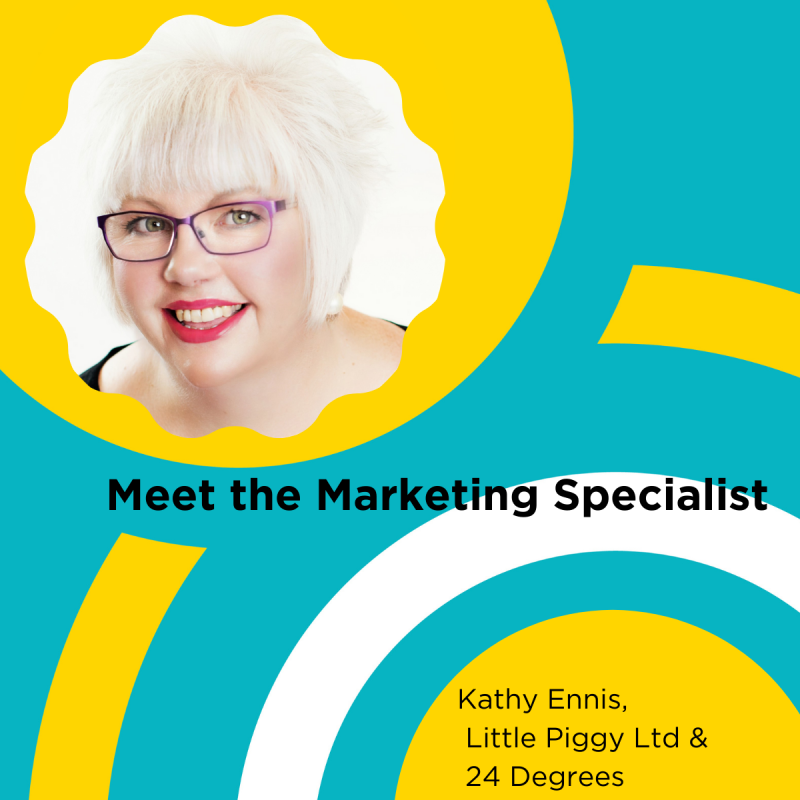
Kathy Ennis, LittlePiggy Ltd & 24 Degrees

Who we are26th Apr 2021

About Kathy Ennis and LittlePiggy

I became a Business Mentor because I know exactly how amazing it feels to start out on your own, armed with a big idea, a strong work ethic, and a head full of dreams. And, after 20+ years experience of running my own businesses, I also know how hard it can be to turn those dreams into a profitable business without advice, guidance and support.

As an Accredited Practitioner Mentor with the Association of Business Mentors, and an Accredited Master Mentor with the International Authority for Professional Coaching and Mentoring I have the qualifications to be able to help businesses at any stage of their development. But, more importantly, as someone who has had three businesses in the past 20 years I have the hands-on, business knowledge, experience and empathy necessary to understand and support business owners. They get their business mentoring from someone who has been there, done that and bought the T-shirt.

So, my role is simple. It’s to help business owners turn the passion they have for their products and services into a profitable business. The way I do that can be described as ‘a brain to pick, an ear to listen – and a push in the right direction’. Through discussion, direction and sometimes training I help busy business owners innovate, prioritise, and implement the changes that will make a difference.

As a Business Mentor I help business owners harness the Business in their business so it becomes less of a chore and more the rewarding experience it should be – both emotionally and financially.

We’re 24 Degrees.

24 Degrees is the brainchild of Kathy Ennis, Founder of Norfolk-based, business mentoring and training company, LittlePiggy and Emma Goode, Founder of the award-winning, Brentwood-based, digital marketing agency, 24 fingers.

Kathy has over 20 years of business experience and is an expert in helping businesses start-up, scale-up and turn their passion for their idea into a profitable business. As a successful Business Mentor and Trainer with 30+ years experience, Kathy has a no-nonsense, you can do it attitude. She specialises in enabling business owners to put the business into their business. Kathy knows that success and failure go hand-in-hand and that planning, processes and systems are the missing link between passion and profit.

With her team of expert content creators at 24 fingers, Emma works with companies who are all fingers and thumbs with their online marketing. She enables them to grow their business and brand through highly effective digital marketing. Whether that’s getting more leads from social, increasing brand awareness or engaging with customers, Emma’s 24 fingers help to add extra digits to a company’s bottom line.

 We think you may also find this interesting: Boost your business – top tips from a success business

You can view this blog and many others on the LittlePiggy website by clicking here

Five flaws that could be your biggest strength in business

NatWest Business Builder: Self Awareness

© Getty Images
© Getty Images

It takes a certain set of qualities to be a great entrepreneur, but not all of them are what you might expect. Here, we speak to SME owners about the personal ‘flaws’ that have aided their success.

Characteristics that some people might see as flaws could actually serve you and your business well, providing you know how to use them properly. Below are five prime examples of business-friendly flaws and a little insight from those who’ve used them to their advantage.

1. Stubbornness

Stubbornness is a trait most people try to avoid in their personal relationships, but as a business owner it could help to keep you on the right track.

Keith McNiven is the founder of London-based personal training company Right Path Fitness and has no problem admitting his flaw. “I find it hard to accept when I’m wrong and when I make a plan, I want to see it through no matter what,” he says. “Being stubborn isn’t something I’d put at the top of my social profiles, but it has definitely helped me to develop my business.”

In particular, McNiven’s one-track determination led him to take bigger risks when he started out. “Not content with starting a new business, I also decided that I’d move to London and set it up there,” he says. “It was really hard at first because I knew virtually no one and had left all of my useful fitness contacts back in the north, but my stubbornness saw me through. I was absolutely determined that I was going to make the business work and see through my original plan – and in the end I did.”

2. Introversion

You’d be forgiven for assuming that to be successful in business, you need to be confident and outgoing. After all, self-promotion means putting yourself out there and talking to people. But according to entrepreneur Barry Moore, being introverted needn’t be a barrier as long as you play to your own strengths.

Moore’s Guildford-based holiday agency Party Hard Travel recently announced triple-digit growth for the third year in a row, and he’s confident that his own quiet nature has contributed to the company’s success so far.

“When I was younger, I used to hate being introverted,” he says. “My social skills always seemed behind everyone else’s. I was normally the kid in the corner who wouldn’t say a word to anyone. I used to think it was a huge flaw.

“But looking back at it, the experience I had to go through was amazing because it enabled me to accept being different to the crowd. Rather than being a social person it allowed me to develop other skills.

“I read and study a huge amount, and that’s something the extrovert people I know really struggle with. I’d rather sit behind a computer and play around with numbers than be out and about speaking to people. I really enjoy those behind-the-scenes jobs that a lot of people don’t enjoy doing. This enables us to improve Party Hard Travel and continue to grow and expand.”

3. Obsession

In most areas of life, being obsessed could be considered a negative thing, but in business it often translates as determination – a trait that’s synonymous with success.

That’s certainly the case at West Sussex-based IT firm Ingenica Solutions. “I have been described as a perfectionist, obsessive, determined and competitive and while I would sometimes argue about those descriptions, I have been guilty of them all in the process of starting a business,” says the company’s founder and chief operating officer, Nicola Hall.

“Being stubborn isn’t something I’d put at the top of my social profiles, but it has definitely helped me to develop my business”

Keith McNiven, founder, Right Path Fitness

“But I feel those traits are part of why Ingenica Solutions has been successful; I have been obsessed with the business and utterly determined to make it a success – we’ve just had to make sure that’s all tempered with a bit of fun and humour.”

4. Impatience

No entrepreneur wants to wait for their company vision to become reality, but it can take years of hard work to even get close. One business owner who’s found a positive use for his own impatience is Richard Hayes, CEO and co-founder of online broker Mojo Mortgages.

“In some instances, my impatience has had a detrimental effect on my business,” he says, “but it has also driven me to innovate more quickly, because it just wasn’t feasible to wait for the scale of innovation that I wanted when I started and still want now.”

Hayes found a match for his impatience in a product development team that he says has been crucial to the company’s success. “I realised I could turn my flaw to my advantage after I was introduced to product development,” he explains.

“After realising the opportunity that developing our technology would bring, I knew immediately that working with a product development team would suit my impatience, in that I could effectively deliver through them.”

Asked what advice he’d give other flawed entrepreneurs, Hayes says: “It’s important to ensure that your flaws – in my case impatience – never have a negative impact on customer experience.”

5. Cautiousness

Impatience might be conducive to success for some, but a cautious nature serves Sarah Watkinson-Yull – founder and creative director of London-based retailer Yull Shoes – well, especially when it comes to money.

“I am overly cautious with credit,” she says. “I turn down orders from companies I am uneasy about as not being paid, or even being paid late, can have a huge impact on cash flow. I would rather not have the order in the first place.”

Watkinson-Yull’s cautiousness has helped her build a successful brand in an unquestionably busy sector, and it’s not the young entrepreneur’s only useful flaw: “I nag a lot,” she says. “My pet hate is when I ask someone to do something and it doesn’t get done, but me being constantly on top of everything and everyone means nothing gets forgotten.”

Further Reading

  • Management strategies: the six questions you need to ask your staff
  • Leadership lessons: how to be a good boss
  • Management strategies: why mentoring matters

We have a thriving and diverse community of thousands of entrepreneurs from multiple sectors, backgrounds and skill sets helping you to connect with the right people at the right time. No matter whether you’re looking to upskill, get feedback, engage with new people or simply observe, there’s something for everyone.

‘Want to learn more? Register for NatWest Business Builder to view all of their business development tools. Click HERE

Management strategies: why mentoring matters

NatWest Business Builder: Self Awareness

© Alamy
© Alamy

Whatever level you rise to in business, you probably won’t have all the answers – which is why you should never underestimate the power of mentoring.

From building the leaders of the future to improving staff performance and morale, there are numerous ways that mentoring can boost your business. It’s relevant at every level, because even founders can benefit from a fresh perspective, and it can help with issues such as staff retention, productivity and growth.

“Mentoring ensures staff feel supported, educated and confident in their job roles,” says Alistair Bambridge, founder at Bambridge Accountants, which specialises in supporting clients in the creative industries. He’s a great advocate of mentoring, both for himself and for his team.

“Creating an environment where staff can seek guidance and expand their knowledge is imperative to the success and growth of a business,” he expains. “I use one-to-one mentoring to monitor my staff’s progress and understanding of the business, as well as training-based mentoring as an essential resource to fill any gaps in my own knowledge.”

Mentoring works by drawing on the experience of others. The mentors themselves don’t have to have all the answers, but their fresh perspective can often make the crucial difference.

“Whether your issue is a failing business, working with colleagues you don’t get along with or being overstretched, being mentored by people who have experienced these issues can help you make smart decisions at times of both trouble and opportunity,” says Matt Cross, UK MD at global communications agency Hotwire.

A common misconception is that mentoring takes staff away from the ‘real’ job at hand, but it’s a worthwhile investment, says Bambridge. “Those few hours of one-to-one or group work will help boost morale, unite your team and, in turn, help your employees understand what’s expected of them. The more confident and well-informed they feel, the more able they are to be individually proactive throughout the rest of the week.”

Five ways to use mentoring to boost your business

1. Reverse mentoring

“Mentoring is often seen as a more senior person mentoring a junior person, but it can be used for any situation where you want to develop yourself in a particular area,” says Nick Goddard, head of development at Abstract UK, a company that designs and delivers career development programmes to improve business performance. “For example, we’ve seen ‘reverse mentoring’ where the CEO of a company was being mentored by a graduate to gain a better understanding of how 20 year olds use social media, giving the CEO a better understanding of both his customer base and his younger employees.”

Charlotte Valeur is the founder at Global Governance Group, which specialises in corporate governance advice and training. She has created U25 Mentoring, a scheme designed to bridge the knowledge gap between under-25s and board members, senior executives and politicians.

Through the framework she’s set up, young mentors connect with senior mentees once a month over the course of a year. Besides providing the older mentees with insights that could give their company a competitive edge, the scheme has other benefits, including improved staff retention.

“A lot of companies are concerned about holding on to young talent: if the younger generation are not happy, they’ll just move,” she says. “Reverse mentoring is an opportunity to discover why you’re losing talent.”

The process also prepares young mentors to take on more senior roles in the future.

“The young person has to steer and lead, so this is a form of leadership education,” adds Valeur.

Practical tip: decide on a period of time that the mentoring will run for, hold regular sessions, and evaluate the gains for both parties at the end of the process.

2. Board apprenticeships

Another project founded by Valeur is Board Apprentice, a programme that places company employees on charity boards for a year and supplements this with training in corporate governance.

The apprentice gains a detailed insight into the role of a board member and an opportunity to learn the necessary skills to operate at that level. Meanwhile, the company has a young member of staff who has been coached to take a more senior role.

“External mentors can develop new skills that may not be possessed by managers, giving a fresh approach”

Rob Moore, co-founder, Progressive Property

“More than 50% of them go out and become board members after that year – they have the confidence to put themselves forward because they know what it involves,” says Valeur.

“The scheme is a chance to retain talent and give younger employees interactions with senior people. To the under-25s that means a lot – they’ll leave companies when they don’t feel heard. This scheme can do so much for succession planning.”

Practical tip: give board apprentices opportunities to apply what they’ve learned during their apprenticeships.

3. Outside mentoring for leaders

Bringing in mentors from outside your business can provide valuable new perspectives for leaders.

“External mentors can develop new skills that may not be possessed by managers, giving a fresh approach,” says Rob Moore, host of the Disruptive Entrepreneur podcast and co-founder of property education company Progressive Property.

Meanwhile, Shaun Thomson, CEO at sales and management training provider Sandler Training (UK), adds that business leaders must think strategically when choosing a mentor.

“It’s key that the mentor can deliver value on a number of fronts – not just assisting the business leader with their own personal career development, but also teaching them coaching skills themselves in order to build a company and keep their team motivated,” he says.

Practical tip: identify your challenges and weaknesses and pick a mentor who can specifically help you address these.

4. Formal mentoring within your company

Making mentoring a key part of your HR strategy can result in great benefits for your business, coaching your team through personal and professional challenges, says Moore. “Mentoring allows autonomy, in that it gives guidance or advice that’s sought out, rather than hands-on micro-management,” he says.

Formal mentoring that pairs junior employees with more senior team members can be beneficial when there’s a focus on progression and succession planning, says Natasha McCreesh, founder of mentoring and collaboration business PIP to Grow Strong. Other useful approaches include cross-functional mentoring. “This is a powerful tool in enabling different parts of an organisation to connect and understand each other, creating more engaged and cohesive teams,” says McCreesh.

Practical tip: allow employees time away from their regular tasks to spend in mentoring – it can benefit your business in the long run.

5. Informal peer mentoring

Besides structured mentoring programmes, informal peer-to-peer mentoring can provide greater cohesion and support within your team. “Developing informal peer mentoring as part of the organisational culture is positive and empowering, so training staff on mentoring approaches is a valuable investment,” says McCreesh.

A less formal peer-to-peer approach can often overcome resistance to mentoring, too.

“People are generally resistant if they feel that mentoring has been imposed on them, if they have a perception that they’re being mentored because something is wrong, or they haven’t been involved in choosing their mentor,” she says.

Practical tip: encourage your employees to take ownership of their mentoring by choosing peer mentors.

Further Reading

  • Management strategies: the six questions you need to ask your staff
  • Leadership lessons: how to be a good boss
  • Five flaws that could be your biggest strength in business

We have a thriving and diverse community of thousands of entrepreneurs from multiple sectors, backgrounds and skill sets helping you to connect with the right people at the right time. No matter whether you’re looking to upskill, get feedback, engage with new people or simply observe, there’s something for everyone.

‘Want to learn more? Register for NatWest Business Builder to view all of their business development tools. Click HERE

Smart savings for start-ups

NatWest Business Builder: Cost structure

Starting a business is no small feat, and in the first year every penny matters. We look at practical economies SMEs can make to keep their budgets in check and survive that challenging first year.

It costs an average of £27,520 to set up a business in the UK, according to a recent survey of 850 new companies. Nearly half of these entrepreneurs used their own savings, and almost a quarter had help from friends and family. That’s quite a financial – and personal – investment.

But with careful planning and thinking outside the box, business leaders can slash those costs dramatically.

Here are a few ways you can save cash in that all-important first 12 months.

Choose your location carefully

Much of your spend on premises, staff and suppliers depends where in the UK you are. The average London business spends around £30,000 just on admin during its first year, but head to Wales and you could pay just a quarter of that. The cheapest place to launch a business in England is Yorkshire, where average first year costs for start-ups are £11,454.

Refurb’s the word

It might be tempting to kit all your team out with the latest tech but refurbished computers, tablets and phones can give you the same quality for a fraction of the price. “Technology moves so fast that it can be hugely expensive to invest in new kit that could be outdated in six months,” says Geoff Wightwick of accountant RSM UK. “But cheaper alternatives are out there. Look for those low-cost options in everything you do. It’s not just tech – keep a lookout for businesses moving premises, which will often be offering unwanted office furniture cheaply, or even free.”

“People tend to note down utilities as a fixed cost. But [you’d] be amazed at how much you could save by paying a little attention”

Jason Smith, founder, Business Electricity Prices

Conserve your energy

“People tend to note down utilities as a fixed cost,” says Jason Smith, founder of advice website Business Electricity Prices. “But [you’d] be amazed at how much you could save by paying a little attention.”

This is particularly true if you’re taking over a premises. “New tenants get put on ‘deemed rates’, which is the second highest tariff out there,” says Smith, “and many businesses don’t even notice. But you can change it immediately by calling the provider. Also, make sure you shop around at renewal time – some ‘automatic, take-no-action’ renewals put you on a 30% higher tariff than you were paying before.”

Share your space

Finding premises is costly – so why not join a co-working hub? Britain’s increasingly flexible working culture means new businesses that previously might have had to commit to a year’s rent for a space they could never hope to fill can now hire space one desk at a time, on an ad hoc basis. “It’s brilliant,” says Jane Porter, who set up her bespoke uniform fashion-design company Studio 104 at Shoreditch co-working hub The Brew. “We started with two of us, and a tiny space to match, and we now have 10 staff and just expanded on the site, and without the tie of a fixed-rent contract. This allows companies to grow and shrink, and pay only for the space they use, when they use it.”

And it’s not just office space that can be shared. Many universities now have business incubation centres/enterprise hubs, which let units, including industrial spaces, to start-ups at affordable rents – and often offer free mentoring and business advice.

Exchange

If you need to buy something, you don’t necessarily have to pay cash for it. If your product or service is of use to, say, the local printer, you could do a deal offering your product in return for producing your promotional materials.

And this can scale up, too. “This is a fantastic way to buy, especially if you’re struggling for cash flow,” says Chris Kirby, who with business partner Greg Harrand runs the British arm of Australian firm Bartercard. “We have 54,000 global ‘Barter cardholders’ who sell their services to fellow members for so-called ‘trade pounds’, which they can then spend on a product from another member. It’s a brilliant way of reducing expenditure.” The UK franchise only opened up in April, but already has 2,000 members and is aiming for 10 times that by 2020.

Moving to hire ground

Staff are a costly expense – essential in the longer term, but freelancers might suit you better to begin with. “It could be a flexible, cheaper option than staff when you’re starting out,” says Bobby Lane, start-up consultant at London-based accountants Blick Rothenberg. “You hire them when you need them and, as they’re self-employed, you don’t need to provide the employee benefits you would for those on permanent contracts. Freelancers are particularly good for short-term, specific projects, but even employing them for more general tasks you avoid long-term fixed costs.”

Head in the cloud

There’s no longer a need to buy expensive servers and office software – cloud-based software will save you money on hardware and installation, or upgrading in the future.

“It’s an obvious money-saver for start-ups and SMEs because it’s so much cheaper than setting up a network,” says Robert Davies, who runs technology consultancy business Kashiko. “Most providers will offer word processing, spreadsheets, calendars, while cloud-based accounting is secure and can give your accountant real-time access to your figures, which will save you money too. You don’t need an email server, you just buy as many addresses as you need, with your own domain name. And the biggest advantage is that if you suffered a fire or a theft, you don’t lose any of your files.”

But, Lane warns, however you save money, it should not be shorthand for cutting corners. “Every start-up has necessary expenses, and it’s foolhardy and short-sighted to cut these out for the sake of saving a few pounds. The key is to plan, evaluate where you need to spend the money and then work out the most cost-effective way to do it.”

We have a thriving and diverse community of thousands of entrepreneurs from multiple sectors, backgrounds and skill sets helping you to connect with the right people at the right time. No matter whether you’re looking to upskill, get feedback, engage with new people or simply observe, there’s something for everyone.

‘Want to learn more? Register for NatWest Business Builder to view all of their business development tools. Click HERE