In todays’ podcast Haze Carver, AKA The Zinger is chatting with John Nortcliffe, Founder and Director of Redhead Architects, an architects firm based in the heart of Norwich.
They talk about the challenges and successes of setting up a business just as Lockdown began, starting his career working in practices in London and Bermuda until the pull of living a family life in Norfolk came calling.
“The plan is to keep it simple, be nice, work hard and listen to our clients to produce the best designs we can.”
Good design made simple
Redhead Architects is a chartered practice, located in the heart of Norwich. We deliver new-build and retrofit projects, ranging from one-off homes, city apartments, hotels, commercial and heritage projects. We use sound design principles to seek the potential for joy in every scheme. (No matter how well-hidden). Over the years, we feel lucky to have shared fantastic experiences working with amazing people on a vast array of residential, commercial, education, conservation and master-planning projects both in the UK and Bermuda for several great practices. …Redhead Architects is the culmination of these experiences.
Having worked for many practices over the years, we wanted to seek out a better, more collaborative way of working and sharing ideas. We use simple sketches, BIM models and Virtual Reality to ensure that everyone has a clear understanding of their project, right the way through from concept to completion. We use these tools to test our ideas and fine-tune our projects throughout the design process and into our production information.
Welcome to the Norfolk Chambers Podcast, in todays’ podcast Haze Carver AKA The Zinger chats to the incredible Nor-folk wonder woman that is Fiona Burrage.
Fiona is the Creative Director and founder of vegan bodycare brand Sop and lifestyle brand Nor–Folk. She is also host to a retreat, the Water Cabin, set within the Broads National Park, and co-founder of co-working space Studio Inn.
Fiona runs an all inclusive football club called Left Field. Fiona has built her companies and passion projects within a framework of a more simplistic and intentional way of living so listen in to find out interested to talk about how you combine this workload and your create and personal mission.Audio Player
Sop ~ Scents of place is a bodycare and fragrance brand made in Norfolk and inspired by our local landscape and language. All our products are vegan and cruelty-free. Sop wants to put down strong roots to help us grow, which is why our sustainable, nature- nurturing approach is central to our philosophy.
In this podcast, we’re joined by Richard Seppings, Founder of Anglia Car Charging, an independent installer of electric car charging equipment.
From working in his family-run business on a Norfolk farm, getting into Newcastle University with tons of determination and grit and working within the agricultural sector before discovering the world of green energy. This podcast is full of sustainability, electric cars, and environmental issues.Audio Player
Delivering EV charging solutions for businesses and organisations of all sizes across East Anglia
We are number 1 in East Anglia for the supply and installation of EV charging systems. Based just south of Norwich, we cover the whole East Anglian region.
Welcome to the Norfolk Chambers podcast, in this episode Haze Carver is talking to Thomas Panton, CEO & sustainability expert at Canopey.com (formerly Greenr).
“Your home for better buying. Quantified impact data, ethical brands, better impact products. Fight back against the big-boy polluters, it’s time to Bin B*zos and Buy Better.”
Thomas is CEO and resident sustainability veteran at Canopey, having worked in the industry for a decade with organisations like Greenpeace UK and Surfers Against Sewage. As a previous startup founder, Climate Change MSc student, and LinkedIn Top Green Voice, Thomas is Canopey’s lucky volunteer when it comes to speaking at events, and talks to Haze on all things sustainable – from crowdfunding, angel investors, hot summers to how perfectionism often hinders the progress we need to make in the climate change movement.
Thomas Panton is an experienced speaker for the London Speaker Bureau in the environment sector, spending his time educating, inspiring, and engaging different audiences to begin their journey to become more sustainable. He also talks about mental health in high pressure roles, and advises other founders on wellbeing and making tough decisions.
We’re proud to have Thomas as a Business Climate Leader for Norfolk Chambers of Commerce, Thomas is Co-creator of The Topic, with Nadiah Arif. A podcast that talks about everything from climate change to human rights, raising awareness on these important issues and educating people on how to get more involved in challenging the status quo. He is also Founder of Festovers, upcycling leftover consumer waste. One of IQ Mag’s Green Guardians. BBC Oxford’s expert on festival tent waste and sustainability.
We’re not just building a shopping platform, we’re building a community of people and brands that want to create a greener future.
We want to make it easier for everyone to shop more ethically and become a platform that educates people on sustainability issues so they can learn how to create the change they want to see. Our vision is to make sustainable living, living.
Good value, better values
We’re not just about making shopping more ethical: better values are at the core of everything we do. From creating a diverse and talented team, to ensuring our marketing is accessible.
If you keep meaning to make eco-friendly changes in your life but never quite get round to it, then listen in as Leon discusses his Ten ways to save the planet by living more sustainably.
We’ll be talking about his journey from serving as an Engineer in the Royal Air Force, to founding a multi award winning Zero emissions taxi service right here in Norwich, testing satellites for Elon Musk, and most recently setting up his own company, Leon Davies.co.uk and becoming a Sustainability Specialist.
If you would like to find out more about Leon’s business, you can get in touch with him below
According to statistics, it’s likely that as we near the end of January, only 9% of people will have stuck to their new year’s resolutions, with a staggering one in four failing in the first week of the year!
If you really want your business to become more sustainable in 2023, we’ve outlined some tips that will make your sustainability goals more achievable.
Why focus on sustainability in 2023?
In today’s world, consumers and those in the supply chain are much more sustainability-focused. They expect the organisations that they purchase from to be adopting a sustainable approach and working towards a net-zero target.
Even in markets where there isn’t a customer need for sustainable practices, adopting a more sustainable stance can lead to lower operating costs and overhead expenses, increased bottom-line profits and an enhanced employee experience.
So what steps can your business take in 2023 to become more sustainable?
1 – Understand where you currently are
Any business looking to become more sustainable should start by measuring and understanding their carbon footprint.
The carbon footprint of a company is the total amount of greenhouse gasses (GHG) emitted directly or indirectly through its activities expressed as carbon dioxide equivalent (CO2e). A carbon footprint report identifies how much business operations are contributing to climate change and is the perfect place to develop an action plan from.
So before you start with any actions, it’s best to understand your starting point. This way, any actions you implement you can report on their success/impact.
Small measures
If you’re a passionate member of a ‘Green Team’ or you’re struggling to get leadership to commit to a carbon footprint, don’t be put off. There are a number of small measures that can be introduced in a business setting. Unfortunately, without a carbon footprint in place, it will be difficult to understand what impact this is having but recognise you are helping the planet by looking at the following three areas, all of which are easy to explore:
Focus on recycling
Find out what is recyclable with your waste management service and make sure it is clearly posted on bins so employees know what they can and can’t recycle.Make sure bins are easily accessible and encourage employees to recycle as much as they can.
Along with recycling paper and plastic, it’s also important to not forget about e-waste, including computer parts, mobile phones, and ink cartridges, which can be a pollution risk with toxic chemicals leaking into the ground. Common e-waste items include computer parts, mobile phones, batteries and ink cartridges. Ensure you have proper disposal providers in place and are not disposing in standard waste bins.
Use alternative energy sources
You don’t need to take large steps to get started using alternative energy sources. Contact your energy provider and explore their Green Tariff options. Green tariffs will either match your usage with renewable energy generation or the energy provider will commit to supporting environmental schemes on your behalf (the least preferred option, as it still results in the burning of fossil fuels).
Solar, wind, and geothermal energy sourcing are much easier on the environment than fossil fuels – ask whether your energy can come from these sources.
Encourage behaviours which reduce your energy use
By using less energy, you can save money and limit the effects on the environment.
One way to save on energy is to address the phenomenon known as vampire power, which is when electronics continue using energy even in standby mode. Speak to your workforce about this and request that they unplug devices and chargers when not in use and turn off devices instead of letting them go to standby mode.
If you haven’t already done so, make sure standard light bulbs are replaced with LED ones. These use up to 90% less energy than incandescent bulbs and can last up to 25 times longer.
As with your electronic devices, turning off lights when not in use is an obvious way to reduce usage. You could also look into the feasibility of installing motion sensors to automatically shut off lights when a room is empty.
Summary
As stated at the start of this blog, the most important sustainable resolution a business can make is to undertake a Carbon Footprint.
If this feels daunting, don’t worry, Groundwork’s Sustainable Business Consultants will work with you to calculate your footprint. Once this benchmark is established we can support you with a comprehensive pathway towards net-zero emissions.
Contact us to speak to a member of the team about getting started.
Mobilitways Commuter Census Survey 2022 reported that 81% of commuters were considering an alternative travel mode and 61% of commuters worried about rising fuel costs. Not only will sharing a journey be at least half as expensive as driving alone, they will also be making substantial CO2e savings contributing to your net-zero goals.
Be proactive in tackling Scope 3 commuter emissions
Each vehicle removed from the road saves an average 139kg of CO2e per employee every year.
Track the number of shared journeys and miles saved
View all of your sustainable travel data on a custom dashboard. Collectively, Liftshare communities have saved over 1 billion miles!
Improve air quality in your local area
Fewer cars mean less congestion and reduced emissions in your local area.
A net zero strategy that doesn’t include Scope 3 commuting emissions isn’t a net zero strategy
I am extremely pleased with how the Liftshare system is constantly evolving and improving to provide us with more and more valuable data. The whole Liftshare community has been a huge success for Arup and very much helped to alleviate our car park issues. I would be more than happy to recommend their services to other businesses.
I’m a passionate advocate for sustainability, and I want to use my knowledge and drive to help as many businesses and individuals as possible.
Real change is all about action, so it’s an exciting time as global leaders prepare to come together at the UN’s Climate Change Conference (COP) in late October.
Their mission is to find ways to accelerate the action we’re taking as the inhabitants of this earth so that we can make a planet-saving impact fast.
For me, that’s terrific because while I love talking to people about climate change, going green and saving our planet, unless we do something, nothing will happen.
I feel lucky because my job is helping businesses become more sustainable and encouraging everyone to live more sustainably – and it’s also my passion.
Because it’s my passion, when people come up to me and say, “I’d really like to go greener, but I haven’t done it yet because I don’t know where to start, and it seems quite tricky,” it tends to rankle me a little bit.
Surely if we all stopped procrastinating about going greener and just got on with doing it, we’d quickly find out that living a sustainable lifestyle and running a sustainable business isn’t difficult to accomplish at all.
Whatever you think you can do, do it. It won’t take long before it becomes a way of life you won’t even have to think twice about, and if we all made just one small green change at a time, it would cumulatively make a huge difference.
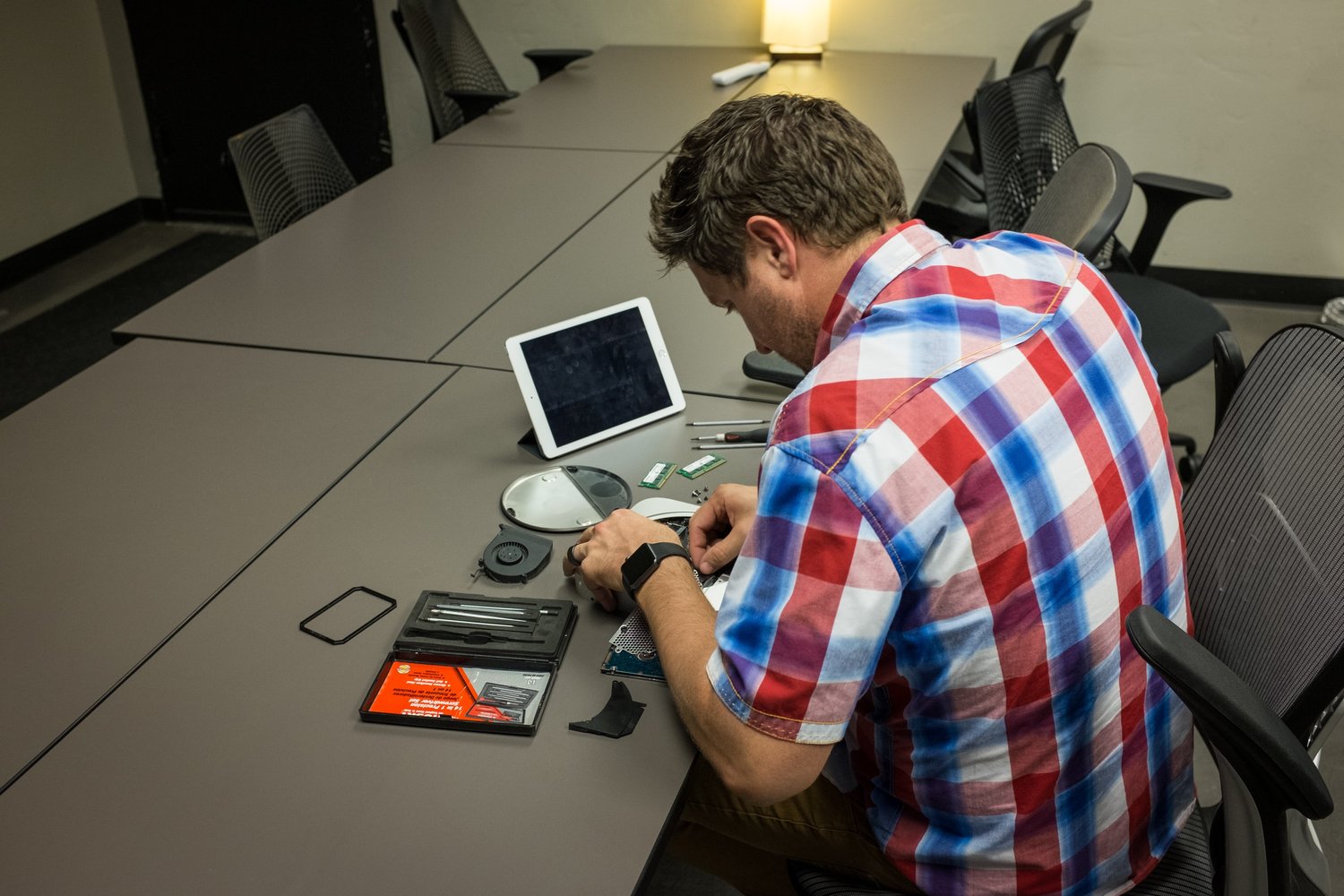
If you’ve got something that doesn’t work, don’t throw it away – try fixing it!
(Of course, I’m talking here about appliances and other fixable or up cyclable objects; if you’ve got a person in your life that doesn’t work, or a dog that won’t bring the ball back when you want it to, you need to be taking advice from a completely different type of consultant.)
Seriously, though, a lot of us are horrendous for throwing stuff away instead of trying to repair it, and that level of wastefulness and laziness has a massive impact on our carbon footprint. So, instead of tossing your glitchy electronics or household appliances into the skip next time they stop working, fix your relationship with electronics and electricals by trying to repair them instead. In fact, if we make a habit of looking after our appliances a lot better than we do (like regularly cleaning and maintaining them), that’s often all it takes to prolong their life cycle.
Take a look at this fantastic social enterprise scheme called The Restart Project for more information and ideas and to find out about their nationwide network of skill-sharing workshops.
Alternatively, if you’ve got any working electrical items that you want to get rid of, why not donate them to the Norfolk homelessness charity Emmaus? A lot of other charity shops won’t accept electrical items but Emmaus do, and they test them before they resell them, so they’re a brilliant place to purchase second-hand electrical goods from too. Give them a call!
Stop using single-use plastic
It’s well known that plastic waste is environmentally catastrophic. Of the 8.3 billion tonnes of plastic in the world, only a tiny percentage of it can ever be recycled. Items like plastic bags, plastic packaging and plastic straws can take up to two hundred years to decompose. Please stop for a moment and think about how much harm that is doing to our animals, our oceans, our ecosystem and our environment during that incredibly long length of time. Surely that’s not the legacy we want to leave our kids and future generations?
Back in January 2018, the UK government launched a 25 Year Environment Plan committed to improving air and water quality, creating richer habitats for wildlife, and curbing the terrifying amount of plastic that’s clogging up the world’s oceans. It also includes a lot of other initiatives.
Helping the planet by curbing your use of single-use plastic is a sustainable step you can take right away.
· Stop buying bottled water.
· Take your own bag with you next time you go to the supermarket.
· The next time you have a party or a picnic, choose naturally sustainable disposable tableware and packaging instead of single-use plastic knives, forks and plates.
· Invest in a reusable bamboo or metal drinking straw. That’s not only a healthier eco-friendly solution, it’s also more cost effective.
Eat less meat
Yes, I know that will sound like a step too far for most of the carnivores reading this, but if each of us replaced one or two meat meals a week with something veggie or vegan, we’d make a significant impact on the planet’s greenhouse gas emissions (GHG). The odds are, we’d feel and look quite a bit healthier too.
GHG emissions occur at every stage of the meat and dairy process, from farming (i.e., methane produced by livestock and nitrous oxide produced by fertilisers), processing, packaging, the transport required to ship the product onto the supermarket shelf, to finally serving it on our plate.
The meat industry consumes a massive amount of water too. It takes 10,910 litres of water to produce 0.5 kg of meat. On the flipside, it only takes 114 litres of water to produce 0.5kg of wheat.
Still not convinced?
In that case, you could at least start eating greener by buying at least half your food locally. The COVID lockdowns proved that the increasingly popular idea of the 20-minute neighbourhood, where everything you need in work or life should preferably be within twenty minutes’ walk of where you live, is more achievable than we might previously have thought. Not only is buying your food locally a great way to cut down transport costs, support local retailers, and help your community to flourish, it’s also healthier and more sensible. Meat spoils, and fruit and veg lose their nutritional value over a relatively short time, so how far your food has travelled can have a noticeable impact on how long it will last when you get it home.
Save energy
· Switch to energy and cost-saving LED bulbs.
· Turn off lights when you’re not in the room.
· Turn down your thermostat: almost half the money spent on energy bills is absorbed by heating and hot water costs. Turning your heating down by just one degree could save up to £80 a year.
· Switch off computers, TV’s and other appliances when you’re not using them, or only keep them on standby if it’s necessary for their operation.
· Don’t charge phones or tablets overnight; charge them during the day, so you can see as soon as the battery’s full and then disconnect them.
· When you’re making a hot drink, only boil the amount of water you need: according to British Gas, if all of us only boiled the water we needed for a cup of tea, we’d save enough electricity in one year to power the UK’s street lights for a month.
· Wash your clothes at a lower temperature: washing at 30 degrees instead of 40 degrees will help reduce your energy usage. Also, if you do a lot of washing, cutting out one wash cycle per week could take £5 off your annual energy bill.
Be mindful about recycling
· Recycle your paper and cardboard (newspapers, magazines, leaflets, boxes, etc.) but remove any tape from the boxes before putting them in the recycling bin.
· Recycle your metal cans but clean them out beforehand because contaminated containers can’t be recycled.
· Recycle textiles and unwanted clothing, maybe by donating them to a charity shop or putting them in the charity bank at your local supermarket.
· Recycle your garden waste: if you do a lot of gardening, ask your local council to supply you with a recycling bin especially for that purpose.
· Items like batteries and paint are considered hazardous waste products and can be trickier to recycle depending upon where you live. Check if your local recycling centre will take them. If they don’t, ask them if they ever have a hazardous waste amnesty when they’ll temporarily accept paint, batteries and other hazardous waste items. Most councils do.
On the other hand, if there’s only a small amount of paint in the can, add something absorbent to dry it out (like cat litter or sawdust) and then, once it’s dried, you can put the paint container in your general waste bin.
Green your commute
When you want to go somewhere, only use your car if you’ve got no other option – walking, riding a bike, or taking public transport are the best ways to get places while minimising your CO2 emissions.
Or, if you have to use a car, find out if there’s somebody you can car share with or would like to car share with you. If you’ve got to drive every day to get to work, car sharing is an excellent way to get to know your colleagues better.
Alternatively, if you live in or around Norwich, you could book a ride with a certain zero-carbon taxi company I’m associated with!
If one or two of these tips sound familiar, it might be because you’ve already read my article, 10 Ways to Save the Planet by Living More Sustainably. If you haven’t, check it out. It contains plenty more suggestions to encourage you to start thinking and living more sustainably.
A final thought
The United Nations Environment Programme (UNEP) says, ‘A healthy planet depends on all of us’, and my team and I will always be on hand to help you achieve that. Whether you want to implement more sustainable solutions in your business or your home, or if you know somebody who wants to go greener and could benefit from our expertise, please get in touch.
At the end of the day, it all starts with mindfulness; being aware of why we’re doing something, consuming something, buying something, needing something, producing something… and those are all elements that, on a very microscopic level, begin with each of us as individuals and then gradually expand out.
Emma Andrews Jan 1 | CanopeyGreener goods, all under one roof.
The start of a new year is a time for fresh starts and new beginnings – and setting yourself a resolution can provide a sense of purpose and direction.
Many people find that having a sense of community and shared purpose can help them stay committed to their goals, and telling others about your resolution is a proven way to increase how successful you are in keeping it.
Making a resolution can also be a way to reflect on the past year and identify areas to make improvements. It can be a way to motivate yourself to make positive changes in your life, whether they’re related to your health, career, relationships, or personal growth.
Why make a sustainable or eco-friendly resolution?
Every year the effects of climate change are becoming more and more apparent, and urgent action is needed now. It’s expected 2022 was the UK’s warmest year since records began in 1884.
But it can often feel out of our control to do something about it. Enter: the New Year’s resolution! A great way to make more sustainable habits and see a positive change in a tangible way. And you can get started today.
But did you know there are more benefits to sustainable resolutions than just reducing your impact? Here are just a few:
Many sustainable practices, such as reducing your meat consumption and growing your own food, can also have health benefits.
Living more sustainably can also help you save money in the long run, for instance by reducing your energy consumption or using reusable products instead of disposable ones. And yes: it is cheaper to and lower impact to wash something to use again, rather than buying something cheap new!
As we’ve mentioned, a sustainable New Year’s resolution can have a positive impact on your mental health. When faced with the scale of climate change, making sustainable choices can give you a sense of accomplishment and pride in the impact you are making, and the standard you set to others, which has a knock-on effect itself.
Without further ado, let’s get started with our list of sustainable New Year’s resolutions.
1. Reduce meat and dairy
It’s officially Veganuary! so what better time to cut down on the meat you buy and consume?
One of the biggest changes you can make for a more sustainable diet is cutting out meat. Studies comparing different lifestyles show that opting for a vegan diet could reduce the carbon emissions of what you eat by up to 73 per cent.
Buying secondhand, especially clothing, is a brilliant way to drastically reduce your impact. The fashion industry is a BIG polluter, not just of carbon emissions, but water and plastic waste, too. Thankfully, buying secondhand is easier than it’s ever been!
For clothing, take your pick – from charity shops and boot fairs, to apps like Depop and Vinted. It’s not just the stuff nobody wants – you can find loads of great brands, luxury pieces and unique fits to suit your needs. What’s more, you’re more likely to find one-of-a-kind styles that nobody else has.
For used tech there are some great marketplaces like mpb (for camera gear) and Backmarket for a wide range of items.
It goes both ways: you can sell your stuff, making money from unwanted devices, clothing and decorations while decluttering the house.
3. Cut down on the car
Switching some of your journeys to other types of transport like the bus or train are great ways of cutting your carbon footprint, and with the current price of fuel you might save money, too!
Carpooling with colleagues is a great way to save on the work commute. Better yet, if it’s a walkable or cyclable distance, they are the easiest way to go emission-less!
If you’re walking, you can pop on a podcast or music. It’s a great way to clear your mind, get away from computer screens, and get fit while you’re at it.
4. Get gardening
An active, flourishing garden doesn’t just look nice: it’s a great way to reduce your impact and even mitigate emissions in your area.
Plants and trees absorb and store carbon dioxide from the atmosphere, improve soil health and provide a safe haven for whole ecosystems of insects, animals and fungi. They’re a great way of using up compost from food waste, which in turn reduces the emissions created by food breaking down improperly in landfill, where there often isn’t enough oxygen or bacteria to break it down.
If you don’t have a garden, there are plenty of ways you can plant in window boxes or on a balcony. And of course, house plants can be placed anywhere indoors.
5. School yourself
Learning is always a good goal, and there’s so much to delve into when it comes to sustainability.
Learn more about the issues and what you can do to lead a more sustainable life with books like Greta Thunberg’s newly-released The Climate Book or Fashionopolis, an in depth guide to sustainability in fashion by Dana Thomas.
For more books and magazines about sustainability check out our recent Christmas gift guide.
6. Upcycle and regift
Many of the things we need are already in a cupboard or drawer in our houses – and after Christmas, that’s especially going to be the case. Repurposing presents and upcycling what we own are therefore great ways of reducing waste, unnecessary emissions and saving space.
It’s an excuse to get crafty or practice a bit of DIY, and a unique handmade gift also shows you care. Things like birthday cards can easily be made by hand, and if you’re not planning on using that gifted soap bar, why not wrap it up in tissue paper and string and gift it on to someone who will?
Pinterest is a great place for ideas and ways you can upcycle and make something new from existing objects, and even look for inspiration for handmade birthday cards.
7. Support local
Big established chains and supermarkets can be some of the biggest culprits for carbon emissions and waste.
Shopping a bit more thoughtfully, by doing at least some of your shop at your local grocer or butcher, can help cut down on both. By moving away from supermarkets you generally support smaller supply chains, less waste and more local suppliers which tend to be more ethical and responsible.
Many grocers and butchers allow you to buy just what you need and packaged in paper bags, saving money and food waste, and plastic packaging.
8. Buy better
Finally, we couldn’t not include this one. Making a New Year’s resolution to support better brands that care about the environment is a fantastic way of voting with your wallet. You could also boycott Amazon, while you’re at it!
Whether you want to go all-out vegan, order organic, phase out plastic or find Fair Trade accredited brands, Canopey.com – launching early 2023 – is the place to go!
With products spanning skincare, clothing and footwear, technology, homeware, food & drink and more, we feel like we know a thing or two about reducing the impact of your shopping basket. And our impact calculator makes it easy to see the carbon emissions, water waste and plastic waste you could be saving by choosing better alternatives.
Good luck!
Making and sticking to a New Year resolution can be hard, so make sure yours is realistic and don’t lose faith if you don’t quite meet it.
The key thing is to keep going and try your best. Remember that perfect is the enemy of good.
World leaders are united in developing policies to tackle climate change, and UK businesses have a role to play. But where to start?
This informative session will build your understanding of the threat posed by climate change and demonstrate how your business can successfully plan for a low-carbon future. By the end of this learning journey, you should be able to articulate the principles of sustainable business practice and be inspired to take your next steps.
Be informed: understanding the threat
What do we mean by climate change? What sort of business interruptions could severe weather inflict? How do government policies impact small businesses?
Watch our film for an introduction to tackling climate change and why it matters.
Be successful: 10 steps you can take now to be a greener business
There is no one right solution on tackling the threats of climate change – start small and you could still make a difference. Read the Business Builder sustainability checklist to understand how the weather could affect your business and changes you can make straight away.
Further reading
For more insights on climate change and the race to net zero, visit the NatWest Business Hub’s spotlight on Green Business.
We have a thriving and diverse community of thousands of entrepreneurs from multiple sectors, backgrounds and skill sets helping you to connect with the right people at the right time. No matter whether you’re looking to upskill, get feedback, engage with new people or simply observe, there’s something for everyone.
‘Want to learn more? Register for NatWest Business Builder to view all of their business development tools. Click HERE‘
Will Richardson, founder and CEO of Green Element, witnessed first-hand the impacts of climate change when he travelled around the world. He made a life-changing decision to dedicate his work to helping build a sustainable future for generations to come.
Here, he speaks to NatWest Business Builder to share his insights and expertise. He talks about why climate change is the biggest crisis facing the world today, and how businesses of all sizes can rise to meet the challenge.
Be successful: 10 steps you can take now to be a greener business
There is no one right solution on tackling the threats of climate change – start small and you could still make a difference. Read the Business Builder sustainability checklist to understand how the weather could affect your business and changes you can make straight away.
Further reading
For more insights on climate change and the race to net zero, visit the NatWest Business Hub’s spotlight on Green Business.