At the COP26 summit in Glasgow in November 2021, heads of state, climate experts and businesses will come together to agree coordinated action to tackle climate change. We can all play a part.
So, is your business as green as it could be? Is there a gap between knowing and doing? How do your products, services, and behaviour align with government targets?
Watch our film to understand how the sustainability agenda will affect your business in the coming years.
Be successful: 10 steps you can take now to be a greener business
There is no one right solution on tackling the threats of climate change – start small and you could still make a difference. Read the Business Builder sustainability checklist to understand how the weather could affect your business and changes you can make straight away.
Further reading
For more insights on climate change and the race to net zero, visit the NatWest Business Hub’s spotlight on Green Business.
We have a thriving and diverse community of thousands of entrepreneurs from multiple sectors, backgrounds and skill sets helping you to connect with the right people at the right time. No matter whether you’re looking to upskill, get feedback, engage with new people or simply observe, there’s something for everyone.
‘Want to learn more? Register for NatWest Business Builder to view all of their business development tools. Click HERE‘
To help your business stand out and achieve its green ambitions, you must be able to assess your climate impact. Here’s how, and why, it matters to the wider world.
Through exclusive conversations with and guidance from business leaders and sustainability specialists, this is where you’ll learn how to effectively assess your current carbon impact. We’ll dig into the sustainability auditing process and look at how it can build foundations for more socially responsible decisions, increased efficiency, and better all-round business health.
Be informed: what is your carbon footprint?
By measuring energy and resource use, businesses can play a key part in bringing greenhouse gas emissions back to a sustainable level and slowing climate change?
Watch the video below to understand more about your carbon footprint and the simple actions you can take to change it.
Be inspired: how to address your carbon footprint
Businesses in every sector will be wrestling with this dilemma. What steps can they take? And how easy is it to get to net zero?
Listen to our podcast – with special guests Peter Belk, Circular Economy Director at Business In The Community, and Tessa Clark, co-founder of food-sharing app Olio – to learn more about how your business can tackle climate change.
Be successful: how to collect data and use it
Taking responsibility for your carbon footprint is a journey built on data: before any change can happen, you must know what to measure, where to find it and how to use the results.
Planting trees to offset your brand’s carbon footprint is all the rage right now. And while trees are undoubtedly successful at removing carbon from the atmosphere – does ‘offsetting’ your carbon footprint really make you carbon neutral as quickly as the planet needs it?
Through burning fossil fuels, the commercial production of beef and lamb and deforestation (amongst plenty of other contributors), the world emits around 43 billion tonnes of carbon every year.
If we don’t do something to tackle the carbon crisis, by 2100 sea levels will have risen by 1.8ft resulting in an 170% increase in flood risk, the arctic will be ice-free every summer and 18% of insects and 16% of plants will have lost their natural habitat.
Many brands – including BuxtonThreeTwo – try to tackle their carbon output in some form. From offsetting your team’s carbon footprint to planting a tree for every sale, thousands of organisations across the globe are working hard to create a better world. We should all be tackling the climate crisis however we can.
However, we need to be transparent in how we are tackling climate change. Many companies claim to be ‘carbon neutral’ or ‘carbon negative’. While these brands are working hard to slow down the effects of climate change, the measures they’re putting in place to offset carbon emissions aren’t fast acting and do not reduce the amount of carbon that is emitted directly into the atmosphere, today and tomorrow.
With a mature tree taking 20 years to grow, brands who claim that planting trees makes them ‘carbon negative’ aren’t necessarily telling it straight – as it’ll take two decades to reach carbon neutrality, let alone carbon negativity.
As such, claiming to be ‘carbon negative’ while continuing to emit carbon into the atmosphere lulls customers into a false sense of security – where their expectations for a company’s environmentalist policy doesn’t align with their real-world practice.
Researchers have explained that ‘natural climate solutions’ are more beneficial to the planet than the creation of man-made forests. Restoring wetlands, minimising emissions from farmland and protecting existing forests and reforesting degraded areas could have a much greater impact on the reduction of carbon – to the tune of 23.8 billion tonnes of carbon per year.
We need to try and act now with preventative methods, rather than attempting to mask over our existing negative impact.
So what else can businesses do moving forward to reduce their carbon footprint?
Build brands with the environment at the heart from day one.
Start with green intentions – and keep them at the core of everything you do. Instead of being reactive to the climate crisis, act proactively. Brands shouldn’t think ‘what can I do to offset the carbon I emit?’, but instead ‘how can I prevent our business from emitting carbon in the first place?’.
Retrospectively alter your model to be more climate-conscious.
There are plenty of ways to introduce environmentalist policy into your already successful business, too. It’s never too late to switch to recyclable packaging, invest in green manufacturing methods or transfer to local suppliers. Try introducing a cycle to work scheme, or continue to offer flexible remote working hours to your team.
Be transparent.
To strive for a positive outcome is to have positive intentions. Any brand that is working to fight the climate crisis is influencing others, leading the way and having a positive impact. But it is important to be cautious around the terms we use when discussing a company’s environmental policy, and to remain transparent in our endeavours to build a better future.
Everyday, society grows more climate conscious. And as such, the environmental expectations consumers hold of brands increases with it. While planting trees is a great way to reduce our carbon levels in the long term, this one action is not enough to claim climate neutrality or negativity, as it’s results aren’t seen quick enough.
Be honest with your consumers. No one is expecting any one company to be perfectly green – so don’t claim to be.
Sharing your company’s environmental pitfalls alongside the successes may even help you connect with someone who can offer a solution – we can combat the climate crisis, together.
Clean-tech entrepreneur Elon Musk is a man who never fails to surprise. But I must admit to being knocked for six when I received a DM from him. I’d dropped him a cheeky Tweet to offer to beta-test Starlink, the new satellite internet technology that SpaceX is developing. Obviously, I thought I’d have more chance of taking a flight to the moon than hearing from him. That’s why when Elon got back to me, I was more than a little gobsmacked.
Even after Elon had agreed to let me amongst the first 1% of people in Europe to beta-test Starlink, I didn’t really believe it. But when, some weeks later, the complete kit – including a £4,500 satellite – was delivered to my front door, it became clear I wasn’t dreaming. As a pioneer in electric vehicle technology, Elon has inspired me. It’s thanks to trailblazers like him that clean-tech entrepreneurs like me have been able to launch our EV businesses. Now I was about to take part in the development of his latest innovation.
What is Starlink?
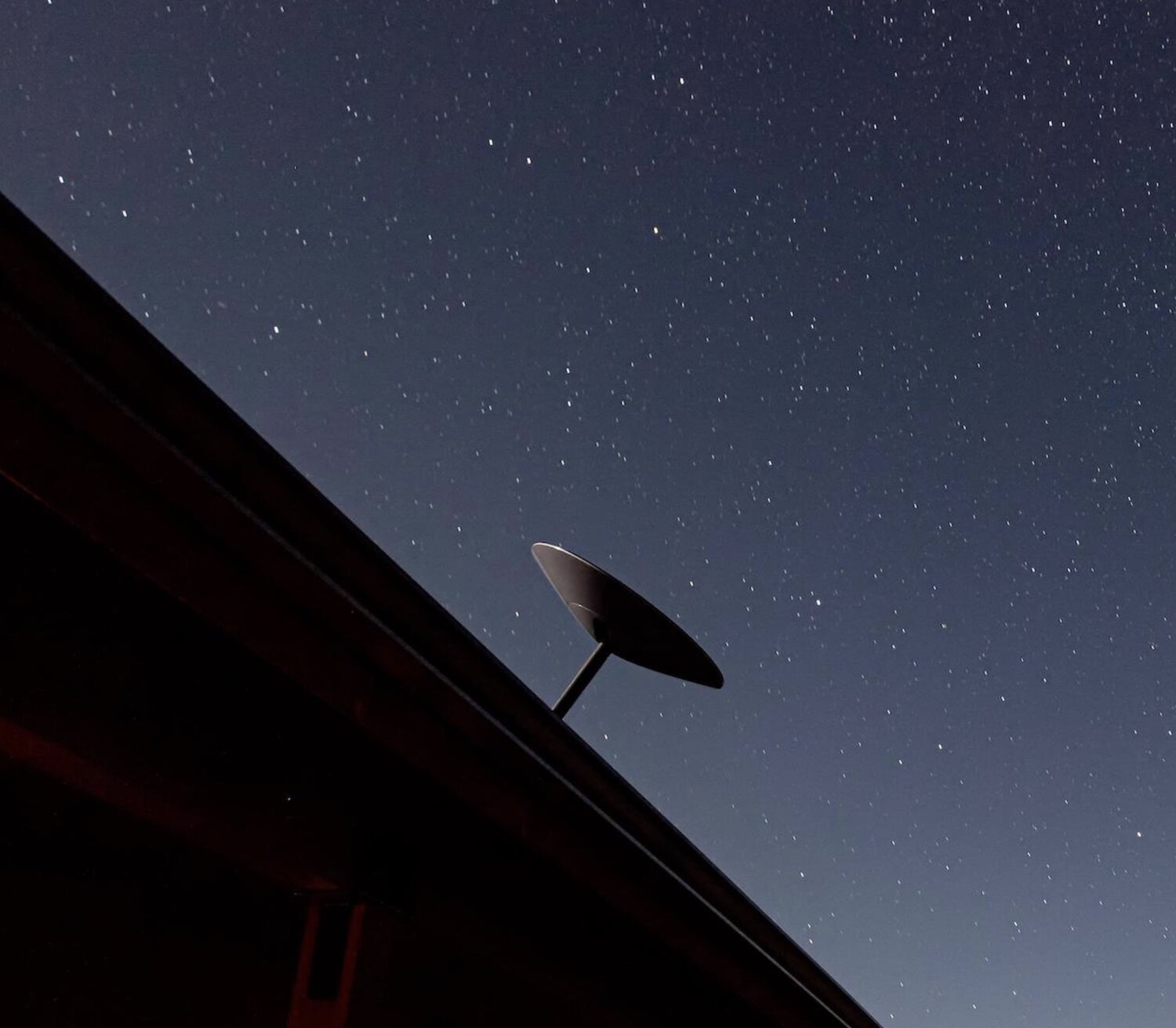
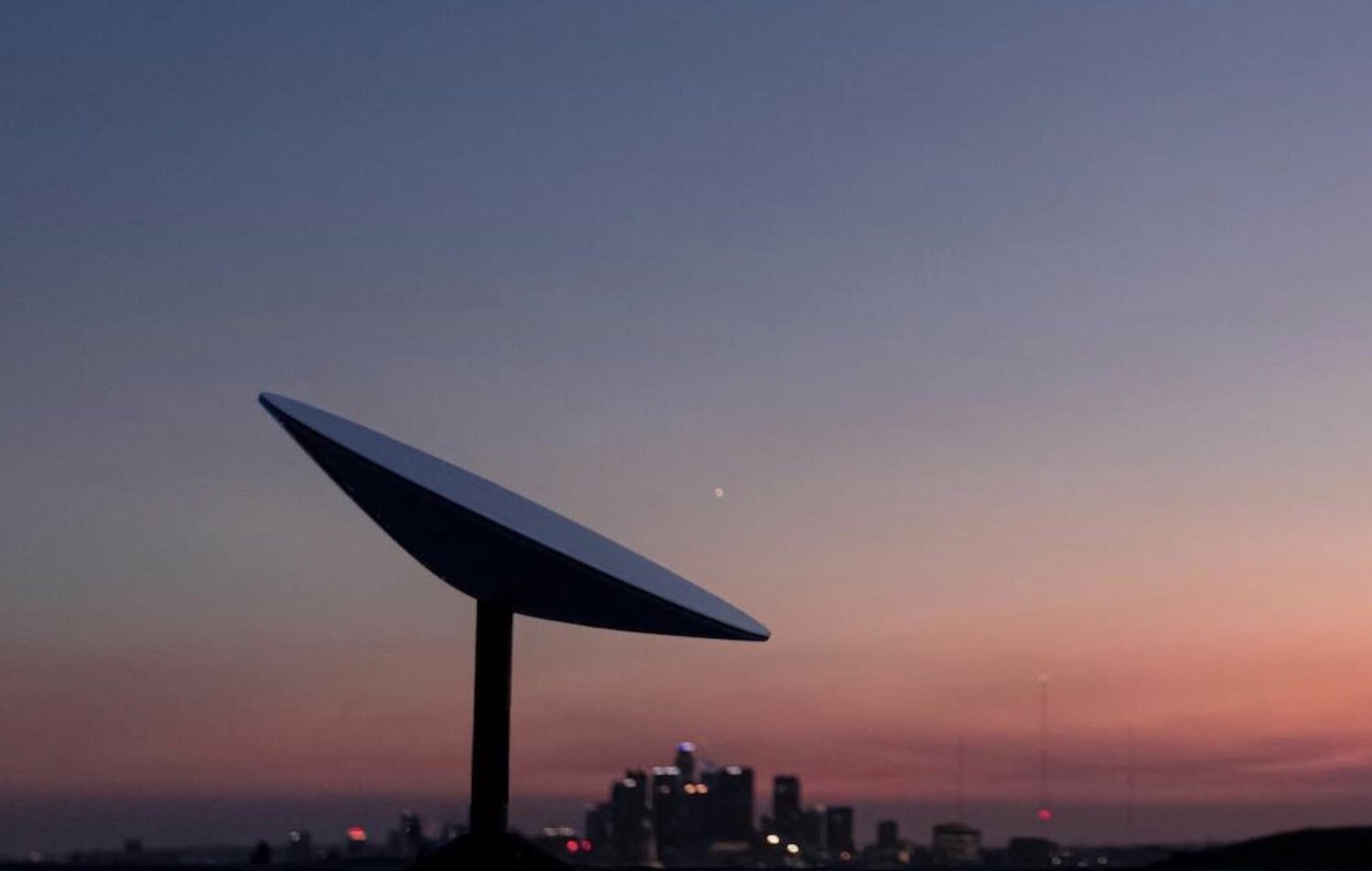
For the uninitiated, Starlink is SpaceX’s satellite internet constellation, built to provide superfast global internet coverage. The business is aimed at selling high-speed internet access to anyone in the world, particularly those in rural areas where broadband connectivity is limited or non-existent. It works by deploying a network of orbital satellites that are 60 times closer to the earth than traditional satellites. In doing this, the company cuts the time it takes to send data from one point to the next. The term they use is ‘lower latency’ internet that offers high speeds and high performance. As the company grows and deploys more satellites, so the service becomes even better. So far, in two 2021 launches, SpaceX has sent 120 satellites up.
While I cannot claim that I live in a particularly rural area, Norfolk as a county is infamous for internet connectivity challenges. Too many people here don’t have reliable internet, and this issue limits potential here in the county. However, Starlink can level the playing field and deliver the kind of internet coverage that Norfolk and other rural areas globally should have access to. I’m so excited about the opportunities it’ll provide for innovators and business in the local area, as well as domestic internet users. The expected cost per month is likely to be £89.
Getting set up
The kit itself was simple to assemble. I was sent a small satellite which I set up to receive the signal and pass the bandwidth onto a router. First, I had to download the Starlink app, which gave me advice on where best to position my satellite with clear access to the sky. Once mounted on the tripod they sent me, I connected it with the cables to the router. During this beta testing period, I’m told to expect speeds varying from 50Mb/s to 150Mb/s. This speed should increase as more Starlink satellites are deployed.
If Elon Musk’s current projections are correct, we could be looking at a global rollout for the Starlink system by 2022. It’ll be a gamechanger, and it’s thrilling to be part of helping them test and develop it further. I’m hoping to make some videos in the next few weeks to show how I’m getting on with my Starlink satellite and my thoughts on the kit. It’s going to be fascinating to see how it goes.
Be inspired
I hope you’ll be encouraged by this story to reach out to the people who inspire you. I never thought that Elon Musk would read my message, let alone respond and invite me to beta test Starlink, but it happened. If an ordinary person like me can get an opportunity like this, it should inspire you to be bold and speak up when you want to be part of something big. If you are willing to ask for something or put yourself forward, you never know what might happen. Why not take a chance?
If you have content you want to share, get in touch!
The Norfolk Knowledge Hub is available to every business, the content is provided by every business that would like to share their knowledge, skills and expertise. It is curated by your Norfolk Chambers of Commerce.
If you would like to get involved, then we would love to hear from you!
Why not drop us a line and we’ll get straight back to you to arrange a chat.
You can find out more about membership with the Norfolk Chambers of Commerce here
Or if you would like to speak to a member of our team directly call us on 01603 625977
(we’d love to know more about you and your business!)
In November 2021, representatives from over 200 nations around the world came together to address the global problem of climate change. The annual United Nations climate change conference took place in Glasgow, and ended on 13th November.
But what was discussed? What decisions were made? And how will they reflect you as a consumer? Let’s take a look at how the decisions made at COP26 could affect households in the UK, and why some criticise the actions to be taken as being too little too late.
What is COP26 and why is it important?
COP26 is the 26th Conference of the Parties. Following on from the Paris Agreement of 2016, it is attended by representatives of the countries that signed the United Nations Framework Convention on Climate Change (UNFCCC) in 1994. As well as world leaders, COP26 was attended by representatives from the world of business, charities, faith groups and non-government organisations.
Hundreds of nations from all over the world were in attendance from 27 EU member states as well as the US, Canada, Australia, India, Colombia, Ghana, Nigeria, South Korea and the Democratic Republic of Congo to name but a few. The event was the biggest summit ever hosted by the UK with over 30,000 attendees.
Its goal is to address the biggest ecological crises facing our planet, tackling the climate crisis and creating a global infrastructure for more sustainable living.
How did the COP26 end?
COP26 ended with some clear resolutions for further action to be taken around the world to address the current climate crisis. One key takeaway is that, after years of dancing around the issue, COP26 ended with a clear reference to the role of fossil fuels in perpetuating our climate crisis. However, some critics were frustrated by the lack of a more decisive stance on the use of coal. Following a late objection from Indian delegates, the language shifted from the “phasing out” of coal to a more gradual “phasing down” with a reduction of “inefficient” fossil fuel subsidies.
Much of the action on the issue of phasing out fossil fuels was deferred to COP27 which will be hosted in Egypt. However, several decisive actions were decided upon in what became the “Glasgow Climate Pact”.
What are the main decisions taken?
There was some disappointment among environmental groups that more decisive actions were not agreed upon as COP26 drew to a close. Nonetheless, the committee did decide upon several priorities in order to reduce the impact of climate change.
Although nations are not legally bound to take action, US climate envoy John Kerry told CNN that nations in attendance would be bound by the”public scrutiny that holds you accountable to your own promises… That’s a huge level of accountability, frankly”.
The main decisions made in the Glasgow Climate Pact were as follows.
Fossil fuels
Environmental groups were pleasantly surprised when explicit reference was made to the role of fossil fuels, particularly coal, in exacerbating climate change. The burning of coal is responsible for roughly 40% of the world’s carbon dioxide emissions.
The language of the agreement was changed from “phasing out” to phasing down” following an objection from India. The agreement also includes a commitment to end fossil fuel subsidies.
End of deforestation
Trees absorb vast quantities of CO2 and are instrumental in the prevention and reversal of climate change. So it was a relief to see that over 100 countries (which contain 85% of the world’s forests between them) pledged to end deforestation by 2030.
Critics, however, warned that we have seen similar initiatives come and go with very little impact. Climate change expert Prof Simon Lewis said that the world has “has been here before”, citing a 2014 declaration in New York which failed to make a meaningful impact on deforestation. It was also unclear how this would be policed.
Limit global warming to 1.5C
COP26 President Alok Sharma expressed gratitude to delicates for “keeping 1.5 alive”, in reference to the Paris Agreement’s goal of keeping global warming at 1.5 degrees Celsius above pre-industrial levels. This is essential in order to avoid a climate catastrophe and prevent the impact of frequent and intense heat waves and storms on our planet.
The key to this is reducing greenhouse gas emissions on a global scale. In order to limit global warming to 1.5C, the world will need to reduce greenhouse gas emissions by around 27 billion metric tons per year. Critics argue that the commitments made in the Glasgow Climate Pact fall short of this.
What will be the next steps for the UK?
The decisions made at COP26 will have far-reaching implications for governments, industries and businesses around the world. But what are the next steps for the UK? The most important include:
Doubling down on
our commitment to become carbon neutral by 2050
Working harder to
reduce greenhouse emissions
Investing heavily
in clean energy infrastructure
Working with the
automotive industry to hasten the phasing out of petrol and diesel
vehicles
How can the climate conference change our lives?
We can expect the decisions made during COP26 to influence our day-to-day lives in a number of ways. And while we should celebrate the transition to a more sustainable way of living, we all need to acknowledge the contributions that we need to make, and what we can do to help to mitigate the effects of climate change. Some of the ways in which we can expect our lives to change over the next 10 years include:
Living in greener homes
There are lots of ways in which we can make our homes more sustainable. Even little things like switching to a green energy supplier can make a big difference to your household’s carbon footprint.
The government is also looking at new ways to incentivise heating your home using methods that don’t use fossil fuels (i.e. gas). While the Green Homes Grant was scrapped earlier this year, the Boiler Upgrade Scheme could help to offset the cost of installing ground or air source heat pumps, solar water heaters and, in some cases, biomass boilers.
Switching to electric vehicles
The government has already announced its intention to make the manufacture and sale of new petrol and diesel cars illegal by 2030. However, it has recently announced plans to start phasing out fossil fuel-powered vehicles starting in 2024. £620m has been dedicated to offering targeted grants to make electric vehicles more affordable to households.
Paying more for groceries
Now there’s one more reason to eat your veggies! The worldwide pledge to halt deforestation will place severe limitations on animal agriculture and the palm oil industry which are among the leading causes of deforestation. As such, we can expect the cost of meat, dairy products and processed foods to rise.
Your pension and investments
Over 400 financial institutions have committed to providing more funding for green technology. As such, you can expect your pension provider to start investing more of your money in green technologies.
Did COP26 meet the expectations?
While Prime Minister Boris Johnson has been quick to tout COP26 as a grand success, many critics are quick to point out that the proposed measures, while welcome, will be insufficient to reduce global warming to 1.5C. Indeed, what has been agreed is projected to reduce global temperatures to rise by 2.4C, which will still do irreparable damage to many of the world’s most climate-vulnerable nations.
Time will tell whether the UKL is able to lead by example and exceed its commitment to reverse the damage we’ve done to our planet before we reach the point of no return.
World leaders are united in developing policies to tackle climate change, and UK businesses have a role to play. But where to start?
This informative session will build your understanding of the threat posed by climate change and demonstrate how your business can successfully plan for a low-carbon future. By the end of this learning journey, you should be able to articulate the principles of sustainable business practice and be inspired to take your next steps.
Be informed: understanding the threat
What do we mean by climate change? What sort of business interruptions could severe weather inflict? How do government policies impact small businesses?
Watch our film for an introduction to tackling climate change and why it matters.
Be informed: sustainability & businessBe informed: sustainability & business
At the COP26 summit in Glasgow in November 2021, heads of state, climate experts and businesses will come together to agree coordinated action to tackle climate change. We can all play a part.
So, is your business as green as it could be? Is there a gap between knowing and doing? How do your products, services, and behaviour align with government targets?
Watch our film to understand how the sustainability agenda will affect your business in the coming years.
Be inspired: a sustainability masterclass
Will Richardson, founder and CEO of Green Element, witnessed first-hand the impacts of climate change when he travelled around the world. He made a life-changing decision to dedicate his work to helping build a sustainable future for generations to come.
Here, he speaks to NatWest Business Builder to share his insights and expertise. He talks about why climate change is the biggest crisis facing the world today, and how businesses of all sizes can rise to meet the challenge.
Be successful: 10 steps you can take now to be a greener business
There is no one right solution on tackling the threats of climate change – start small and you could still make a difference. Read the Business Builder sustainability checklist to understand how the weather could affect your business and changes you can make straight away.
Further reading
For more insights on climate change and the race to net zero, visit the NatWest Business Hub’s spotlight on Green Business.
We have a thriving and diverse community of thousands of entrepreneurs from multiple sectors, backgrounds and skill sets helping you to connect with the right people at the right time. No matter whether you’re looking to upskill, get feedback, engage with new people or simply observe, there’s something for everyone.
‘Want to learn more? Register for NatWest Business Builder to view all of their business development tools. Click HERE‘
The debate on what and how businesses are becoming more environmentally sustainable should not begin and end on the annual Earth Day. Norfolk Chambers members have been making ‘going green’ part of the fabric of their company’s strategy so that this becomes integrated in everything they do.
Climate change and how businesses can reduce their impact on the world around us is not a new concept. Businesses have been saying for years that they are making changes – using sustainable materials, upping their recycling, sourcing locally to reduce their carbon footprint…
Back in January this year climate change and going green was one of the discussions at Norfolk Chambers of Commerce’s The Big Debate. We were joined (virtually) by Jonathan Denby Head of Corporate Affairs for Greater Anglia, Richard Buckingham Climate Change and Carbon Manager for Anglian Water, Dr Catrin Ellis Jones Stakeholder Engagement Manager – Offshore Wind for Vattenfall, and Duncan Baker MP for North Norfolk discuss how businesses can improve their carbon footprint and become more environmentally sustainable.
Highlights of the session included all saying that they are committed to a more sustainable future. Greater Anglia has made great strides in ensuring its future is green with the introduction of the fleet of new trains that are greener and cleaner for the environment.
As part of the debate, Jonathan Denby from Greater Anglia said: “Business should have a real commitment to reducing their carbon footprint. What can you do with recycling and energy saving? Build green issues into your decision making.”
Dr Catrin Ellis Jones from Vattenfall agreed: “We represent the sector that is having a big impact on lowering carbon emissions. It is our business strategy not just our sustainable strategy to lower carbon footprint.”
Anglian Water have also made good progress with reducing their carbon emissions. Richard Buckingham from Anglian Water said: “We have committed to net zero carbon emissions by 2030 and we have a target of using 44% renewables by 2025.”
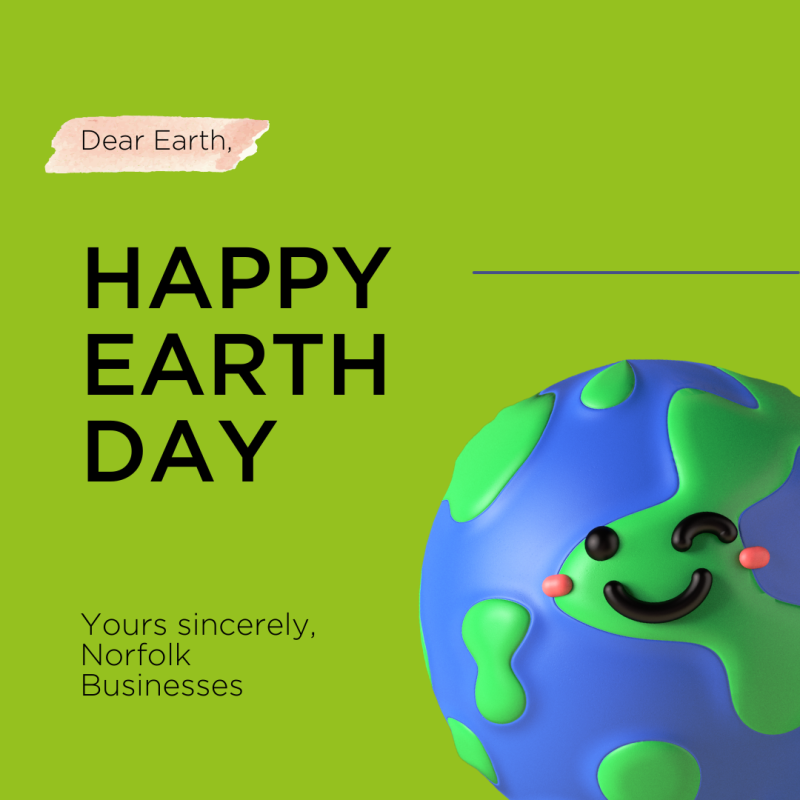
For Earth Day 2021 we asked our members and wider Norfolk business community ‘if they could write a letter to Earth telling it what it is doing to secure its future what would you say?’
We had quite a few responses many talked about the little things they have changed in lockdown such as recycling more and walking instead of driving, which they plan to keep doing as we gradually get back to ‘business as usual’. For others, it is about doing more creative practices in order to evoke positive change. The Cambridge Norwich Tech Corridor tweeted that businesses in the tech corridor are ‘using brewing waste to power homes, using seaweed to replace plastic and turning coffee back into coffee cups’.
Talking about the quick wins a company can do right now, Director of the History of Advertising Trust Richard Powell said: “The easy stuff is what a company can see on the bottom line: use LED light bulbs, turn off the lights (8/10 times we don’t need them on we have just got used to them being on), water savings, recycling, looking at travel… how much have you saved in lockdown? Do you need all those journeys now? If so, can you do them on an office cycle in the summer months? Does your office have a couple of electric bikes? Also ask your employees for their suggestions.”
So how can we make sure that environmental sustainability is more than just hot air? How can we ensure businesses implement this seriously into their business strategies in order to make positive change?
Thoughts from The Big Debate earlier in the year pointed towards a few key strategies:
• Business incentives to make change happen. Meeting key targets with incentives to implement certain things could help businesses go green.
• The incentives in building new eco-friendly homes should also be in place for retrofitting old houses, besides the green homes grant. We also need to look at what materials we build houses from – bricks, steel and cement are not environmentally friendly options.
• Small steps can make a big difference. Businesses can switch to a greener energy supplier, make sure that when they look to invest in a new vehicle go electric.
• Supply chains can also be looked at in terms of sourcing products and supplies locally, or at least from the UK.
Finally, we need to start shouting about what Norfolk businesses are already doing and are planning to do so that others follow. Just take a look at the great work Vattenfall is doing with offshore wind, or Norwich Research Park and UEA with their research and development into more sustainable food sources. Make sure you let us know what your business is doing so that we can share your stories far and wide!