‘International Women’s Day (March 8) is a global day celebrating the social, economic, cultural, and political achievements of women. The day also marks a call to action for accelerating women’s equality.’
This year International Women’s Day is about embracing equity. It is important that we understand the difference between equity and equality. ‘Equity means creating an inclusive world.’
What is the difference between gender equity and gender equality?
Equality means each individual is given the same opportunities and resources. Equity is about allocating the exact resources and opportunities to an individual based on their needs, equity recognises that individuals have different circumstances.
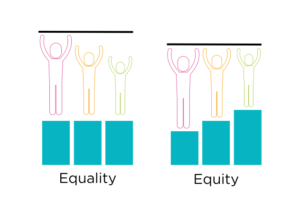
By creating equity, you create a level playing field which in turn will result in equality.
‘When we embrace equity, we embrace diversity, and we embrace inclusion. Equality is the goal, and equity is the means to get there. Through the process of equity, we can reach equality.’
You can read more about International Women’s Day 2023 and how to get involved here
To recognise International Women’s Day, we approached some of our members who work in an industry typically known as ‘male – dominated’ to gather their insights.
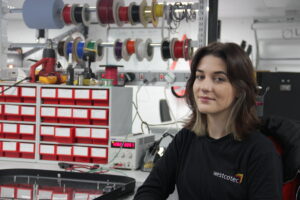
Ellie Chapman, Manufacturing Technician at Westcotec Limited
What inspired you to take the career path you’ve taken so far?
Growing up I never had a specific career in mind, I just always believed that if I was happy in my job, that was all I needed. I’ve always been in a retail setting but felt that it wasn’t for me long-term. I chose this career because I wanted to really challenge myself and step entirely out of my comfort zone into a field I knew nothing about. I came into this job with no prior knowledge of electricals or manufacturing, but since starting I have already gained so many skills and broadened my knowledge in this area. I also know how vital road safety is, so being in a job that helps to make the roads a safer place for everybody is really rewarding.
What do you think is the biggest challenge for women in business?
I would say that sexism is still the biggest challenge that women face in business, though there have been some improvements in recent years. Looking at it in a broad way, women still face inequalities in various areas, the most notable being the pay gap between men and women. I do think there are still also stereotypes of “traditional” roles for women, and women who branch out of those stereotypes are not always taken as seriously as their male counterparts. I’m privileged to say that I don’t face any of these difficulties in my job, but that doesn’t mean that I don’t acknowledge these issues within the industry. There is still a long way to go in bridging the gender inequality gap, but I am hopeful that these challenges and differences will soon be a thing of the past.
Who is your female role model?
The women in my family have always been a source of inspiration for me; my mum, my grandmas and my aunts have all had a big influence in my life. I wouldn’t say that I have a specific role model, though there are many women that I admire. From a young age I knew that the only person in control of my life and my future was me, so I think since then I’ve found a role model within myself. I have always gotten myself through challenges that I’ve faced, and I use this as motivation that I can get myself through any other difficulties that I may encounter. The world is full of inspirational and influential women, but it’s also important to see those traits within yourself too.
Grace Fricker, Electrical Apprentice at Flagship Group
What inspired you to take the career path you’ve taken so far?
My family had a big role on my career path, when my dad had his maintenance company, I’d watch and help him when he worked. My sister had gone into the RAF, I wanted to be just like her, so I prepared to go in the RAF until I dropped out of school and decided that’s not what I wanted anymore. After working in hospitality, I knew I didn’t want to work like that. I still wanted a technical job, so I applied and here I am now.
What do you think is the biggest challenge for women in business?
Having the confidence to get started, especially when it is a male dominated environment.
Who is your female role model?
My Older Sister, Katy.
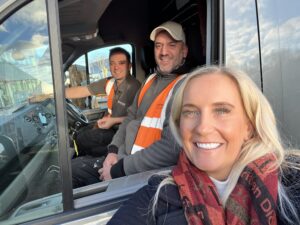
Gemma Hoskins, Business Unit Director at Evander
What inspired you to take the career path you’ve taken so far?
From a very young age I was determined to do whatever career path I wanted regardless of gender. My first experience of a very male environment was motor vehicle studies which was a 2-year NVQ course testing both practice and written skills. First female to have picked this option at school and yes I did have people including teachers ask me was a sure as it wouldn’t be easy. My response was it’s as easy as I make it ! Once the class had gotten over the fact I was the only female in the group we formed a great team, working together was vital in the 2 year course and I quicker learnt management is all about playing people to their strengths.
One finished school I did a small stint in Insurance admin however it didn’t challenge me so I applied for a customer services advisor at Evander and got the job ! I was gobsmacked as I didn’t have any experience with dealing with customers on the phone but I guess my confidence shined. I have done many roles within Evander including running a branch which in the past was deemed a very male environment, but it’s never been an issue and over the years many females have taken on what in the past was deemed male roles.
I think confidence and mindset plays a massive part in any career wherever you are female or male. As Business Unit Director I have worked for Evander for the last 23 years and I can honestly say the guys within my business have always been very supportive and I have a great platform to communicate with my team which is so important.
I would say mindset is key, I don’t see gender a consideration in any career, you just need to be able to contribute the same regardless of being male or female.
Being motivated is key in any business but my advice to any female thinking about moving into a male dominated role go for it. We are all ultimately judged on what we deliver not what gender we are. Researching a company is also a great place to start when thinking about a new opportunity as this will give you valuable insight into the companies culture.
What do you think is the biggest challenge for women in business?
In my opinion the biggest challenge for women in business is themselves get that nailed and it wont ever be an issue, remember you’re in the role due to your ability not your gender.
Who is your female role model?
Biggest role model what a question, it’s a really tough one for me to answer as I come across amazing resilience women every day. I think being resilience is a massive tick when being a success in business. All the women you expect come to mine like Karren Bradly & Malala Yousafzai, Michelle Obana just to name a few. However I cant pick one as there is so many amazing women who are an inspiration for us all. I would say work on being the best version of you and remember you can do anything you set you mind on.
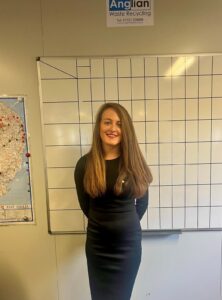
What inspired you to take the career path you’ve taken so far?
I have always had a passion for all areas of corporate business although my original roots were established through finance practice, I have always thrived on identifying solutions to problems through strong eyes for detail and identifying business savings through operating, financing, or investing activities.
I have never been the ‘traditional’ woman in finance and have found myself deviating away from the corporate normality. I have a strong, vivacious personality and thrive off the passion I have for business and negotiating deals between parties, especially deals associated with sustainable, social, and economic benefits. I love a sense of community, not only in the workplace but also with the stakeholders of our business activities through various partnerships. I believe thinking and acting outside of the box is the primary way to implement solutions.
I have been advised many of times that I talk too much to work in an office all day, I believe that you can absolutely have characteristics to do both! These traits had eventually guided me into a new route in my career. Construction is an industry that deviates away from the corporate normality and is an amazing industry to thrive in with the right values behind you. I work with the most passionate individuals and the tenacity presented in the workplace each day is amazing, we are all ready to hit any challenge at any point.
I had my first exposure to Anglian Demolition and Asbestos Ltd in 2021 as an external consultant to their finance department, fast forward around 10 months and followed on a mission to build some temporary business avenues abroad, I was then ready to jump into my Business Development Role full time at Anglian in July 2022 and have been having the great challenge of developing Anglian Demolition further.
What do you think is the biggest challenge for women in business?
Even with the changes over the past decade, I still feel that the construction industry is limited with Women in the workplace and that there could be some amazing skills to compliment the industry that just aren’t being recognised. I personally believe that even though we are making some strong movements in this decade, the biggest challenge for Women in business is feeling obliged to prove themselves or to go the extra mile to be recognised as an intelligent individual compared to an established male in business although at present we have come so much further with equality in the workplace and It’s great to see so many women that are gaining more confidence and making some amazing progress in their careers and in their roles, especially locally in Norfolk.
In my current appointment, I work closely alongside Toni Storer, one of Anglian Demolition’s Directors. Toni has an amazing ability to get stuck into any activity whether that be office administration, sales and relationships, physical labour or dealing with all varieties of disputes and will adapt to the task at hand. It has traditionally been very rare to find women so adaptable in the workplace and Toni’s abilities to thrive despite the opinions of others has always been inspiring to me. I can relate to the drive that Toni has, which motivates me in my role to adapt to changes within the industry and to have more involvement in all areas of the organisation, Toni shows that steel cap boots can in fact be stylish for Women and has been an amazing supporter to me and the whole team below her.
Who is your female role model?
A female role model that I have always been inspired by is Sara Blakely. Sara is an entrepreneur and is the founder of the brand, Spanx. Sara had an amazing niche with little funds to start her business and no investors to come on board, Sara had experienced heavy rejection multiple times before she was able to become established. Sara shows strong diligence and independence which is the ultimate of her successes. She quotes, ‘I did not have the most experience in the industry or the most money, but I cared the most’. If I’ve learned anything in my career so far, it’s that genuinely caring is the biggest superpower I’ve got, and that no goal is unachievable when you care about your colleagues, suppliers, and customers and the impacts we all have on the community and economy around us.
Victoria Kruger, Environmental Social Governance (ESG) Manager / MSc Sustainability Apprentice at Flagship Group
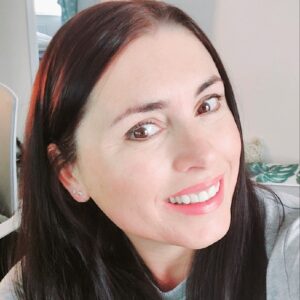
What inspired you to take the career path you’ve taken so far?
I have always been passionate about nature, and our surroundings, wanting the best for people and working for a thriving business. With my environmental projects background and experience working in social housing, a career in Sustainability seemed like the natural progression to bring all that experience together. It’s great to work in a profession that gives me the opportunity to find innovative and efficient ways of doing things, working across all the areas of the business with a diverse group of people. Studying an MSc in Sustainability via the apprenticeship route gives me a more well-rounded leadership and technical skill set that I could immediately start applying to my role day to day. We live in a time where it’s crucial to understand the impact our business and lifestyle are having on the planet and the people that inhabit it.
What do you think is the biggest challenge for women in business?
From my personal experience, juggling being a parent with work demands can be challenging. I am very fortunate to work for a company that has adopted agile flexible working which gives me the work/life balance needed.
Who is your female role model?
Sue Garrod – Sue is an experienced Sustainability Consultant who has worked with some huge well-known brands including Unilever, she has a wealth of knowledge and her passion and professionalism give me something to aspire to. I love hearing her talk and share her knowledge.
Lynne Tierney, Head of HR at Evander
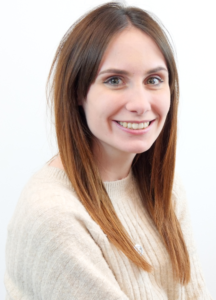
What inspired you to take the career path you’ve taken so far?
I was initially interested in HR because I liked the idea of working with different people across all areas of an organisation, understanding how the parts fit together. I started my career as an HR Advisor specialising in recruitment and MI. This was a great way to learn about different departments, meet various stakeholders and contribute positively to the growth and development of an organisation. After a while, I started to crave more variety and my next role as an HR Advisor in a new company had a much wider, more generalist remit. Being an HR generalist taught me so much about every aspect of HR and I loved that no two days were ever the same. I then decided to complete a post-graduate degree in HR Management because I knew that I wanted to contribute at a more strategic level. Becoming an HR Business Partner at Evander was great for my career because the leadership team were so collaborative, and I was given every opportunity to contribute across all areas. This was not only from a purely HR perspective, but operationally and commercially as well, which I have since become really passionate about. Last year, I became Head of HR, managing the HR and Payroll teams alongside continuing to work closely with the wider business as a member of the Leadership team. Fundamentally, every business relies on its people – they are the most important asset. I find being part of shaping their experience and the performance of the organisation really rewarding.
What do you think is the biggest challenge for women in business?
Everyone has a different experience, and I am fortunate to work with a brilliant team of people at Evander. That said, I am conscious that overcoming bias and stereotyping is a significant challenge in some working environments. Preconceived judgements can prevent people from collaborating. They can prevent people from being empowered to add value outside of their immediate remit, or even from doing their own job to the best of their ability. Where these behaviours are prevalent, this is hugely damaging and everyone suffers, including the performance of the organisation. It takes a lot of time and energy to break down these barriers and it can put a lot of pressure on people, who feel they need to work twice as hard to be recognised and accepted, and ultimately to deliver the same results. Organisations where this type of thinking prevails could achieve so much more if they addressed their culture, freeing up time and energy to be used elsewhere.
Who is your female role model?
My mum has always been career driven and has a very strong work ethic. She worked in many demanding roles while studying for additional qualifications and advancing in her career, alongside raising three children with my dad. She is also very people orientated and wants the best for the teams that she manages. The example that she set is a positive influence on my approach to work.