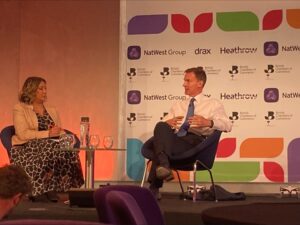
This week saw a Westminster Hall debate on business rates, with the Chamber network’s position on this key business issue being cited by Peter Aldous MP. The Minister for Business and Enterprise, Rt Hon Michael Fallon MP, also welcomed the British Chamber of Commerce’s supply chain report which highlights the continued problem of late payment to businesses. It was also announced this week that Stephen Metcalfe MP and Andrea Leadsom MP have secured a debate on the floor of the House of Commons to help small and medium-sized businesses by highlighting the problem of late payment in the supply chain of public sector contracts. The Chamber will be working to ensure that our members’ concerns are raised during this debate.
The Infrastructure (Financial Assistance) Bill, which will enable the government to guarantee up to £40 billion of investment in infrastructure, and up to £10 billion of new homes, received Royal Assent this week.
The next reading of the Growth and Infrastructure Bill is expected next week, which contains several positive measures around planning and infrastructure. The Chamber is also expecting the important Energy Bill – which will reform the electricity market to make nuclear and renewable more attractive to investors – early next week.
Commenting on Lord Heseltine’s independent review of UK competitiveness, John Longworth, Director General of the British Chambers of Commerce (BCC), said:
“Lord Heseltine’s analysis of the state of the UK economy is compelling. Businesses will welcome his call for steady, long-term thinking to improve the UK’s economic performance. Yet Heseltine’s prescription for action focuses too much on institutions, rather than on the fundamental barriers to business growth.
“Ministers should think carefully before committing to a restructuring of government, and focus first on the key constraints facing the real economy: the availability of growth finance, practical help for our exporters, our creaking physical infrastructure, and an education and training system that responds to business needs. Government can best support enterprise by collaborating with business to get the basics right.”
On Lord Heseltine’s recommendation that Chambers of Commerce play an expanded role in business support and local growth:
“We welcome the fact that Lord Heseltine has recognised that Chambers of Commerce are local, resilient, independent, internationally-focused and pro-active in their communities. We are pleased that he believes Chambers can continue to play a central part in making local growth happen.
“Lord Heseltine makes a range of recommendations that, in his view, would help bolster Chambers’ ability to serve local business. We will be studying these recommendations carefully and discussing their implications with Chamber members, the government, and other business organisations in the weeks and months ahead.”
On business access to finance:
“As long-standing campaigners for a British Business Bank, it is helpful that Lord Heseltine’s report acknowledges the fact that there is a structural problem around long-term, patient loan finance in Britain and that the Business Bank offers a possible solution. This is a much more fundamental issue for UK competitiveness and growth than the structure of government.”
On exports:
“Lord Heseltine argues that Britain’s competitors have a more systematic, joined-up approach to exporting and international trade, involving both government and business organisations. “This is a critical issue for our global competitiveness, and we are working actively with Lord Green on ways to better use Chambers of Commerce at home and across the world to provide British exporters with the best possible support to break into new markets.”
On skills and training:
“Lord Heseltine is right to highlight the fact that the education and training system doesn’t currently deliver to employers’ needs. Chambers of Commerce stand ready to link employers to local schools and other training providers to ensure that British businesses can compete globally.”
On decentralisation away from Westminster and Whitehall:
“Local businesspeople across England tell me they would like more influence over local growth and economic development. Many companies in the real economy will agree with Lord Heseltine’s view that England is over-centralised, and that power, money and real decision-making need to be rebalanced away from Westminster and Whitehall.”
SMEs often find the burden of bureaucracy and red tape overwhelming. The European commission is now carrying out a consultation to find out which are the most burdensome pieces of legislation to smaller companies. The online consultation is now open and will run until 21 December 2012.
Once the consultation is complete, the European Commission will analyse the results and consider how the situation can be improved for SMEs. Areas covered by the consultation include services, customs, employment and social affairs, energy, product safety, environment and taxation.
The Norfolk Chamber, together with the British Banking Association, recently held the annual British Banking Association Dinner for Norfolk. The main debate centred on access to finance and allowed local businesses the opportunity to raise any concerns on this issue. The guests included representatives from the major high street banks and Norfolk Chamber members from across the business community.
One year on from the last Norfolk dinner, the overall perception was that nothing much had changed, but this is not the case.
The banking world is moving forward, albeit in small steps, more importantly these steps are positive. Since the banking crisis, many of the chairs and chief executives for the leading UK banking institutions have been replaced. Bank governance and the risk elements of lending have all been reviewed. New fail-safes have been implemented, including ring-fencing retail finance from the investment sectors of the banks.
The result of these measures is that the legal criteria which the banks have to work within is more rigid and the banks are now trying to get a better balance between lending and borrowing, as well as concentrating on being more open in their dealings and regaining the confidence of the business community.
SMEs were recently asked about bank lending. 13% stated that they were discouraged from seeking funding from their bank and 12% said they did not trust banks in general and would not use them for funding. Despite this perception and, whilst the banks have a duty of care to lend responsibly, only 1% of SME’s were actively discouraged by their bank from seeking funding, due to bad risk. The same results also showed that in the second quarter of the year SMEs had obtained new borrowing facilities of £5.9bn and banks continued to maintain approval rates of more than 8 out of 10 lending applications.
Similarly the business community should not automatically look to the ‘traditional’ route of the bank as the only source of access to finance. Alternatives to the usual lending routes could be considered. Routes such as ‘angels’, credit unions and equity finance are all possible alternatives that might be better suited for a particular business’s needs.
The days of automatic access to finance are gone and the businesses should also be responsible in their approach to lending. SMEs should ensure they have done their homework and a solid business plan is a ‘must’ when approaching a funding source. Amazingly only 6% of SMEs take professional advice when looking for finance.
Support mechanisms, such as SME mentoring services (www.mentorsme.co.uk); and the Funding for Lending scheme, designed to stimulate the economy by making cheaper loans available to firms and individuals; are supported by the British Banking Association to help drive economic growth. The recent announcement of the formation of a National Business Bank is also another positive step.
The British Banking Association dinner provided an ideal opportunity for the banks to understand the concerns of the Norfolk Chamber business community and to discuss ways in which the banking world and local businesses can work together to promote prosperity and economic growth in Norfolk.
This week, the British Chambers of Commerce (BCC) hosted its first annual International Trade Conference in central London. In his speech to delegates, Minister of State for Trade and Investment, Lord Green, said that exports should be increased to 40% of UK GDP, and that exporting is ‘not just good for Britain’, but that it is ‘essential for Britain’. In a stark message to the UK, he explained that after 50 years of trade deficits, we run the risk of an unsustainable economy as this cannot be funded by the government for much longer. Commenting on the speech, John Longworth, Director General of the BCC, said: “We are really encouraged by some of the comments made by Lord Green, as we believe that exports are going to be vital to any sustainable recovery in the UK. In Germany, exports make up 46% of GDP, so there is no reason why with the right support, we can’t hit the 40% target here in the UK. “We are pleased that the government wants Chambers to play an increasingly important role in promoting international trade overseas. The BCC already has strong relationships with Chambers of Commerce around the world, and we will continue to work with colleagues to help British firms break into new markets. But the government needs to provide sufficient funding to British Chambers overseas as a platform for practical help for businesses looking to export if we are to compete with countries such as Germany, France and Italy who are already doing this for their exporters. “But we are running out of time, and action needs to be taken immediately to help kick-start export growth if we want to see a bright future for our children and grandchildren. Businesses have the right attitude. They want to grow and break into new and evolving markets, but they need the right support in order to do this. The latest report by the BCC and DHL shows that more than a third of companies increased their export sales in the last three months, and while this is encouraging, the figure is down on the previous quarter. The government must intervene and help new and potential exporters increase orders and expand into fast-growing markets. “If the government is serious about exporting, ministers should create an export voucher scheme. There are unspent funds available that have been allocated according to government priorities, not business needs. Businesses, not government, are best placed to decide which services they need most to help them boost exports overseas.”
The latest figures show that the number of private sector businesses in the UK increased significantly to 4.8 million at the start of 2012 – a record high.
This is an increase on last year’s figures, which showed there were 4.5 million businesses in the UK at the start of 2011.
The statistics, published by the Department for Business, Innovation and Skills, also show:
•The 4.8 million private sector businesses employed an estimated 23.9 million people and had an estimated turnover of £3,100 billion •Of the 4.8 million private sector businesses, 99.9 per cent of them were small and medium sized enterprises. •SMEs also account for 59.2 per cent of private sector employment and 48.8 per cent of private sector turnover.
Belgium may not be as well known as some other global markets, but it is an open and dynamic export market for British goods and services, and the most globalised country in the world . You wouldn’t guess that this country of 11 million people with three official languages is also the UK’s 6th largest trading partner in the world, with UK exports worth £12.7bn in 2012 – more than India and China put together!
Compact, close and affluent, Belgium is a great starting point to build your business across all of Europe. It’s just over two hours by Eurostar to Brussels or a short and hassle free hop from the wonderful London City Airport to Antwerp.
“It is an ideal place for the first time exporter and a great stepping stone to the rest of Europe” says Jonathan Brenton, HM Ambassador to Belgium, “English is widely accepted, and there are quick and easy communications and connections with the UK and the rest of mainland Europe”.
As a market place, the country is full of opportunities, especially for small and medium-sized business. Belgians value good life and place a premium on non-price factors such as design, quality, delivery, and after sales service. British exports to Belgium powered ahead by 9% over the past year, the highest increase for any EU market. Key sectors include chemicals, ICT, renewable energy and healthcare.
The Golden Bridge Award 2012 is a new annual award for the most successful UK businesses exporting to Belgium. Open to both service and manufacturing companies, the awards celebrate the success of UK businesses in the Belgian market, and give British products and services a higher profile at the heart of the EU.
For further information about the Golden Bridge awards, please contact:
Joanna De Keyeser Business Development Executive British Chamber of Commerce in Belgium Boulevard Bischoffsheim 11 1000 Brussels T +32 (0) 2 613 28 53 E [email protected]
The much-promised legacy of the 2012 Olympics may appear much further afield than East London, with news that UK companies are already winning big contracts for the 2014 FIFA World Cup and Rio 2016 Olympic and Paralympic Games.
According to the Department for Business, Innovation and Skills, London’s successful summer of sport has put UK firms in the box seat to win contracts with future international events.
So far, 22 British companies have won 36 contracts for the 2014 World Cup and 2016 Olympic and Paralympic Games (all to be held in Brazil), which together amount to over £70 million.
Projects include urban and transport planning for nine World Cup host cities, the Olympic Park master plan design contract, and communications and IT facilities.
Prime Minister David Cameron has led a trade mission of 58 companies to Brazil, where he brought British companies together with key decision-makers in Rio 2016 at a special summit on hosting sporting events.
Britain wants to make the most of its experience as hosts of London 2012 to strengthen its relationship with Brazil and deliver an economic legacy for the UK, he explained.
Research published by Deloitte reveals that more than a quarter of British firms (28%) believe the successful delivery of London 2012 will help UK firms boost their exports to the host countries of future major events.
The research also found that 50% of companies feel the Games have increased confidence in British companies’ ability to deliver large infrastructure projects.
As the Membership manager of the Norfolk Chamber, getting out there and experiencing the innovation of our Chamber members is always eye opening and inspiring but sometimes i do get to have a bit of fun in the process. Today I was invited to attend Ride and Drive day with Dingles Toyota at Sprowston Manor and experience two cars that sit at either end of their range.
First up was the Prius Plug-in
One of Toyota’s true electric cars. In support of the green economy, it’s not hard to see why 85% Toyotas fleet market is made up of sub 100g/km cars when in
Norfolk the awareness of the Green Agenda is growing daily. Reducing you businesses carbon footprint has now become a critical part of lots of our member’s businesses plans and every time I visit a business they are keen to tell me how they work hard in reducing costs and thinking working hard and becoming more sustainable. Those that have a fleet of company cars can dramatically reduce costs and carbon emissions by investing in hybrid technology and this car with CO2 emissions of just 49g/km and an astounding 134 mpg is one of the many sustainable solutions to reducing a fleet’s carbon footprint and saving fuel costs. With the emergence of more and more plug in points throughout Norfolk this type of hybrid will be seen more and more on our streets and hopefully in the fleets of our businesses looking to cut down on that all important Carbon footprint.
Second up was GT86.
Yes my job does have its perks and getting to drive Toyota’s long awaited performance car is certainly up there with the best of them. Yes the little boy in me made me take this out on the road for a spin and you can instantly see why the whole point of this car is to be fun to drive. You can’t help but grin ear to ear as
you pull away from the tree lined drive of Sprowston manor and hear the growl of the 2.0 litre Boxer engine and watch as the electronic speedometer hurtles through the numbers to 60 mph in just 7.6 seconds. There is a bit of a strange anomaly with this car as for some unknown reason the earth’s gravitational pull seems to have a dramatic effect of your right foot as soon as you get in.
Although not in exactly in line with the green economy, this is an example of car manufacture catering for all types of driver and although you would want to drive a Hybrid for work, you would want a GT86 in your garage at home.
So In my last few months I have experienced helicopters, steam-trains and cars, so what’s next in line for my excisions into the diverse Norfolk business community’s offerings? There is so much to choose from so one can only wait and see.
Members of Great Yarmouth Chamber Council, together with Cabinet members of Great Yarmouth Borough Council met recently to discuss the private and public sector working in partnership to promote economic growth.
The meeting, held at Great Yarmouth Town Hall, covered topics such as: broadband: road infrastructure, including the third river crossing; inward investment; the Enterprise Zone; and tourism.
John Morse, President of Great Yarmouth Chamber said “We are delighted that there is now a much closer engagement between the public and private sectors, working together with a clear aim of developing Great Yarmouth into a vibrant place in which to do business. Going forward, we eagerly look forward to working with the Cabinet to convert dialogue into practical solutions and to maximize employment opportunities in the town.”
The 116th Norfolk Chamber of Commerce Annual General Meeting was held at Dunston Hall Hotel on Friday 5th October 2012. The event was well attended and the finalised minutes can be viewed by clicking on the attachment.
Entries are being invited from local businesses for the Mayor’s Business Awards, which have launched today (23 October).
The awards, originally established in 1989 by former mayor Cllr Les Daubney, are the borough council’s way of publicly acknowledging outstanding business achievement and recognising the contribution that local businesses make to the economy of west Norfolk.
Borough Mayor, Cllr Geoffrey Wareham, who will be helping to judge the awards this year, said: “As I have engaged with local businesses during my year as mayor, I have been impressed by the determination and optimism in the business sector in what we all know are challenging times.
“The Business Awards are well established and I would encourage local businessmen and women to put their enterprise forward for one of these awards. Previous winners and their staff have benefited greatly from the publicity and feel-good factor. I am looking forward to visiting this year’s nominations and seeing for myself the growth in our business sector.”
There are three categories to enter:
Manufacturing Business of the Year
Service Business of the Year
Young Business of the Year (for businesses trading between one and four years)
Judges for the Mayor’s Business Awards are particularly interested to learn about achievements in areas such as:
business growth
marketing and promotion
business innovation
development and investment
training and managing staff
performance management
environmentally friendly initiatives
Cllr Alistair Beales, Cabinet Member for Regeneration, added: “Our local businesses are vital to the west Norfolk economy and, despite the ongoing difficulties of the current economic climate, they continue to succeed. Celebrating their successes and achievements is absolutely crucial and helps us to show others that despite the challenges, local businesses are thriving. We are really keen to hear about local business achievements, whatever they may be, and would encourage people to submit their entry forms as soon as possible.”
Entries can be made by downloading the entry form on the borough council’s website www.west-norfolk.gov.uk. Entries must be received by 30 November. Shortlisting of the finalists will take place by the end of the year, with judges visiting the finalists during January. The winners of the Mayor’s Business Awards will be announced at a prestigious awards ceremony on 15 March 2013.
The Mayor’s Business Awards are organised by the Borough Council of King’s Lynn & West Norfolk with support from Lynn News, KLFM 96.7, NWES, Norfolk Chamber of Commerce and the West Norfolk Partnership.
For further information contact Paul Harrison, Business Development Officer, on 01553 616735 or e-mail [email protected].