Read

24 Tips to Grow your Instagram Followers

24 Fingers

If you’re on any of the social media platforms, you’ve probably asked yourself countless times, how do you go about growing your followers? And when it comes to Instagram, a platform which is really working wonders for many brands’ sales, it really pays to grow your Instagram followers.

If you’re looking to grow your Instagram followers, there are definitely tips and tricks that you can use to build your follower numbers. Tips and tricks which don’t involve badgering your mum, your mate’s cousin’s sister and your dog into following you under duress. So before you go about asking Rover for a follow back, here are our top 24 tips for growing your Instagram:

Choose your Instagram content wisely

First things first, you are never going to grow your following if what you post isn’t relevant to your audience and your brand. This means producing images that work well and are optimised for Instagram, as well as those which are consistent with your brand. A good way to consider it is: if someone searches a hashtag and sees your image on the explore page, are they going to be intrigued enough to click on it? If the answer’s no, then they’re not likely to land on your page and add to your follower numbers. Booo.

Develop a theme

Curating your content is one of the best ways to gain new followers. The aim of developing a theme is to instantly make new people who land on your Instagram grid want to follow you, simply because your grid looks so beautiful / interesting / colourful*, *delete as applicable*.

It’s really simple to curate your feed and develop a theme, too, although it does take a bit of work and getting used to. However, simple ways of developing a theme include using the same colours and tones in all of your posts, using the same filters or presets on all of your images, or having a common element throughout to create cohesion. By doing this, your followers will instantly recognise your posts when they appear in their feeds, and it will also reiterate and endorse your brand and the consistency it offers.

Use your Instagram bio

Your Instagram bio is prime real estate, but you’ve only got 150 characters, so it’s important to use it wisely. It’s often the first impression of your Instagram feed, so you need to make sure it’s snappy and compelling, so that people decide to follow you. Remember to include a CTA and a link to your website, too, as this is the only place that you can include a link on Instagram (although if you want the secrets of how to get around that, get in touch and let us give you the tips of the trade for getting more out of your Instagram link – just saying).

Develop a good relationship with your audience

By developing a good relationship with your audience, you’ll be able to work out what they like and dislike about your posts and those of your competitors. Look at what your competitors are posting; what’s working well for them, and is this type of post something that you can incorporate into your social media schedule to increase your relevance and therefore your followers?

But don’t overshare

We all know people who overshare on social media (you know the types – at any given time you know where they are, what they’re doing and what they’re having for dinner, too). And for personal accounts, this is absolutely fine.

However, for professional accounts, you need to make sure that whatever you’re posting is in keeping with your brand. Posting a photo of you as Director of your company in the thick of some of the behind-the-scenes action is absolutely fine; posting your holiday snaps to your company page, unless they’re somehow relevant to your brand, is maybe going a bit far. Whenever you’re worried about oversharing, ask yourself whether it’s something that your followers would like to see in relation to your brand; these last five words are crucial as it needs to move your brand forward, always.

Don’t see your followers as numbers

Yes, of course, this article is all about growth, and growth on Instagram in the most literal sense is follower numbers. But just as a watched pot never boils, watching your followers constantly won’t help you in the long run. This is the reason for getting to know your followers and your audience; it’s always better to have a small but engaged audience than a large, indifferent one. So spend some time interacting with your followers: reply to their comments and messages, set polls and questions in your Stories and generally treat them like the human beings that they are.

Build your network

When it comes to Instagram, there is definitely an element of ‘if you scratch my back, I’ll scratch yours’. By this we mean, grow your network through the actual ‘networking’ bit. Go and seek out your target audience to follow, as well as others in your industry or local brands, and they might just give you a cheeky follow back as a show of support.

Set up an account swap

If you do build your network effectively, you will likely get to a point where you can set up an account swap with some of your followers. This could be in the form of an account or Stories takeover for a day, which is a great way to show off what you do to their audience, and vice versa.

Show your face

People buy from people. So where relevant, include photos of you or your team. Images with faces will naturally increase engagement on Instagram, as people want to feel like they’re interacting with another person. If you can’t include an image with faces in, using an image which is a point-of-view can help to increase engagement as it makes your followers feel like they’re part of what you’re showing them. In your face…

Add value

Remember that when you post, you should be telling a story which shows your audience what value you can add to their lives. Don’t go generic; get your audience invested in what you’re talking about and how you can help them. If you can, try to elicit some emotion with your posts: this could be making them laugh or inspiring them, or making them feel part of your team or in da club, for example.

Use a call to action

When it comes to engagement, there is no harm in using a call to action to specifically ask people to interact with your posts, as long as it’s subtle. This could be asking your followers to tag their friends who could benefit from what you’re offering, or asking a question and asking them to comment with their answers. The former will certainly help to grow your Instagram, as when your followers tag their friends, it will bring new people over to your feed, all of whom are potential new followers.

Give shoutouts

Collaborating with someone? Had some great service from someone? Don’t forget to give them a shoutout on your Instagram. This can help to build your following, if they or their followers come and give you a follow. It’s also good karma: you’re telling your audience how great they are, and in return they are likely to give you shoutouts in future, which will introduce their followers to you.

Work with influencers

Similar to shoutouts, but on a much more formal basis, working with influencers is a great way of getting your content and products in front of a different audience. It can be a great ROI, as they sing your praises to their followers for you, which should bring their followers flocking to your feed, too.

Whether you decide to simply engage with influencers in the hope of it helping to grow your following, as they might naturally fall in love with your page and your products and share what you offer with their own followers, or pay some influencers (whilst following all of the relevant ASA guidance, of course) is up to you and how much return you would like to see from working with influencers.

Use User Generated Content (UGC)

User Generated Content (UGC) is a simple way of getting your followers – and potential new followers – involved. UGC is taking photos that your followers have posted and have tagged you in, and using them to your best advantage. They might be good enough (and consistent with your theme enough) that you can use them on your grid, but if you don’t feel that they fit your theme, adding them to your Stories is a great option. Once your followers and potential followers know that their images might get shared in your feed, they are more likely to tag you so that you can repurpose their images.

As a side note: it’s always polite to ask if you can share someone else’s image (unless it’s really obvious that they’re happy for you to do so). Why not ask your audience to tag you in their posts? This is a really easy way of generating more content for your feed and keeping your followers engaged. Win, win.

Post consistently

Posting regularly will really help to build your followers. You’ll have more posts for people to find via hashtags or on the explore page, and your followers will know when to expect posts from you, meaning that they will know when to check in and see what’s new with you. This consistency will help people to rely on your feed and follow you.

Post to stories

Yes, we know, Stories is just another aspect of social media that you’ve got to keep up with, but it’s really worthwhile posting to Stories regularly. It’s a much more informal way of keeping your followers up to date with what you’ve got going on, and the fleeting nature of them means that people often engage with them really quickly, but they make a huge impression.

They’re great for sharing behind-the-scenes content, for example, which will help to build the authenticity of your brand. Use polls and questions for engagement, and you’ll often find that people start talking about how great your stories are, which will bring more followers to your page. 

Use Reels

Now we really are getting into the realms of having to teach slightly more mature dogs new tricks, but Reels have taken off with a huge amount of popularity. Once you get the hang of them, you’ll see that there’s loads you can do with them, and they can often be really fun and engaging. For example, if you’re a clothing brand, why not use Reels to create a fashion show of several different looks? You can use the same model throughout, just stopping the video for outfit changes, and content such as this has potential to not only appear on the explore page, but also go viral.

Use hashtags

This is a no brainer on Instagram, as hashtags help to get your content in front of different people. In fact, by tagging away, your content will be found more easily by those that don’t already follow you…and then, of course, they might just follow you, and your Instagram numbers will grow. #hashtagwinningallovertheshop.

Use the right hashtags

Of course, your hashtags need to be relevant in order to attract the right audience. It’s no good if your Instagram followers are growing but they aren’t people that would buy from you or invest in your brand. Therefore, research the most popular hashtags for your industry and use the tags that are relevant to you.

Remember that if you’re a small brand who wants a local following, many locals often follow localised hashtags, such as #BrentwoodBusiness, so it’s worth researching which of these to use, too. If you’re not sure what would work well for your industry or business, get in touch and let us do the heavy lifting for you.

Create a branded hashtag

Of course, hashtags don’t always need to be those used by others. In fact, sometimes, you might want a hashtag which is unique to your brand or your marketing campaign. By creating a custom hashtag for your marketing campaigns, such as #50SquidforSFH for our recent charity campaign, your followers, or even those just interested in the campaign, can easily find your posts. And if your followers start tagging their posts with your campaign hashtag? Well, that’s another route to finding that aforementioned User Generated Content.

Host a giveaway

Holding a giveaway can really build your following very quickly. Everyone loves to try their luck at winning something, and if you ask your followers to tag a friend and follow your page as a condition of entry, you may find that other likeminded users arrive for the giveaway but stick around for the long term.

Pay for an ad

Sponsored posts are a really good way of gaining followers. If you target the ad audience, you’ll find that your grid posts or stories are put in front of relevant people, who are the likely to come and follow your page if they like what they see. Not sure who or how to target the ad? We’ve got a course for that.

Geolocation tagging

A really simple trick: remember to tag your posts with your business location if you can, or if you’re out and about – for example at meetings or on a photoshoot – use that location. People who are searching for that location in the explore page may well find your content this way. And if they happen to be looking for a local photographer who happened to tag their location at their recent photoshoot, for example, they may well come and follow your page.

Marketing outside of Instagram

Of course, you can also market your Instagram account outside of the app itself: on your website, on email newsletters, on your business cards and printed material…you name it, you can put your Instagram handle on it. This is a really simple but effective way of driving people to your account who may not have come across it otherwise, growing your Instagram from outside of the app.

24 tips to grow your Instagram not enough? Let our 24 fingers get to work

And if this little lot isn’t enough for you, book in for your free Instagram consultation. Our 24 fingers can get to work with even more tips and tricks to grow your Instagram followers. We’ll soon have you at that hallowed 10k.

Mae Day Marketing Helps Supplier to Beer Industry Increase Customer Base by 50%, Despite Pandemic

Case Study

In June 2019, Mae Day Marketing was launched, a consultancy business headed by experienced communications expert, Judi-mae Alderton. Only months before, Brook House Hops had made the bold decision to invest in some ground-breaking marketing support to take their business to the next level. They got in touch via LinkedIn and a conversation started that would change both of their businesses for good.

Brook House Hops contacted Judi-mae because they foresaw that her experience would be beneficial to them as a business. She had enjoyed a marketing career spanning nearly 2 decades working in home improvements, stainless steel manufacture and software development right through to brewing. In fact her last two full time roles had been heading up the marketing function for Norfolk’s biggest brewer, Woodforde’s Brewery and helping launch reborn heritage brand, Lacons Brewery.

Head of sales and marketing for Brook House Hops, Sebastian Nielsen explains: “We engaged with Judi-mae of Mae Day Marketing initially to run a small consulting exercise and to help with our marketing plan. She was extremely thorough and had some great suggestions on how to structure and promote our business.”

But the insight didn’t stop there.

Sebastian continues, “After a few weeks, it became obvious that Judi-mae would be a brilliant asset to the Brook House team, so she started managing ALL of our PR and social media activity. As our business and needs grew, she helped us in many other areas too.”

After an initial review and a marketing strategy was created, a monthly agreement was put in place which covered a diverse set of marketing activities intended to boost the profile of Brook House Hops: bring in new fans and followers, increase online sales, improve website rankings, increase online engagement and capture the attention of the industry press.

Within 6 weeks, eyes on social media content was up more than 3 fold and engagement across all social media networks was nearly 5 times what it had been before they started working together. Brook House Hops’ commercial success went from strength to strength, with new routes for customers to discover their portfolio of UK and international hops.

The working relationship between Mae Day Marketing and Brook House Hops kept growing and 6 months into the agreement it was bolstered and increased in order to dedicate more time towards continuing the growth of the business, particularly to support recent investment and expansion.

Mae Day Marketing helped with creative briefs, copywriting for new brochures, website optimisation, sales process review, e-mail activity and designed sales collaterals to improve their overall communications and customer relationship management. Judi-mae even designed and created a deck of ‘Hop Trumps’ for an upcoming event, which went down a storm with customers and fans alike!

They were on a roll and teamed up with Paul’s Malt to exhibit at the Society of Independent Brewer’s BeerX event in Liverpool in March 2020 just as the pandemic broke, using Mae Day to coordinate all of their live social media posts across the couple of days, giving a boost to both brands in the process.

As the pandemic effects kicked in, budgets were put under pressure but the benefits of marketing were really clear so activity continued, maintaining the company ethos of supporting the industry by introducing some unique initiatives and lowering prices.

By the beginning of 2021, Brook House Hops had increased their customer base by an incredible 50%, despite the impact of the pandemic, due to a dedication to sales and marketing activity and innovation.

In the 18 months July 2019 – March 2021, Mae Day Marketing had grown their online following by 71%, increased the reach of online content by 438% and improved engagement levels of social media content by 478%. Over a dozen pieces of national and local press coverage was garnered from PR activity.

Sebastian Nielsen comments “Judi-mae comes highly recommended! Working with Mae Day Marketing was easy and fun and I’d recommend their services to anyone, particularly those starting a new business or moving into a new market / launching new products. Mae Day Marketing’s services were invaluable to us.

Mae Day Marketing owner Judi-mae adds “Brook House Hops were my first client and will always have a special place in my heart. Working with them was always exciting and we tried out so many new things with their brand, constantly achieving great results. The skills I have learnt from a lifetime of interest in digital technology and nearly 20 years working in marketing departments really shined for me as I became an independent business owner and I look forward to many more years doing the same for other ambitious businesses.”

To get in touch with Mae Day Marketing, visit them at www.maeday.co.uk, call Judi-mae on 07828 852448 or find them on social media. To find out more about owner Judi-mae, you can read about her varied and award winning entire career history here: https://maeday.co.uk/about

Facebook: https://www.facebook.com/maedaymarketing

Instagram: https://www.instagram.com/maedaymarketing/

LinkedIn, business: https://www.linkedin.com/company/35647103

LinkedIn, personal: https://www.linkedin.com/in/judimaegaler

Hethel Innovation Case Study: Indigo Illusions

Local Creatives Starting Businesses

Norwich based animation and video production

We asked Lucy and Jake at Indigo Illusions a couple questions about their business, check out their answers below!

Talk us through Indigo Illusions, what is your story and what do you do?

We are a creative animation and video production studio based in Norwich. We specialise in motion design, 2D animation and video to develop brand’s and business’ individuality and help them to communicate a clear and unique message to their audiences.

The studio is ran by myself (Lucy Summers) and my business partner Jake Sutcliffe. We met on the BA Animation course at Norwich University of the Arts and began developing Indigo as soon as we graduated in late 2018. With both a shared passion for moving image, the local creative industry and being business driven, it felt like the natural move to form our own studio.

How have you been working with the Business Development Team at Hethel Innovation?

Near the beginning of our journey we attended the Activate course that the Hethel Business team were running. This is how we initially began contact with Hethel. The course was very insightful and we really felt a sincere belief and encouragement from the team. It was clear that they are very invested in the local business community and we have developed a very supportive relationship with them as our business has grown over the last year.

What do you see in your business’ future, do you have any goals right now?

Of course like most businesses our primary goal is to scale up, build a team and work with really exciting clients. On top of that, as an animation studio we really want to bring something different to Norwich and build an exciting personal brand for Indigo. We want to contribute to our creative community and inspire other young people and students to further their dreams in the creative industry.

We have had a fantastic experience so far and have learnt so much along the way, as well as meeting so many other inspiring business owners in the local community. We are really looking forward to continuing to develop our relationships with other entrepreneurs and expanding our network over the years

Is it worth being an Entrepreneur or Angel in the UK?

Magic Sauce

Ok, so that headline was a little hyperbolic.

Beauhurst published results of a survey on the feelings of the Startup ecosystem in the UK with regards to possible government plans to overhaul CGT (Capital Gains Tax) on share disposal.

Currently, when a founder exits a business the first £1m of the proceeds is only subject to 10% tax, with the rest subject to 20% in most cases.

The government is proposing a 45% tax on disposal of those assets. 

This would make it the highest in Europe, with all of the consequences that entail.

1. 85% of those surveyed said that they’d set up in another, more favourable location (in tax terms).

2. 88% said that jobs would move abroad.

3. 90% said that it would be harder to attract top talent.

4. 72% of Angels said they would be less likely to continue to invest in UK companies.

All of these scenarios would be catastrophic for the UK at at time when financial stimulus and innovation is needed most.

The high growth sector of the UK economy employs 3.5m people, all paying income tax, national insurance and VAT on whatever they buy.

Those companies would definitely have brought a proportion of inward investment to their businesses throughout their growth (which is then spent on staff, services provided by UK companies, etc.). 

Let’s use back of a napkin maths. Let’s say that each person working for a high growth company (mostly well paid jobs) pays £16666 through the year in income tax, NIC and stuff like VAT.

That’s worth £58bn to the economy annually. 

That doesn’t account for those fast-growing companies that have been acquired and now form part of a larger corporate machine.

This doesn’t account for the increase in spending a tech platform may encourage, or business efficiencies and productivity gains it may provide.

What none of these things mention is the risk that founders take to gain the potential high rewards that a tech platform scaling and then being acquired or going to IPO can bring.

Quite apart from the toll on mental health, it causes relationship break ups, debt, sleepless nights. It’s not a 9-5 job. People are putting their reputation, savings and everything else on the line (and the burden of responsibility that any good founder feels when they are invested in by outsiders).

To try and bracket that risk and the tax on the reward on the same level as an employee in a well paid 9-5 job is an insult, a deterrent and could stifle an entire generation of innovators (or force them to another country to try their luck).

Look across the pond to the US. 

A tech founder could realistically exit their business and not pay a dime in tax on the first $10m of the sale of their shares in their own company. They’d pay 20% on the rest. That incentivises both investors and founders to innovate and scale a business. 

Having the highest CGT in Europe does not.

It will harm more than just this current generation too.

Every founder I’ve ever met on my journey that’s made it to a pre-seed investment has a purpose of some kind. Ultimately, every single one of them wants to be an Angel investor themselves one day and ‘pay it forward’. That paying it forward is critical to the circular economy within the tech landscape. People get invested in, they grow a company, and if they have enough money they become an investor themselves to seed the next generation of tech companies.

Living in Norfolk, one of the things that caused a lag in the growth of the tech Startup scene here initially was the lack of exits. An ecosystem cannot exist without successful ex-founders who choose to reinvest in that cycle.

80% of the people surveyed by Beauhurst said that they would be unlikely to reinvest. Liquidity on disposal of a Startup is critical to the growth of further innovation and Startups in the UK. 

We’ve already lost jobs from large companies due to Brexit, we’ve lost entire companies due to Brexit. If the government thinks it can rely on those corporates to maintain the country in a post-Brexit, post-Pandemic world, it’s deluded and smacks of the same overconfidence of many high street retailers who failed to change the way they do things and adapt to the new behaviours of its’ consumers.

We get that we have to reduce the borrowing that has spiralled thanks to the pandemic to offset the measures put in place to keep people in jobs. That money shouldn’t have been spent propping up ailing, dying giants in the form of large high street retailers that were going to die anyway. It should have been spent upskilling or helping people transition into better paid jobs in the digital sphere, for employers that would truly value them.

If anything, we need to seed the environment to create more high growth companies and the jobs that go with them. Imagine if we could double the amount of high growth companies in the UK over the next 5 years?

That would look like over £100bn in tax revenue for the UK, jobs created, inward investment pouring into the company paying for the growth of those companies, more confidence from the investment community to invest in those companies, more people paying it forward, more Angels, more people able to invest in VC funds and lending…

We also have to remember that a lot of the Angels that have helped grow the sector until now have been ex-corporates and landowners who’ve levied their assets to invest. That can’t go on forever, especially as we’re seeing more people turn to spread betting lower amounts via crowdfunding rather than getting involved.

The alternative is dwindling confidence that the UK is a hotbed of innovation that attracts more inward investment into Startups than any other country in Europe. People start to switch off, people lose the aspiration to do things that could improve processes, governance, the climate, stimulate consumer spending.

Don’t raise CGT.

Offer high growth companies (up to) the first £5m of their disposal free of ANY tax (on a disposal of £50m). Tax them at 20% for the rest. Sure, put a caveat in that the £5m is only tax free because it’s ringfenced for reinvestment. 

If we tiered (the government likes loads of tiers, I’ve noticed that) that tax so that it represents 10% of the value of that disposal to an individual it means they’re likely to either start a new company with money behind them or invest in others.

At the bottom end, even if someone benefited from the sale of a company to the tune of £5m, they’d be tax free on the first £500k, with 20% being levied on the rest. The total tax to pay would be £900,000 (instead of £2,250,000). Would that encourage an entrepreneur to start again or invest in others at £25k a pop? Don’t sit there scratching your arse and thinking because the answer is yes.

The other thing that needs regulation is the amount of founder equity that some universities are taking in the UK. They should be capped at a maximum amount of 25% of dilutable equity. There is so much IP floating around the Universities that’s been left to rot due to ignorance/greed of Universities. No-one will invest in a startup that has 50% of the IP and founder equity belonging to a non-active partner. Stop it.

You can get in touch with Magic Sauce here

Graphics vs Live-Action: The Showdown!

JMS Group

Graphics vs Live-Action

One of the questions we are often asked by clients at the briefing stage of their TV campaign is “Do you think a filmed advert, or one made with graphics is going to work best?”

First, let’s define ‘graphics’. It’s a broad umbrella that can cover an almost infinite variety of production styles, each with their own level of complexity – and each requiring widely different investments of creation time. For the purposes of lower-budget TV commercials we can safely assume ‘graphics’ to mean ‘motion graphics’ (mo-graph) – which is the addition of creative movement to otherwise static artwork, logos, images, and text (moving text is sometimes referred to as ‘kinetic typography’). Motion graphics create a sense of ‘animation’ but are not animation in the truest ‘traditional’ sense of the word. Animation usually refers to creations where every element of every frame has been created for purpose, and it’s a process that is usually far more time-consuming than motion graphics. 3D ‘CGI’ is a different beast that sits somewhere between motion graphics and animation – creating a commercial entirely in CGI can be a very time-consuming process, but many 2D motion-graphics ads incorporate elements designed and rendered in 3D applications.

Long story short: The things you can film in reality are limited, the things you can create with software are infinite.

Semantics dealt with, let’s get back to the question – is it best to produce a TV commercial using filmed live-action footage, or motion-graphics?

What Are the Objectives of Your Campaign?

If you’re advertising products – where the physical appearance and functionality/efficacy are the key selling points – the case for filming an ad is pretty clear-cut. It’s a no-brainer to shoot a commercial or use CGI renders that are so photorealistic they can be treated as live-action footage. Car commercials show the car – because an attractive drawing of a car is not what the manufacturer is trying to sell! Viewers want to see what it is you are trying to tempt them to purchase.

If you are going to be advertising a service – something altogether more conceptual – then you’re trying to get a viewer to appreciate how an offering would be beneficial to them. And, as there isn’t a physical ‘thing’ to point a camera at, the options for the advertising creative are essentially limitless.

Are Graphics as Effective as Live-Action?

Way back in the past, graphics were indeed the poor relation to live-action footage. Big advertisers spent big money on big film shoots. Little advertisers pointed a video camera at printed artwork. The difference was starkly visible, ‘live-action vs graphics’ was what separated local advertisers from the big boys. Roll forward a few decades and motion-graphics for TV are now an artform that’s not to be dismissed. Graphics-based commercials can more easily explain abstract concepts and processes, can be easily tied to wider brand strategy, and can be just as emotive as filmed commercials. On a practical level, graphics ads can be produced within days – even within hours if absolutely necessary.

Graphics also provide flexibility for campaigns likely to require future changes to their messaging. Shooting storyboarded footage to fit a pre-written script can ‘set in stone’ many elements of a commercial, which can sometimes limit options for future adjustments – or at least require compromises to be made. However, every element of a motion-graphics commercial can be altered at relatively short notice.

So, there are plenty of practical reasons why major national and international brands use motion-graphics commercials, either as the keystone of a campaign or as supporting sales messages to run alongside a live-action brand commercial – but what about their effectiveness?

The Big Showdown!

We are lucky to have a client who couldn’t decide whether to make their TV debut with a filmed commercial or a graphics commercial. There was a feeling that a presenter-led commercial might better solidify the reputation of the brand, to put a face to the name. But… a graphics-led commercial might better demonstrate the benefits of the product. So, they did both. Gotta love clients with such a gung-ho can-do attitude! We produced a live-action and a graphics commercial, and the client A/B tested the two ads in parallel. Two weeks into the campaign, the client shelved the live-action commercial and substituted the remaining airtime to broadcast the graphics commercial alone. The cheaper (sorry, more ‘cost-effective’) graphics commercial had prompted a better response than the presenter-led version.

Objectively, the graphics ad didn’t have the same ‘razzle dazzle’ as its live-action brand-led compadre, but the straightforward explanatory creative of graphics were perhaps able to convey the benefits with more clarity. Of course, that’s just a single anecdotal example – the majority of commercials on air are filmed as live-action, and are – by and large – exceptionally effective. If the budget allows, a shoot is always worth considering. But when choosing between multiple creative approaches there are no grounds to regard a graphics commercial in any way the lesser of the options. Choosing graphics can also be a canny strategic move for new advertisers looking for immediate impact, or for experimenting with multiple versions of campaign creative. Graphics are not necessarily always produced for smaller budgets, but there is the potential for a lower investment in production, and those savings can be used to allocate more of the campaign budget to airtime or viewer impressions (AdSmart), and so gain additional exposure for the commercial.

________________________________________________________________

Tom Vaughan-Mountford is an expert in television advertising and video marketing for SMEs. He has more than twenty years’ experience in production and post-production for broadcasters, major advertising agencies, and name-brands. He is a regular writer on the media industry, a columnist at Brand Chief Magazine, and an author. Tom is a senior creative at JMS Group, a long-established TV advertising and video production company near Norwich.

We think you may also find this interesting: 8 Rules to Get the Ultimate SEO Benefits of Video Marketing

Seven ways to make your customers feel valued

NatWest Business Builder: Customer Discovery

When done well, customer service can help build a strong reputation and loyal customer base. Experts share their top tips on getting it right.

More than seven out of every 10 (71%) UK SMEs believe they deliver strong customer service, a survey by Close Brothers has found. Only 5% saw their customer service as poor, while the rest (24%) saw themselves as neither strong or poor.

While having confidence in your customer service is a good thing, a true marker of whether you are excelling is how valued customers feel. Ultimately, a customer who is valued is more likely to return and even spread the word, helping you to attract new customers and generate more business leads.

Here are a handful of practical ways to provide your customers with a service that makes them feel valued.

1. Speak to customers in their voice

“There’s no better way to show you understand your customers than through your tone of voice, branding and marketing,” says Lesley Bambridge, founder of marketing consultancy We Mean Business. Bambridge has experience working with household names such as Aquafresh, Lucozade and Ferrero Rocher.

Even the best customer service can be undermined by the wrong tone of voice. The words used or how they’re expressed can say a lot about how customers perceive your attitude.

“You need to make yourself a brand that they can rely on and relate to, so don’t speak to them as if you’re owed the business,” Bambridge says.

2. Reward them

Customer loyalty programmes have long been regarded as an effective retention tactic, and not just post-purchase.

Handbag brand Mia Tui gifts new customers 500 points upon signing up, which is worth £5 off their first purchase. They then receive five points for every £1 spent thereafter.

“A scheme like this helps customers to feel like they’re part of a club,” says Mia Tui’s director and founder, Charlotte Jamme.

3. Personalise the purchasing experience

A customer’s journey shouldn’t end once they’ve checked out.

“You should personalise wherever possible and make the purchasing journey specific to them,” says Bambridge. “Consider following up with offers and bespoke deals, based on their previous purchases.”

Of course, you need to ensure you’re being GDPR-compliant and that your customers have opted in to receive future correspondence and marketing emails in the first place.

Frozen Indian food supplier Nikasu Foods UK personalises its customers’ experience by encouraging them to share recipe ideas post-purchase, which are then reshared by the company online.

4. Thank your customers

Any business hopes that its customers will keep coming back for more, but, for companies just starting out, loyal customers can be hard to acquire.

““You need to make yourself a brand that they can rely on and relate to, so don’t speak to customers as if you’re owed the business”

Lesley Bambridge, founder, We Mean Business

“One thing that I’ve done since we started, and it seems to go down really well, is to include a handwritten note with each order, thanking them,” says Ruth Oldfield, co-founder of Bolton-based Coffee & Kin, which sells compostable coffee pods, coffee beans and tea, with her sister and their partners. It doesn’t matter how many times they’ve ordered before.

“I truly believe doing this helps customers feel more connected to our family,” she says.

5. Welcome feedback

No matter how strong you believe the customer service you’re delivering to be, there is likely to be room for improvement. And welcoming feedback is key to this.

“We acknowledge and respond to all feedback we receive [from our customers], whether it’s good or bad,” says Galyna Nitsetska, founder of Empress Mimi, a lingerie subscription box.

Nitsetska’s commitment to valuing her customers is partly down to the difficulties she faced fostering loyalty and engagement for her previous business – an e-commerce website selling luxury workwear for women. Many of the purchases made through the site were one-offs, she says.

6. Be open and honest

If you have the capacity and the resources, it’s worth considering replying to any feedback in person, rather than sending a generic response.

Too many SMEs try to replicate the approach of big corporates, which can often be scripted and lack empathy, rather than thinking about how they can deliver more emotive customer experiences, says Nitsetska. You need to be open and honest with your customers, which means admitting when things have gone wrong. Keeping your apologies fresh and sincere can help win them over and encourage them to stick around.

“Being able to scale is important, but if you’re at the beginning stages [of building a business], having a loyal customer base is far more crucial, until you get to a place where scaling and atomisation becomes unavoidable,” she says.

7. Don’t take yourself too seriously

While it’s important to deal with any issues promptly and professionally, your customer service shouldn’t be seen as a robotic process. It also helps to have a sense of humour now and again, says Bambridge.

“Life’s pretty unfunny at times, so if you can do anything to lighten or brighten a customer’s day, just do it,” she says. “It’ll build huge brand affinity and make you one of the ones that stand out.”

Further Reading

  • Management strategies: staying solvent in the early years
  • Top tips for would-be entrepreneurs

We have a thriving and diverse community of thousands of entrepreneurs from multiple sectors, backgrounds and skill sets helping you to connect with the right people at the right time. No matter whether you’re looking to upskill, get feedback, engage with new people or simply observe, there’s something for everyone.

‘Want to learn more? Register for NatWest Business Builder to view all of their business development tools. Click HERE

How to create (glorious) content for a D2C brand

BuxtonThreeTwo

When building a brand, it’s far too easy to assume that you know what your audience wants. But the truth is, unless you actually have the insight to know what they want, your content won’t cut through and lead to the quality engagement and conversion that you’re after. Because what works for you, doesn’t always work for your audience.

So, how do you create content that counts?

ADAPT TO THE MOMENT

As a B2B manufacturer, supplying fresh pizza dough to the hospitality sector, Millennium Foods realised that in order to survive the Covid pandemic, they needed to create new revenue streams and move with the times. 

They came to us to create a Direct to Consumer (D2C) brand that placed their products directly in consumer’s homes – not just as a reactive solution to the Pandemic, but as a strategy that could achieve long-term growth.

We worked with Millennium Foods with the aim to make waves in the ‘at home’ meal kit market. Using our insight driven approach, we analysed the market and ideal customer to build a targeted solution that put the experience and customer at the heart of the brand.

From the word go, we knew that Dough & Glory would start life as a purely digital brand – and that this would require some seriously engaging content. With everyone at home, we had to stop thumbs scrolling and make an impact on social media platforms.

MAKE IT MEANINGFUL

At BuxtonThreeTwo, our (not so) secret weapon is looking before we leap. Before planning content, we created in-depth audience personas, gaining insights into Dough & Glory’s prospective customer base so we could tailor the brand experience and make content that responded directly to real needs, rather than acting on presumption.

As with any project, rather than creating edgy visuals that only pleased our own creative desires, we tested the water before diving in and took time to consider what Dough & Glory’s audience would react to before tackling the creative.

BUILD BRANDS AROUND PEOPLE, NOT PRODUCTS

Once we understood what mattered, we worked up a brand promise and values, ensuring that Dough & Glory’s brand experience would speak loud and clear.

Traditionally, brands have always been product-centric. But with Dough & Glory, we built the brand around people, looking past the pizza to make sure that content was on point and served audiences’ needs before the brand shouted about itself.

The added layer of complexity with this project was the environment we were creating it in. With national lockdowns in place, we had to be strategic in how we could tell the story of the experience and give it a human feel when we were not allowed to bring families into the studio or go to their homes. To do this we proposed a staged approach: firstly focusing on the cooking experience of the product with content, and secondly, when restrictions relax, we will start to incorporate the emotional experience shared with friends and family. 

BE INSIGHTFULLY CREATIVE

We actioned Dough & Glory’s website with user experience in mind. Through a series of ‘how to’ videos, we clearly showed how easy the pizzas are to make and gave digital viewers a glimpse of the experience and food they could enjoy in real life by ordering the product.

We curated a photography library which would be flexible in it’s application, from PR to social platforms. For social that would resonate, we focussed on the experience of cooking with the products, and the glory that comes from taking the first bite of something delicious you’ve made yourself. 

Through our insights, we know that this audience has been looking for ways to feel connected throughout the last year, so we made sure visuals contained branded t-shirts, aprons and serving boards, to foster a sense of community and help them feel part of something bigger.

We are now progressing stage 2, at a time where consumers can see an end in sight, we want to excite consumers about the good times ahead when we can share the experience with parents, friends and housemates.

GET A SLICE OF THE ACTION

Our creatively-led but insight driven approach is paying off. Since launching in February 2021, the Dough & Glory team have been building a steady following and generating revenue through their D2C channels. They’ve enjoyed national press coverage and are in talks over listings, boosted by the fact that – thanks to an insight-led approach – they’re filling a niche and making a real difference to a growing community.

Get in touch with us

+44 7762 344 155

[email protected]

Does symbolism devalue verbal communication, or transcend language?

BuxtonThreeTwo

For millions of years, humans have communicated through symbols. The earliest recorded forms of written language are cave paintings, the cuneiform script and hieroglyphics — each taking form in symbols and drawings

Over time, we have come to develop more sophisticated communication methods. Today, there are over 7000 verbal languages and 3000 writing systems across the globe. But with more channels of communication to choose from than ever before, is it actually getting harder for us to connect?

In 1867, Bass Brewery trademarked the first ever logo. As society moved away from the familiarity of the corner shop, and manufacturers began to compete for business, more companies began trademarking logos in an attempt to build a direct connection with their customers. By 1910, logos were very much mainstream. Regardless of your dialect, a familiar logo represented a product you could trust. Packaging no longer needed to convey product promises, the presence of a logo you recognised was enough for you to trust. Logos began transcending language.

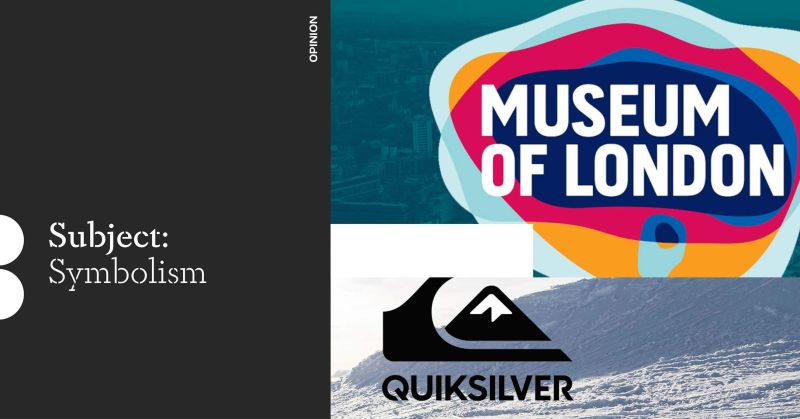
Forward 100 years and logos aren’t just a tool to spark familiarity, but are also now used to convey subliminal messages. Quicksilver’s logo is an interpretation of Hokusai’s ‘Great Wave off Kanagawa’, which is said to represent the irresistible force of nature — apt for a surf brand who are encouraging their customers to be outdoors. The coloured shapes on the Museum of London’s logo represent the changing borders of London throughout history. The logo for the London Symphony Orchestra is not just representative of its initials, it also forms the shape of a conductor.

Each of these logos tell a story — one that doesn’t need to be translated to be understood. But are we regressing? By communicating through symbols and imagery, are we doing a disservice to the development of language?

Have we developed our understanding of communication so greatly that we no longer need language to connect, or have we taken a step 2.5 million years back?

Get in touch with us

+44 7762 344 155

[email protected]

Instagram Remix: Insta gives its Reels a new twist

24 Fingers

Just when you think you’ve got to grips with the latest video-sharing technology on the web, they go all Etch-a-Sketch on us and give everything a good shake, this month’s being the launch of Instagram Remix. The social media platforms have been falling over themselves to copy each others’ services, from Linkedin finally realising video is A Good Thing, to TikTok’s nifty Duet feature. It’s the latter that prompted Instagram to give its Reels tool, which is barely out of short trousers, an overhaul leading to – drum roll please – the Remix video editing feature. https://platform.twitter.com/embed/Tweet.html?creatorScreenName=24_fingers&dnt=false&embedId=twitter-widget-0&features=eyJ0ZndfZXhwZXJpbWVudHNfY29va2llX2V4cGlyYXRpb24iOnsiYnVja2V0IjoxMjA5NjAwLCJ2ZXJzaW9uIjpudWxsfSwidGZ3X2hvcml6b25fdHdlZXRfZW1iZWRfOTU1NSI6eyJidWNrZXQiOiJodGUiLCJ2ZXJzaW9uIjpudWxsfX0%3D&frame=false&hideCard=false&hideThread=false&id=1377304845204422661&lang=en&origin=https%3A%2F%2F24fingers.co.uk%2Finstagram-remix%2F&sessionId=6a11471eb25c16143a6113e57109a5414dc3689f&siteScreenName=24_fingers&theme=light&widgetsVersion=1ead0c7%3A1617660954974&width=550px

It gives Instagram users the chance to create and post their reaction to a Reel, and while it might have a lot of comedic value, it’s also got great potential for business. 

Picture the scene: a small or medium-sized company posts its reaction to content from a bigger company, which then goes viral, bringing customers to their door and putting their brand on everyone’s lips. Talk about lights, camera, action… 

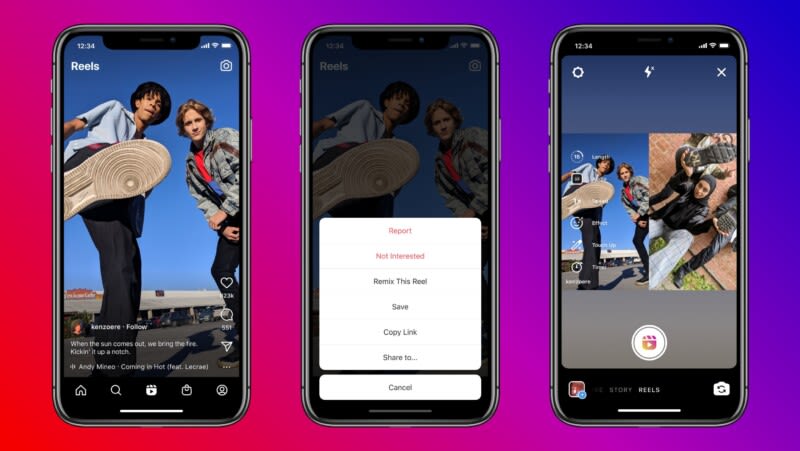
You can Remix any Reel, as long as the original poster has enabled access. The great thing is, the feature can be turned on and off, either by using the Privacy Settings, which would affect all Reels, or after you share each individual video.

To Remix a Reel, choose the video you want to react to and tap the three dots. “Remix This Reel” should appear if the original Instagram poster has enabled the feature. 

Record or upload your new Reel, which should appear on the right side of the screen. Now’s the time to merrily edit and get creative, adding stickers, a voiceover or change the soundtrack. When you’re happy with your content, write a caption and choose your video settings, then share – easy peasy. 

We reckon Remix Reels could give TikTok’s Duets a run for its money, but we’ll keep you posted. In the meantime, it’s time for our close-up… 

We’re 24 fingers, a digital marketing agency and a proud member of the 42 Club, Brentwood Chamber of Commerce, Excel Business Networking Group, the Trusted Business Community, the Organisation for Responsible Businesses and the Rotary Club of Brentwood à Becket. We help companies who are all fingers and thumbs with their social media grow their business and brand. Book your free strategy call here.

You can view the original blog and other 24 Fingers blogs here

Eight business habits to break

NatWest Business Builder: The Importance of Mindset

Even the savviest of businesses can face stumbling blocks along the way – here’s how to get over them.

From being resistant to change to taking employees for granted, we look at some of the most common business habits you need to break.

1. Not planning for growth

According to Dr Lucy Gill-Simmen, lecturer in marketing at Royal Holloway, University of London: “The old cliché is true that if you’re failing to plan then you’re planning to fail. No small business can afford to do without creating a proper, clear business plan – then when the company is up and running, an equally clear marketing plan.” Have a strategic approach to growth – set targets that are achievable and realistic, have a time frame to reach those targets, and put in place three- and five-year plans (or whatever best suits your business). The details will vary from company to company – but the mistake many SMEs make is to have no clear plan at all.

2. Not focusing on cash flow

A key cause of start-up failure is the cash running out at a critical moment – research suggests it’s the second-biggest reason why a business fails, after lack of demand for the product. To stave off cash worries, develop a head for figures; cash-flow projections and forecasting should become second nature. If they’re not, don’t risk losing the business because of a cash crisis – have someone on the team who’s good with figures, or entrust your finances to a trusted external accountant right from the start.

3. Not making the customer central to the business

As a successful SME, it’s a mistake to think your core business is selling a product or service. What you’re actually doing is meeting a customer expectation. Focusing exclusively on the thing you sell means you can quickly lose customers. “Map the customer journey and ensure you have plans in place to support every step of that,” says Chris Daly, chief executive at the Chartered Institute of Marketing. “That journey starts much earlier than many people realise and extends far beyond pressing the ‘buy’ button or delivering the product.” One bad habit many SMEs routinely fall into is focusing on finding new customers rather than retaining existing ones. “It costs far more to get a new customer than it does to generate repeat business,” Daly says.

4. Not delegating

As a start-up, you may well be a one-person band to begin with, only taking on employees as you grow. But your success as an individual can lead to an unwillingness to let go and delegate effectively. “As an entrepreneur, you’re an independent person by nature,” says Francis Toye, CEO at Unilink Group, a leading UK secure software provider for the criminal justice market. “But this means you can be something of a control freak. For a business to grow, you have to enable others to do things.” And, Toye adds, you have to be genuine about this. “It’s not simply about giving other people tasks, it’s about explaining the issue, then giving people ownership of certain areas. It involves giving them real situations and the responsibility to resolve them – if you hang on to the responsibility, you’re not really delegating.”

5. Doing what you’ve always done

When companies mature, the temptation can be to stick to what you know best. But failing to innovate is another key reason for business failure. The photography pioneer Kodak brought itself to the verge of bankruptcy by refusing to move into digital photography, while more agile competitors saw the near-universal shift in consumer preference for digital over film. A culture of innovation can be hard to foster, but remember that not all innovation has to be the previously unheard-of ‘big idea’. Innovation can be small but beautiful – for instance, tweaks to an existing successful product or small add-ons in customer satisfaction.

“As an entrepreneur, you’re an independent person by nature. But this means you can be something of a control freak. For a business to grow, you have to enable others to do things”

Francis Toye, CEO, Unilink Group

6. Competing on price

You can always cut your prices – but it’s very hard to put them up. Once you’ve put a price in place, you fix a perceived value for your product or service that can be difficult to change in the minds of your customers. Instead, find ways of creating value that aren’t dependent on price. Think of something unique that you offer and emphasise that. Do you have a bespoke element to your product? If so, price accordingly. Or offer good service and after-sales service, or create an experience. Ultimately, believing that you have to be ultra-competitive and as cheap as Tesco or Amazon is a recipe for business failure.

7. Not valuing your employees

Another business cliché is that your employees are your best asset. Again, it’s only a cliché because it’s true. Make the most of your staff – an employee who’s willing to go on training courses, for example, is likely to become a successful, productive and profitable member of the team. If you stifle these ambitions for cost reasons, the good employee will go elsewhere. Bear this in mind when you’re recruiting. “Look for passion,” says Alessandra Sollberger, CEO and founder at health supplements company Evermore. “When recruiting, you’ll spot the people who will be good to take things on and spread magic dust in the business.”

8. Not keeping up with regulations

Red tape is the bane of any SME’s working life, but it’s worth keeping up to date with new regulations that affect you for two reasons. First, they can be an opportunity – for instance, the General Data Protection Regulation (GDPR) is, according to Chris Daly, “an opportunity to clean and clarify your data in such a way you can personalise the strength of the relationship between the customer and the business”. Second, the penalties and the potential damage to your brand from not being legislatively compliant can be severe. Take the recent example of gaming firm William Hill Group, currently facing a package of fines of at least £6.2m as a result of failing to meet its anti-money laundering and social responsibility regulations. It’s a risk you don’t want to take.

Further Reading

  • Five laws of disruptive business thinking
  • How to create the right mood
  • SME Tools: how to be productive

Join the Business Builder Facebook Community here

‘Want to learn more? Register for NatWest Business Builder to view all of their business development tools. Click HERE’ 

How can company values help people be their best selves at work?

Self-Improvement in the workplacePure Recruitment

An organisation’s company values can play a significant role in creating a workplace culture which enables employees to bring their best selves to work and therefore be more engaged, motivated and productive.

Using her own experience as a co-founder of Pure, a values-led organisation, Chief Operating Officer Gill Buchanan has shared some of her top tips on embedding values into a business and the reasons why this makes a positive difference.

Gill said: “In our day-to-day work as professional recruitment specialists for the eastern region, we are increasingly seeing just how much importance candidates place on finding an organisation which genuinely cares and which has a set of values they can really relate to. Companies with clearly communicated values are often the most successful when it comes to competing for top talent and having high levels of employee engagement.

Supporting vision and purpose

A company’s vision and purpose can be used as the inspiration and guidance to set company values. This will help to ensure that they are authentic and can successfully form the basis for the organisation’s culture. For example, when we established Pure, our vision was to create a company which was different to others within the recruitment industry. We wanted our business to focus on developing long-term client and candidate relationships rather than being driven by numbers and KPIs. Having a clear idea of what we wanted to achieve helped us to choose our values. We wanted them to represent everything we believed was important about the way we wanted to work and achieve success. Our six values are: Pure Quality, Pure Teamwork, Pure Supports, Pure Delivers, Pure Rewards and Pure Innovates.

Bringing people together

Employees who feel a sense of belonging are far more likely to be engaged and motivated to go the extra mile for themselves, their colleagues and the business as a whole. Shared values can bring people together whatever their background, interest, age or level of expertise. They enable businesses to celebrate and encourage diversity while still uniting people in day to day behaviours, standards and attitudes. We recognise that our business is a people business. We want to bring our people together and look after them as they are our ambassadors and the ones engaging with our candidates and clients. Our values have helped us to create a culture where great work is rewarded, teamwork is celebrated and everyone is supported to deliver high quality.

Company culture foundations

People spend a lot of time at work, so it is understandable that they will want to be in an environment which is a positive place to be. An organisation’s values can help to achieve this as they set the foundations for a company’s culture and the attitudes and behaviours to develop and maintain it. For example, we have a people-first culture and our Pure Supports company value helps us to achieve this. As well as supporting each other, and our candidates and clients, we want our employees to have the support they need to do their job well. It helps us to shape everything from the equipment and training we provide to the initiatives we put in place to support the mental and physical wellbeing of our team.

Embedding values into day to day business

For company values to make a real difference they need to be brought to life and embedded in day-to-day working practices. This means more than just displaying them as part of the office branding, although that is still a very positive thing to do! They also need to become foundational to the business and genuinely underpin everything. Values can be embedded by making them a part of every aspect of your business from recruitment and onboarding through to referencing them in staff reviews, reward and recognition schemes and L&D plans. They also need to be reinforced and authentically displayed by the leadership team to ensure they flow from the top down.

As part of the leadership team at Pure, our values have given us the basis of establishing a consistency of how we want to do things. Because we all really believe in the values, we can live them while still being our true selves, we don’t have to robotically try and demonstrate them. They have also become a key part of the language we use when talking about our business, from updating our teams internally through to our external communications.

We believe that being able to share our values with our clients and candidates helps to give them a real understanding of what it is like to work with us. The same goes for potential new recruits. Our values help us to explain more about how we have created a culture which differentiates us from other recruitment firms. To help share this with prospective employees, and new recruits, we have put together a Pure book to explain more about our company in a fun, easy and tangible way. After a few months of being part of our team, we also ask new employees to deliver a presentation which includes sharing examples of when they have seen our values being demonstrated day to day. This really helps people to understand why they are so important to us and how they benefit everybody.”

Music and Health – Benefits, Mental Health and Dementia

The healing power of music

Listening to music can be a different experience for everyone, but we can all agree that music has its own power, whether it makes you feel nostalgic, helps you focus or boosts your mood. It is something that enables people to connect with others as well as having a positive effect on your mind, body and soul. However, working in the music industry as an artist could also be damaging to a person’s mental health if they do not seek the support that they need.

 POSITIVE EFFECTS ON YOUR HEALTH

Listening to music releases dopamine which is responsible for the feeling of pleasure. When experiencing tension and then resolution in music, for example a drop in a dance track, it is universally satisfying because different brain circuits are involved in both the anticipatory and achievement process. Dopamine also helps with motivation and studies have shown that listening to music whilst working can increase efficiency. However, this depends on whether you had a choice in the music that you are listening to because if the music is out of your control it can cause stress and the positive effects will not occur because dopamine is released only when music is pleasurable in relation to your mood or personal taste.

Music is also known to increase helpful antibodies such as Immunoglobulin A which aids cells to attack bacteria or germs which are invading the body, meaning that listening to music can increase a person’s immune system. Additionally, it has been proven that listening to music strengthens your heart and lowers blood pressure depending on the type of music that you are listening to. Pop, Rap, Country and Reggae have the same effect on the body as they all get the blood pumping which makes you less calm and happier. Metal is believed to help cope with feelings of depression and stress. Classical music releases stress hormones and causes a dopamine rush.

MUSIC AND MENTAL HEALTH

Music therapy has been proven by Levy (2017) to ‘reduce anxiety and physical effects of stress, improve healing, helps to manage Parkinson’s and Alzheimer’s, reduces depression and other symptoms in the elderly, decreased symptoms of psychological disorders including schizophrenia and finally it improves self-expression and communication.’ Music therapy is thought to help manage mental health problems in the ways listed above as well as help minimise the trauma and disruption associated with hospitalisation.

However, 73% of artists in the music industry suffer with mental illnesses according to Record Union. Although listening to music can relieve issues relating to stress, anxiety and depression, it has been said that working in the music industry as an artist can actually increase these negative emotions in relation to their creation of music. This can be caused by fear of failure, financial issues and also being lonely. Help Musicians UK have launched a 24/7 mental health support service for anyone in the music industry that may need some support or advice. Companies like these are here to support musicians at any time and are working on ways to prevent mental illnesses from becoming so common amongst young independent musicians.

MUSIC AND DEMENTIA

The national Music For Dementia 2020 campaign has recently been announced which will help to encourage patients to find the right services. Its aim is to make music available to everyone who is living with dementia. Music helps to unlock memories and improve the quality of life for a patient. It allows them to communicate beyond words and bond with others which is something music can do for anyone. As previously mentioned, music can make anyone feel nostalgic and dementia patients respond best to songs that they grew up listening to as it can trigger emotions and personal memories which can help ease the behavioural and psychological symptoms of dementia.