Instagram has always had a mobile-first approach. Which is great, if you’re out and about and using the app as it was originally intended, to post insta(nt) photos of what you’re up to. But let’s face it, it’s no longer 2010, and in the last ten years or more, many of us are now seeing the benefits of using Instagram for our businesses. As such, wouldn’t it be really, really handy to occasionally be able to post to your Instagram feed from your desktop? Well, we’re here to tell you that with a click of one of our 24 fingers, it’s no longer a pipe dream.
Instagram plans to allow for desktop posting
Although there are lots of features that can be used on Instagram from your desktop, annoyingly, the most important aspect of the platform – posting photos to your Instagram grid – isn’t one of them. Rumour has it though, that Instagram is currently planning to allow users to create posts from their desktop. There are reports that Instagram is working on including a button to post photos directly from your desktop to your Instagram feed.
Initial ideas and images suggest that users will then have the opportunity to edit the image, as you do on the mobile app. This includes choosing the aspect ratio of your image and picking filters, as well as the expected options to add a caption, tag people and add your location information.
Our 24 fingers will be poised to give Instagram a massive high five if this functionality is rolled out to desktop users: it’s been sorely missed by many a business owner who prefers creating social media content from the desktop, for example if your images are stored on an online server or if you’re simply more efficient on desktop than mobile. So let’s keep our collective fingers crossed that Instagram give it the green light.
And until then, how can you post to Instagram from your desktop?
Although it will be fab if Instagram roll out the ability to post from your desktop, this all very much appears to be in the initial stages at the moment – if it happens at all. So until then, what can the desktop lover do to make Instagram work for them?
Well, there are ways and means around it. And our 24 fingers are tapping away at the computer keyboard constantly, making them work for our clients, and regularly posting from the desktop. We may even have our ways and means of posting to your stories from the desktop, too.
Want to know more about how you can post to Instagram from your desktop? Get in touch and you’ll be just a few short clicks away from posting to Instagram directly from your desktop.
Leadership Lunch and Learn with C-J Green from BraveGoose
Top tips for effectively managing remote teams
C-J Green from BraveGoose, the HR tech provider, shared her ten top tips for managing teams remotely. Here are some key points:
Levelling
As hybrid working looks to become the new normal with 91% of forum attendees working from home at least a couple of days a week. New challenges for businesses will arise as employees will no longer all be in the office at the same time. C-J describes the importance of avoiding a two-tier system where employees feel as though they are missing out on important conversations, and generally out of the loop. All-staff meetings should therefore be delivered in a way that the experience is the same for all. This may mean continuing to deliver certain communications virtually to prevent an ‘us versus them’ rift between coworkers in the office and at home. Zoom meetings are great for levelling and connecting staff as the experience is the same for everyone. Virtual meetings can also help remove the professional facade and allow staff to seem more approachable and equal.
Personal approach
It is essential for staff motivation that employees feel their company value and care about them. Employees should be managed on a personal level and their individual skill sets recognised. The pandemic has particularly emphasised the importance of personal connection and the difference in individuals’ experiences. The one size fits all is no longer effective management and staff should be encouraged to level up based on their personal skill set. This can be done by speaking to employees individually on a regular basis to pinpoint strengths and struggles. Coaching conversations can also help motivate, where managers set up calls to catch-up and praise rather than to assign work.
Stronger sense of team
Teams can feel more motivated and connected when all staff members are included in creating new protocols. The pandemic has created a unique opportunity to make major changes to the way we work. Including all team members, even junior staff, in these decision-making processes will help create a stronger sense of team. Employees will also feel as though their voices are being heard and their best interests are in mind.
Working asynchronously
Employers should appreciate that staff have different responsibilities and commitments they have to juggle. It is not always possible for every staff member to join a meeting or event. Recording meetings and allowing access for everyone to watch them makes people feel more included and as though they are not missing out. This can help staff better manage their time and removes unnecessary pressure to be available. Equally, providing agendas before meetings helps people assess whether it is relevant to them to attend. This all helps employees better manage their time and workload, to work in a way most effective for them.
The Elephants Backpack
C-J describes how team discussions at the end of the week to share reflections can be beneficial. This environment should be a safe space for teams to offload any issues and chat through key achievements or areas to improve. This can help team members feel heard and allow managers to know how their team is feeling.
Advice from the panel
The panel of guest speakers shared their experiences of managing teams remotely.
“Manage people instead of things”
Dennis Laudick from Arm has found he has had to focus his time on rebalancing his team to get the best out of the group. When working from home and communicating virtually he noted that some team members are naturally thriving whilst others are shying away. Dennis now encourages group members who haven’t talked much to contribute rather than contributing himself. Ensuring all his team are included and heard and set up to complete work themselves. Managers need to listen to their teams and put in as much effort to communicate as possible.
Managing teams remotely is an opportunity to throw away the traditional roles and ways of working together. Dennis believes managers should be promoting we are all in it together. This not only benefits team members but helps managers better understand their team. He believes things should not go back to the way they were before and hopes that the new human level in the workplace doesn’t go once we return to the offices. The professional facade that has come down with Zoom should stay.
“Some roles are not getting their natural highs”
Louise Hazard from Greene King believes some teams in her organisation have suffered more than others. This is mostly decided by different teams’ roles and how they are reinforced. Sales teams for example are not getting the natural highs of their job roles whilst working at home. Managers, therefore, need to focus on motivating some teams more than others. This can be done by having honest conversations about what will make things better and shows interest in individuals’ future. Setting up team chats where no one talks about work Louise says is another good way to motivate staff.
Louise also notes that staff on furlough are likely to find it hard going back to work. Particularly if they are going straight back to the physical office. A ‘we are all in this together’ approach will be especially important here. Employers should start organising their going back to work policies now, taking into consideration different staff member’s wants and needs. The benefits of working from home that add to working life that office life might take away should be considered and kept in place where possible to keep staff members happy.
“People do not all need to be regimented”
Carolyn Connery from CMI agrees with C-J’s comments of working asynchronously. The pandemic has helped employers look at employee’s soft skills and acknowledge that people do not all need to be regimented to the same thing. Flexibility will be key moving into the post-pandemic workplace. Carolyn states that a lot of change is set to continue and with that, a lot of new skills are needed. Employers should think about levelling up their employees to ensure they keep up with ongoing changes to the workplace.
The pandemic has also highlighted the importance of managing peoples’ mental health and wellbeing. Junior managers may have had to make hard decisions over the past 12 months in terms of redundancies and furloughing staff. Equally, those who have been on furlough may feel disconnected. Managers should be re-educating themselves to be more aware of their team’s mental health. This can be done by paying more attention to changes in staff and setting up chats to ask how people are feeling. A lot of employers are training or hiring mental health first aiders to meet this challenge. Listening to staff and creating resources they can go to is going to be essential as the long-lasting effects of the pandemic continue.
“I have had the time to do things that were not possible before”
Simon Mader from AstraZeneca reports how the digitalisation of meetings has made certain aspects of work more accessible. Meetings which were once only possible by taking two days off for international travel are now easy to attend. More junior staff members who would have not joined trips can also now attend those meetings. Furthermore, tasks which once meant days of travel can now be completed easily in a day.
Not only has remote working allowed employees to connect with staff members they previously would not have been able to, but it has also helped to get in touch with people. People are now more available and easier to get hold of with the majority working from home. This has made some aspects of work easier and quicker. Simon agrees that catch-up chats that are only a click away are invaluable for building and managing work relationships.
Comments from the audience
Productivity
The audience agreed that productivity has varied between team members due to their personal situations, such as homeschooling kids. Productivity has differed depending on the role/seniority of the staff, with less productivity at lower levels due to support not being as readily available. Overall, 49% of the audience felt they had the same level of productivity working from home than in the office. 22% felt they were less productive and 29% more. Where there are more distractions appear to largely determine productivity levels. One audience member said they have found using Zoom has actually enhanced training and productivity by having the ability to share screens and take control.
Communication
The audience felt that it was important going forward to ensure all employees feel equal and included. Techniques to do this include meeting consistency, where all meetings are either online or in the office. Effective communication is essential for staff to feel in the loop and included. Giving communications to everyone at the same time can help this, as can frequent Zoom meetings that engage all staff. Including daily/ weekly catch-up calls and face-to-face meetings once a month. But ultimately, staff should be able to choose what method of communication is best for them.
Mental health
Everyone agreed that the past 12 months have highlighted the importance of recognising and responding to mental health. The audience recommended managers make sure they call their team to ask them what they need or if they want to talk. Furthermore, one-to-one catch-ups should not just be about giving more jobs to do but instead voicing praise and creating a safe environment to voice concerns. One-to-ones can also help managers understand their team’s needs and plan new working patterns as their working and personal lives change. Being available and willing to support staff is key.
One size does not fit all
The audience also felt that one size does not fit all staff members. Management and work, whether in the office or working remotely, should be tailored in line with individuals’ needs. Each team member is different and so is their circumstance. This is the same for new starters, do not use a one size fits all induction and instead design their introduction around what they need to feel part of the team. This can be helped by scheduling social ‘get to know you’ sessions for new starters to meet people they’ll be working closely with.
A Canvas is an essential tool when starting a new business.
It will make you focus on the important stuff you need to consider before you spend time or money on your new concept. Read the instructions and either print and fill in or use a PDF editor to complete the Canvas to see if your idea has legs.
Claire contacted Debra from Community Catalysts in March 2021 as she had heard about the project through a friend and neighbour.
Claire already ran an established cleaning enterprise, but her experience with a family member had made her think about the possibility of offering services for older people providing a little extra care and support and cleaning, laundry, and ironing services.
As a small enterprise owner, Claire was already registered with HMRC. With this stage already complete, Debra was able to advise Claire on how to obtain an Enhanced DBS check and with NCC funding was able to reimburse the cost.
Community Catalysts provided information about suitable insurers for this type of business as well as templates and guidelines for paperwork Claire might need. Also, information and guidance on regulations around sole traders offering care and support.
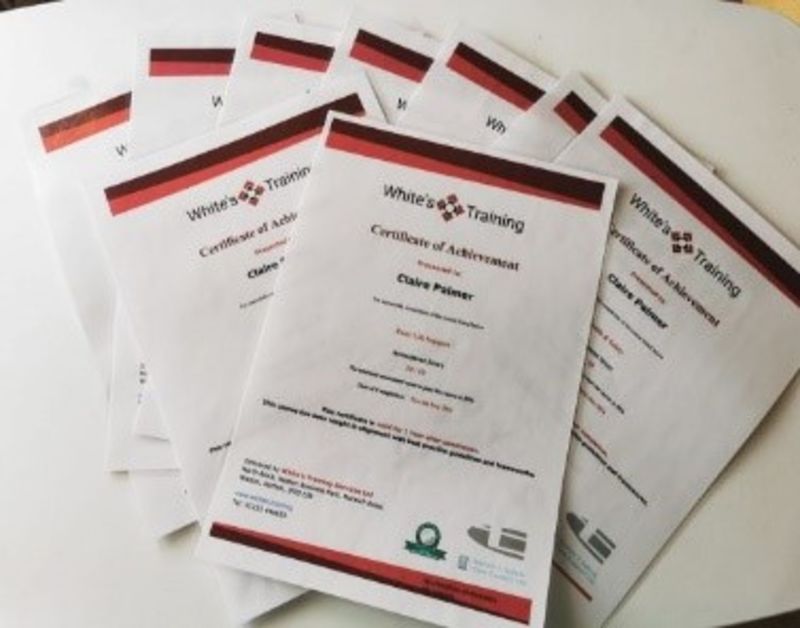
They found a local training organisation that is offering fully funded training to undertake an online Social Care Certificate, covering all required standards.
Claire committed to undertaking the study time required, working around her own caring responsibilities.
Debra says:
Claire was so motivated from the start, such a pleasure to support her to offer further services and support for her older customers.
Within only two months, Claire had completed all the necessary study and passed all of the modules required.
NCC have provided a starter pack of PPE to help her get safely underway.
In addition to her regular cleaning, Claire is launching Lasting Sparkle/Helping Hand. Offering older customers help with shopping, appointments, tea and chat as well as a little support with personal care if needed. Find her on Facebook or
She is good to go and looking forward to welcoming her first customer!
Claire says:
I would like to thank Debra at Community Catalysts for all the support and guidance throughout my setting up process
If you would be interested in hearing more about how Norfolk County Council’s Community Catalysts programme can help your small business offer a wider range of support to older and disabled people in their homes, please do call me for an informal chat
Community Catalysts; Unlocking potential effecting change
Do you have an idea that could help older people and people with disabilities at home?
Do you need help to get your idea started?
Are you already helping people in some way and would like to do more?
If the answer to any of these questions is yes, running a community micro-enterprise might be for you. Community Catalysts can:
· offer you a friendly and supportive point of contact to explore ideas
· connect you with other like-minded people
· give you practical information on regulation, training and opportunities in the health and social care sector
· direct you to other organisations who can help
What is a community micro-enterprise?
· A community micro-enterprise is a small local business (sole trader, limited company, social enterprise) offering flexible and genuinely caring services or support to older and disabled people
· It is frequently one person working on their own who really enjoys supporting people in their own community and having the freedom to go the extra mile
Community micro-enterprises can offer a range of different services and support to people in their area. This can include:
· help at home such as cleaning, meal preparation, shopping, dressing, bathing
· day, evening or weekend social activities
· help to stay connected to friends and leisure activities
· help to undertake training and employment opportunities
· gardening, light DIY, decluttering, therapies
“As I work more and more with older people, I love it. I definitely want to do more of this as part of my business…I’m glad I have Debra’s support to do this” Sue
What’s in it for the community micro enterprise?
· You are self-employed so you can decide on your hours of work, rate of hourly pay and location
· You will receive guidance on any regulations
· You will receive information about free business start-up support
· You will get help to market your business
· You will receive help to obtain a DBS check
· You can receive a free starter -pack of PPE (subject to availability)
· You will receive information about available training
· You can be part of an informal network of support from other self-employed people
· You can receive guidance and information from Community Catalysts and be signposted to other relevant organisations
Norfolk County Council have commissioned Community Catalysts CIC to work in Norfolk. The project runs until September 2021 and is being co-ordinated by local catalyst Debra Morris.
Work is happening in the Norwich and North Norfolk areas to increase the range and availability of help at home & community options. As well as helping people to set up new enterprises, we will also advise small groups and organisations already established in North Norfolk and Norwich and looking to diversify or extend what they offer.
How we operate
We work hard to recognise local strengths and actively build on things that work well and would like to connect with community, third and public-sector organisations, key stakeholders and supporting professionals who would like to know more about the project.
You can read an article on Claire, a case study, and how Community Catalyst helped her here
Get in touch, we would like to hear from you!
Contact Debra Morris, the local Community Catalyst, for more information about the project:
During COVID-19 most businesses have relied on their company websites to keep trading, but did you know if you bought your website through companies like GoDaddy or Wix you don’t really own your website? It is not part of your company assets despite it being your primary sales source.
Websites sold through companies like these allow businesses to effectively rent space on the internet. At Media in a Box we think you and your business deserves a better solution that ultimately sees you completely owning your own company website, it’s called Small Business Booster. As part of the launch of this exciting new product one small to medium sized company could win a 10-page SEO optimised website for their business.
Media in a Box will professionally register, design and SEO optimise your website to meet your exacting requirements and once complete hand it over to you, although we can continue to support your website if you wish. The Small Business Booster is inexpensive as websites start from £46 + VAT each month and we offer a huge range of templates to suit all sorts of businesses with 5, 10, or 20-page sites. Our experienced team of web designers will tailor your site to achieve maximum impact and effectiveness in reaching your target customers. Media in a Box offers round the clock support and affordable digital marketing packages specifically designed for the needs of small to medium size enterprises.
Owning and not just leasing a website is key to your company’s continued growth and success. Having your primary source of income as a company asset means you control how it is configured for Search Engine Optimisation.
And remember to register for your chance to win and own a 10-page new website. Simply email us at [email protected] with your business and contact details.
Ever noticed a marketing campaign which you thought was executed to perfection? A campaign which was timed well and punched one hell of a right hook to create a buzz and go viral. A campaign which used emotion to draw in lapsed customers, infrequent customers and frequent customers and was designed to suit prospects all the way through to brand ambassadors, therefore dramatically increasing customer retention, basket sizes AND new markets? Chances are you have, and chances are it was a Surprise and Delight Marketing strategy.
What is Surprise and Delight and why should brands use it?
Well, in a nutshell it’s pretty self-explanatory: a method of marketing which surprises clients and plays on the influence of emotion in buying decisions. It aims to attract and nurture consumer relations by providing unexpected rewards and it is designed to increase customer loyalty and engagement.
Surprise and Delight is quickly becoming an essential part of any serious marketer’s customer retention and acquisition strategy and according to the Harvard Business Review, surprises are the most powerful marketing tool because they are addictive. It is a strategic way to give unanticipated perks to customers in order to renew interest, boost purchases, restore loyalty, or educate consumers on new products.
How (and when) to create a memorable Surprise and Delight strategy
There are many brands who have created great strategies to surprise their customers. A great example was back in 2015 when The Lion King and Aladdin Broadway cast had a sing off in LaGuardia Airport whist bored waiting for their plane. (It’s well worth a watch! Watch it here).
The cast created an amazing element of surprise for other travellers and created an exciting and remarkable customer experience. You’d be hard pressed to find an onlooker who didn’t then buy tickets for the shows afterwards!
This example highlights 3 main elements of how to get your Surprise and Delight campaign spot on;
Play to your strengths just like the cast used their voices and talent to entertain the crowds at LaGuardia Airport. What are your unique strengths and values? Another example to draw on here is the ‘Kleenex feel good campaign’ which sent out a Kleenex Kit to those they identified on Facebook as being unwell. They orchestrated it through contacting friends and family to help deliver a box of feel good goodies to those who’d recently posted a status to say they felt poorly. This campaign generated more than 650,000 interactions on Facebook alone. If they had instead chosen to send recipients a voucher this would have created some far less exciting results and general buzz around the brand. What do you do brilliantly? What are your values and how can these be used to create a memorable experience and surprise?
How can you add value in a moment? The Lion King and Aladdin cast were bored, most likely alongside all their fellow travellers. They knew they could create a buzz, which in turn would be great promotion for their shows and if recorded would be seen by potentially millions around the globe (the You Tube link above has had 7,705,232 views at the time of writing this blog). How can your brand add value to an individual/team/group of people at the right time? Hopefully we will be heading out of lockdown soon – how does this work for your customers and clients? Is there something you feel they may be pleasantly surprised to receive during this time? Timing is key and if used effectively could create a huge ROI.
Don’t forget your current customers. Whilst the above is all still applicable to your frequent customers, don’t ignore how important customer retention is for your business. Brands which keep their customers coming back time and time again are usually those who pay extra care in nurturing their relationship with their on-going customers. This can be as little as a birthday card, an unexpected gift added in with a purchase to say thank you, a postcard to check in on them. There are many ways you can add an element of Surprise and Delight to your most valued customers and this should be high on your retention strategy.
Surprise and Delight strategies increase customer loyalty, which in turn leads to repeat purchases, larger basket-sizes and increased brand engagement. When utilised properly, this marketing strategy can be extremely good for business.
We hope this has got you thinking about your next marketing campaign!
To find out more about how I may be able to help your Norfolk business thrive then please don’t hesitate to get in touch on 01603 559590 or email [email protected] – you can also get in touch through my contact form here. If you’d like to know a little more about my experience, expertise and accolades then click here.
Client retention is one of THE most important parts of your business, especially in a time when anxiety is high and spending power may be slightly decreased due to uncertainty in the marketplace.
Focusing on your customers, building the trust, loyalty and their confidence in you is hugely important to your bottom line. After all, it could be your most loyal customers who are seeing you through these slightly rougher seas.
Right now customers are acutely aware of how businesses are handling the current crisis, with those showing care, empathy and compassion emerging as leaders in their industry. Never has there been a better time to focus on your brand values, ethics (for both your customers and your staff) and your purpose.
Turning customers into loyal and raving fans is a process which we call ‘Ladder of Loyalty’ and it goes like this:
1. Initially you have Suspects. Suspects are clients/customers who you feel could potentially be interested in your products/services. To get them hooked think of ways to grab their attention. That could be great social media content, a blog, collaborating with another business, an event, an invitation to an event (the invitation itself could be just what they need, even if they can’t attend).
2. Suspects then turn to Prospects. Prospects are essentially Suspects who have shown interest in what you sell. They have taken the first step of engagement and seem warm to the idea of what they could buy from you. According to the book Never Lose A Customer Again by Joey Coleman a Prospect is in the ‘Assess’ phase at this point. “The customer is hopeful that you’ll be able to help, but it’s cautious optimism at best. If you don’t position yourself as fulfilling your needs while wrapping them in a great customer experience, they won’t choose to work with you. If you can convince them that you are the best choice, they will move forward with the purchase. This dance between customer and the organisation is what most people would refer to as “sales and marketing.” The potential customer is assessing their options.” – Joey Coleman.
3. Shoppers are not like a Customer. Shoppers are those who have invested once in your product or service. They have seen the value of what you do and handed over their cash. Here is when you can start the process of keeping your shoppers loyal to turn them into a client/customer. Let them know how much their custom means to you – if you are a relatively small business you could perhaps tell them how their custom affects you/your staff/your family. Bring your shoppers into the fold and make them feel valued and appreciated. This phase is usually where a customer can begin to doubt their decision to work with you – commonly known as ‘buyers remorse’. This is where your communication skills play a huge part and can re-affirm the initial feelings of euphoria and excitement which your customer felt at the start of their buying journey with you.
4. Next up is moving your Shoppers into Customers. Customers are those who have made multiple transactions with you. They have purchased your goods or services 2 or 3 times and they’re beginning to feel some form of loyalty to you. Often this will be because of a mixture of a few key elements such as pricing, communication, brand values and ethics, customer experience and locality. These Customers need nurturing. Could you offer them exclusive deals? Boden do this in the form of a £10 discount offer to those who regularly buy from them online. If you offer a service are there any critical non-essentials you can send them as a thank you for their custom – everyone loves an unexpected card and box of chocolates. If your business is a one time purchase (like weddings) then perhaps there are special offers or bundled packages you can offer for future milestones like birthdays/babies/special occasions. I’m sure there are many ways you can reward your local customers to turn them into…. (go to point 5.)
5. A member. Your Customers reach Member level once they are fully engaged with your business. Now they are more than a Customer. They are a friend of your business who actively believes in what you do/sell and has some deeper connection with you. Members feel a part of what you’re doing. At this stage you want to build this connection. Can you take them out for ‘member meals’, invite them to join you at events, give them a relationship manager so they can always deal with the same individual, who in turn will get to know and understand their needs to further build the relationship. Ask them when their birthday is and make sure you send them a postcard or little gift to make them feel special.
6. Nxt up is an Advocate. Once you start moving beyond the Member level you should be able to rely on your Advocates to help YOU market YOUR business. See what’s happened here – your clients/customers/members have turned into a marketing resource for your business as a result of all the time your have spent building your relationship with them. An Advocate is someone who will respond very positively when asked about their experience with your business. They will say things like ‘I would highly recommend them’, ‘You must work with them/buy their products’. ‘I wouldn’t know what I’d do without xxx, they have really helped me’. Word of mouth is THE most powerful form of marketing and it’s your Advocates that will do this for you. Advocates appreciate your level of customer service and they feel a strong connection to your business/your staff/you. The key to building Advocates is to stay connected with them. Keep in touch with them to see how they are doing and send regular exclusive offers/invitations. Maintain this level of service to keep them feeling loyal.
7. Finally we move to Raving Fans. Raving Fans are simply the best type of customer for any business. They have bought into what you do with such emotion and understanding that they want to spread the word about what they have found. They feel proud to buy from you/use your services and you have made their life so much better that they want to shout about you. If you have Raving Fans then you know how to keep your customers loyal! Just keep doing what you’re doing and MAINTAIN the level of service you offer them!
One final note – if you are serious about client retention and working out how you can best navigate your way to gaining more and more advocates then we’d highly recommend you to read ‘Never Lose A Customer’ by Joey Coleman. Read his first 3 chapters here – we’re pretty sure you’ll get hooked pretty quickly!
To find out more about how I may be able to help your Norfolk business thrive then please don’t hesitate to get in touch on 01603 559590 or email [email protected] – you can also get in touch through my contact form here. If you’d like to know a little more about my experience, expertise and accolades then click here.
Thinking small means staying small. Discover how to harness your business mindset and increase your business success.
Have you ever wondered how some business owners leap effortlessly from working out of a small room in their house, to running a large, profit-generating company that employs teams of people?
Meanwhile, you’ve been working all the hours under the sun, yet you’re still barely covering the monthly bills.
But those big, hotshot business owners aren’t necessarily any more talented than you.
They’ve just developed a focused, business mindset for success, that’s all.
Business Success? It’s All in Your Head
Though their businesses are different, there’s one thing all successful business owners have in common.
They focus on three key principles, which are:
Money: they understand exactly how their business makes money (and how much their business costs), so they can implement the right financial management systems.
Marketing: they create compelling and engaging marketing strategies, regularly analysing their results so they lead directly to more sales.
Mindset: they develop a resilient mental attitude that allows them to make decisions, solve problems, bounce back from obstacles, and manage their success.
Business mindset is the most powerful principle of all, because it underpins everything else you do in business.
So, here’s how to start developing a business success mindset that will help pave your way from micro to macro.
Your Business Mindset will Bring You Your Own Version of Success
What does “success” mean to you?
It could be endless wealth, with your own private island, celebrity friends, and a collection of vintage cars, or it could be simple security and comfort.
Defining your own version of success is important, because it’s only then that you can start planning towards it in a purposeful and measurable way.
For example, visualising the wealthy scenario may mean starting work on an ultimate goal of making millions, whereas security may mean earning enough for you to be mortgage-free.
Understand the Power of Your Brand
Many people immediately think “logo” when they think brand.
But your logo is only a small outcome of your brand development.
Your brand is your unique personality – it’s everything people think, hear, see, and feel about your business.
Essentially, you are operating in a crowded marketplace, your brand is the thing separates you from all the other businesses offering similar products and services.
Build Trusted Business Relationships
Connections are not relationships.
As an example, look at the number of followers your business has on each social media platform. How many of them do you know personally?
Developing deeper, more long-term relationships based on trust will help you succeed in business, because we are all naturally geared to help those people we know and like.
Which leads on to…
Give Without Expecting to Get
One of the most important tools in your business mindset kit is to offer your connections something of value first.
For example, instead of starting conversations by telling people what you do, ask what they need help with.
Listen, share ideas, offer introductions… anything that you can see helps others out. You’ll develop a reputation based on trust and helpfulness, which is something everybody values in business.
(Don’t get me wrong, sometimes you won’t receive so much as a response in return, but when you do, the experience can be truly magical!)
Invest in Others’ Expertise
Whenever I am asked what is the missing link between a promising businessperson and a successful one, mentoring comes to mind
Sir Richard Branson
Investing in your future business success is essential.
As a micro business owner, ask yourself why others should buy from you, if you’re not prepared to invest in support and expertise that elevates you above your competition.
No one person knows everything about business (and nor should they) which is why drawing upon others’ professional skills – just as they will draw upon yours – will help you on your way from micro to macro.
I may be biased, but mentoring, as Richard Branson mentions, is a great start!
Someone who has been there, done that, and got the T-shirt to prove it will help you focus on your personal version of success, helping you develop the right business mindset while sidestepping all those classic business mistakes.
You’ll also have the benefit of a brain to pick and an ear to listen when the going gets tough.
If you’d like to discuss what the power of mentoring could do for your business, why not book a complimentary, half-hour Breakthrough Session now?
When you work for yourself, the idea of building a brand for your business may seem like something you don’t have to worry about. So, what if I was to tell you that creating a values-driven brand will attract more loyal customers?
Should you bother with all that branding stuff? It’s not like you’re in charge of a multi-million-pound company, with thousands of employees. Your business is you. You’re running a side-hustle from your spare room, or you’re a self-employed freelancer working on the kitchen table.
No matter what their shape or size, there’s one thing all businesses need, and that’s customers.
Attracting the right people to your business becomes much easier when they know what you stand for, and when those prospective customers have got a good idea about what you’ll be like to work with.
That’s why every freelancer, side-hustler and self-employed solopreneur needs to develop their values-driven brand
Your Brand is (Much) More Than Your Logo
Let’s be clear. When I say values-driven brand I’m not talking about spending money you haven’t got on a fancy logo, or a swanky website.
These are the ‘bright, shiny’ things that people often mistake for a company’s brand.
They’re not.
‘Brand’ is the collection of thoughts, feelings and emotions that customers have about a business.
What does this mean? As a single-person business your brand won’t just be made up of your logo, website and products and services. More importantly, it will include your personality, ideas, reputation and your core values – the element that underpins them all.
The Importance of Brand Values
A clearly communicated values-driven brand will help potential customers feel they know you and your business. It will also help with practical things, such as, helping you define your terms and conditions, plot out your customer journey, and decide the kind of work you will do and (more importantly) won’t do.
In developing your brand this way you are more likely to attract those customers who share your values (these are otherwise known as the “right” customers!). It also means that those customers you attract are more like to be loyal, supportive repeat consumers.
Defining Your Brand Values
When you work for yourself, you’ve got a clear advantage over the big boys.
They have to spend months on defining their brand values, which are usually set by the business owner or executive team, before slowly filtering them down to all the different people who work for the company.
But as a solopreneur or side-hustler, your brand development is all about you. You have to define what’s important to you personally, then put it straight to work!
Creating Your Values-Driven Brand
Don’t try to be somebody you’re not, because it doesn’t work… just be yourself and stay true to your core values
Ben Quayle
So, to help you to create your values-driven brand and identify those core values, you can try my Five Words Exercise
Here’s what you need to do …
Step One – Grab a sheet of A4, and brainstorm all the words and phrases you feel best describe you – who you are, what you believe, the things hat are important to you. You will probably start with the ‘headliners’ such as honest, trustworthy, quality etc etc.
What I would like you to do is dig a bit deeper; what makes you, you?
exclusive
quirky
fabulous
introvert / extrovert
attention to detail
spontaneous
and the list goes on …
Step Two – Hone and define your list. Remove or merge any duplicates or synonyms. What you are working towards is five words or phrases that you are certain get to heart of who you are.
(This step could take some time to get right – and you’ll know when it is, so try not to rush it.)
Step Three – Now, this is where you put what you think about yourself to the test (remember, we aren’t always the best person to ask about ourselves)
So, what you have to do is ask at least 10 people to give you five words or phrases that they would use to describe you. Don’t tell them yours and make sure to tell them you don’t want any explanations of their choices – just the words and phrases.
It’s important to ask a variety of people, not just friends and family. Include colleagues, ex-bosses, customers, trainees… anyone you can think of. This will give you a more balanced and consistent view of how others see you.
Step Four – Bring together all the words and phrases your 10 contributors give you. Search for similarities that describe how you see yourself, and how others see you. Hone this list down to five also.
Why do we ask others and not just rely on our own thoughts and ideas?
Because our unconscious behaviours identify the real ‘us’, rather than the – often skewed – perception we have of ourselves.
Step Five – Now combine your list of five and your contributors list of five. Do their perceptions of you chime with your ideas about yourself? Does their feedback make you challenge your perception of yourself?
The final stage is to ‘accept’ the five words you feel most summarise who you are.
The conclusion, you will have five words that are ‘you’ and a set of deep-rooted core values.
BTW, if you’re interested, these are mine:
FUN LOVING
SYSTEMISED
INSPIRATIONAL
PHILANTHROPIC
COURAGEOUS
If you want to know how they are embedded within everything I do in my business, let’s have a conversation.
Now There’s No Stopping You!
A values-driven brand will embed attitudes and behaviours at the core of your business. It will make it easier to take business decisions because you will know what’s truly important to you. For example, if you’re undecided about a course of action in your business, you can simply ask yourself, “will doing this compromise or contribute to my values?”
Your customers, meanwhile, can be sure that they are working with the kind of person – and brand – that they can really buy into. The way you and your business ‘behaves’ will be the thing that differentiates you in a crowded marketplace, allows them to choose you as a preferred supplier and keeps them as loyal, repeat customers.
If you’d like some help defining your values-driven brand statement as a side-hustler, freelancer, or solopreneur owner, why not book a half-hour, complimentary conversation to talk through some ideas?
Does the idea of planning and setting measurable business objectives for your freelance or side hustle business scare you?
Planning can seem frightening, because when you’ve got a plan, you’ve got more than just a vague idea. You’ve got something real and measurable to work towards. Something that tells you whether or not your business is a success.
In my experience as a business coach and mentor, this is exactly why so many people are scared of planning!
Business Objectives vs Self Belief
They worry that they might not achieve everything they’ve set out to do. They also don’t truly believe they will achieve it!
And then what?
As a business mentor who specialises in supporting freelance, solopreneur and side hustle businesses, I can tell you that running a business by yourself can heap on the pressure you feel to get everything right.
After all, working for yourself isn’t like working for a faceless corporation, where everything gets swallowed up in the machine. When you’re the only one in charge, there’s nowhere to hide from bad business ideas!
But I’ll let you into a secret: failure is a good thing. Every top entrepreneur knows that we need failure to succeed, because it’s how we learn and become better next time.
Success is not final, failure is not fatal: it is the courage to continue that counts
Winston Churchill
Why Your Own Self-Worth Means More than You Think when Setting Business Objectives
Do you really believe you’ve got what it takes to be successful? I mean, do you REALLY believe it?
From my experience working with freelance and side hustle business owners (not to mention years of running a solopreneur business myself!) I understand the importance of mindset. Specifically the mindset around your own self-worth. This can have a major impact when it comes to setting the right objectives – or any objectives – for your business..
If you don’t believe that you’ve got something other people will want to buy (and buy it from you), then it doesn’t actually matter whether you have or not! Your lack of self-belief will prevent you from setting objectives that will lead you to the right customers.
I once worked with a cake maker who priced her products purely on what she thought people might pay for a cake. Rather than pricing the ingredients and other costs so that she knew, exactly, how much each cake would cost her to make.
When we sat down and looked at her figures, we discovered that she was making a loss on every cake she made!
In this case, she was scared to properly price her cakes. Her thought process? If people refused to buy them for what they actually cost, it meant they were ‘rejecting’ her. Our work together as mentor/mentee did involve practical business advice and guidance; but there was also a lot of mindset and self-worth work in this case too.
Business isn’t complicated; more often then not it’s simple maths.
Example: If your average customer spend per month is £200, then to make £2,000 every month you will need to find ten customers.
As I said, a very simple calculation. However, if you don’t believe that you will be able to get ten customers, you might be tempted to aim lower or not aim at all.
Or it could be that you have a fantastic idea about running an all-inclusive retreat, yet you feel nervous about asking people to pay what it would cost.
(But what if some people were ready and willing to pay?)
How to Start Setting Realistic Business Objectives and Goals
First, a few definitions:
Objective: this is the top-level description of what you want to achieve, for example, more customers
Goal: goals break down the objective into time-specific, measurable outcomes, for example, those ‘more customers’ becomes ten more customers
Action: once you have a set of measurable goals, you need to work out how you are gong to achieve them. Then you need to create a list of actions you will take. So, what will you have to do to get those ten more customers?
Attend 5 networking meetings in the next 2 months
Host a webinar in 6 weeks time
Create a special offer and promote it over the next 8 weeks
Post regularly on Facebook for the next 4 weeks
etc. etc.
A good place to begin with objective and goal setting is by looking at your financial targets. If you know how much your business – and your life! – costs, then you will need to set objectives that mean you can afford them!
Here’s a simple example:
Your business costs you £750 a month to run and you pay yourself £1,250 a month. You currently turnover £2,000, but you want to invest in a new website and pay for some business mentoring support. So, you will need an extra £500 per month. You have 10 customers and your current, monthly customer value (i.e. the average you take monthly from each customer) is £200.
Let’s see how this turns into an objective, goals and actions:
Objective: Increase monthly turnover
Goal: Increase monthly turnover by £500 to £2,500
Now there are a few ways you can go with the Actions; you can approach them separately, or in combination. For example, you could introduce a number of actions that would bring you more customers. In this example you would need 3 more customers spending an average of £200 each to bring you the £500+ you need.
Another option (or maybe, an additional option as there’s nothing stopping you doing both!) would be to increase the value of each customer sale. You could do this by encouraging current customers to buy more, or you could increase your prices.
In this example, if you did a combination (which i would always recommend), it could look something like this:
Increase your prices by 10% – this would make the average income from each customer £220, so your 10 customers would bring you a total of £2,200 per month. Annually, the difference would be an increase in turnover from £24,000 to £26,400.
Now you only need to make another £300 to reach your £500 a month target
Create a new product or service – something your current customers have been asking for; something low-cost, maybe £15 a month. Even if only seven of your current clients buy it, you’ve made another £105 per month. If we look at the annual turnover to include this increase you would move from £24,000 to £28,200.
Now you only need to make another £195 to reach your £500 a month target
Get one new client – we always think this should be our first step, but getting new clients is seven times harder than it is to get clients who but from us already to buy from us again.
I usually recommend my clients to make this a final option.
In this scenario, one new client would bring in £220 per month (remember, you’ve put your prices up and maybe they’re not ready to go for your £15 a month add on).
Now your monthly turnover would be £2,525 and your annual turnover would move from £24,000 to £30,300
Three things have happened here.
One simple objective has been set
A measurable goal has been identified
Specific actions have been created
This example shows that small increases, low-cost items and one extra client can add £6,300 per annum to this business.
If you need to know how to do this in your business, book a Breakthrough Session today
The Importance of Understanding Your Market
Once you’ve looked at your financial targets, it’s time to take a closer view of your market.
In other words, you’ll need to make sure your business objectives and goals are the right ones to attract your ideal customers.
You can use the four Ps to help you on your way: Product, Price, People and Promotion.
All four of these Ps need to be in alignment when you set your business objectives.
For example, if you’ve got the right Product and it’s the right Price but you’re Promoting it to the wrong People, you will find it virtually impossible to achieve your goals.
A common mistake freelance and side hustle business owners make, particularly in the beginning, is blindly marketing their products or services to the people they usually mix with. Targeting people they know from regular networking events, or friends of friends.
A more successful strategy would involve finding and targeting the people who would most benefit from your product or service. This may mean casting your net wider, such as contacting new people on LinkedIn, or running a targeted marketing campaign.
Do You Know Where You Will Be Five Years from Today?
I’ll be taking a more in-depth look at micro and side hustle business objective and goal setting in my next post. Meanwhile, my Five Year Timeline will help you set out your intentions, and ensure you can come up with a clear business plan that fits in with your life.
Manufacturing and Engineering firms in Norfolk & Suffolk are being encouraged to see and manage their talent differently.
New Anglia Advanced Manufacturing & Engineering (NAAME) has recognised the challenges facing regional employers in managing staffing during the peaks and troughs of workflow. With the support of key manufacturing and engineering organisations in the region, NAAME have created a solution with the launch of a new Talent Sharing Platform for Norfolk & Suffolk.
As an industry, advanced engineering and manufacturing needs to attract and crucially, retain qualified & experienced talent. With the world changing as rapidly as it is, our industry needs to consider new ways of managing talent and skills, to meet the evolving needs & demands of our businesses, our industry and our employees.
The new Talent Sharing Platform from NAAME offers a much simpler way for businesses to both supply and/or receive highly skilled talent through a flexible networked scheme, working with other, similarly skilled businesses in the region. This could be via:
Secondment
Planned/on-going
Redeployment
The Talent Sharing Platform is a secure and confidential way of providing details on the skills and talent available in your organisation to other sector businesses who may need them when you do not. This is about thinking about things differently, and opening opportunities for sharing, retaining and collaboration. In this event, you will hear from industry business leaders as well as from experts in HR and legal to help understand the technical and practical issues this process may bring and how to overcome them.
To learn more and book your space at the online discovery event, click here or email james.williamson@jim-rice